
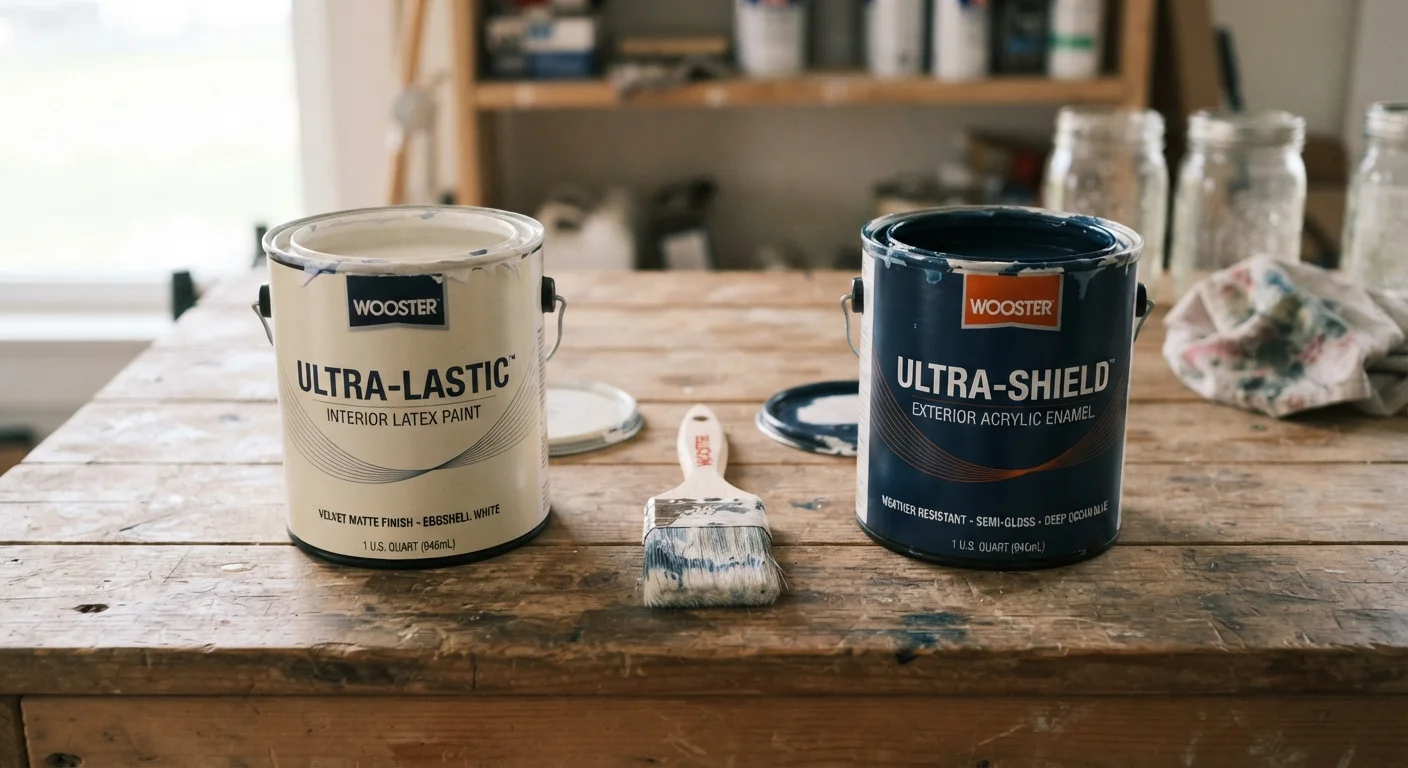
What Makes These Two Paint Types Different
At a glance, interior and exterior paints look nearly identical - same consistency, similar colors, and packaged in comparable cans. The real differences lie in the chemistry: the resins, additives, and pigments that determine how each paint performs over time.
Resins are the binding agents that hold paint to a surface once it dries. Interior paints typically use rigid acrylic resins that cure into a hard, cleanable film - great for resisting scuffs and repeated washing. Exterior paints use softer, more flexible resins (often vinyl-acrylic or 100% acrylic formulas) that allow the paint film to expand and contract as temperatures shift without cracking.
Additives are where the biggest safety distinction lies. Exterior paints contain mildewcides (to resist mold and mildew in damp outdoor conditions), UV-stabilizers (to slow fading in sunlight), and other weathering agents. These additives work well outside where air circulation is constant, but they can off-gas in an enclosed room and create indoor air quality concerns.
Interior paints, by contrast, are specifically engineered to minimize volatile organic compounds (VOCs) - the chemicals that contribute to that sharp paint smell and can cause headaches or respiratory irritation in poorly ventilated spaces.
| Criterion | Interior Paint | Exterior Paint |
|---|---|---|
| Resin type | Rigid acrylic - hard, cleanable film | Flexible acrylic - expands and contracts |
| VOC levels | Low VOC for indoor air safety | Higher VOC; outdoor ventilation needed |
| Mildew resistance | Minimal or no mildewcides | Contains mildewcides for damp conditions |
| UV resistance | Not UV-stabilized | UV inhibitors slow fading |
| Moisture handling | Not designed for wet or weather exposure | Breathable film resists liquid penetration |
| Scrub resistance | High - holds up to repeated cleaning | Lower - stays slightly flexible when cured |
| Best environment | Indoors only | Outdoors and exposed surfaces only |
What Happens When You Use Exterior Paint Indoors
Using exterior paint inside is the more serious of the two swap mistakes. The mildewcides and plasticizers in exterior formulas don't simply disappear after the paint dries - they continue to off-gas slowly in an indoor environment where fresh air exchange is limited. This can cause lingering odors and may irritate the eyes, nose, or throat, particularly in bedrooms, nurseries, or other spaces with limited ventilation.
Beyond air quality, exterior paint's flexible resin doesn't cure as hard as interior paint. That means it stays slightly tacky, attracting dust and lint. It also doesn't hold up as well to repeated wiping or scrubbing, which is exactly what interior walls in kitchens and bathrooms regularly need.
Ventilation Doesn't Fully Fix the Problem
Opening windows while using exterior paint indoors reduces immediate fume exposure but doesn't eliminate the ongoing off-gassing from dried exterior paint film. The additives designed for outdoor durability continue to release slowly in an enclosed space long after the paint has dried. For any indoor project, always choose a paint specifically formulated for interior use.
From a practical standpoint, the money saved by using leftover exterior paint indoors is rarely worth the trade-offs in comfort and durability.
What Happens When You Use Interior Paint Outdoors
The consequences of using interior paint outdoors are less about safety and more about premature failure. Interior paint's rigid resin cannot flex with the natural movement of wood or other substrates as they expand in summer heat and contract in winter cold. The result is cracking, flaking, and peeling - often within a single season.
Interior paint also lacks the UV inhibitors that protect exterior finishes from sun exposure. Colors fade faster, and the paint film itself can break down more quickly when exposed to direct sunlight. Moisture resistance is another gap: exterior paints are designed to let surfaces breathe (allowing trapped moisture to escape) while resisting liquid penetration from rain. Interior paint doesn't offer that balance, which can trap moisture against siding or trim and contribute to rot over time.
1 Season
Typical lifespan of interior paint used outdoors
Paint industry guidelines consistently note that interior paint used on exterior surfaces often begins cracking or peeling within one full weather cycle.
5-10 Years
Expected lifespan of properly applied exterior paint
When the correct exterior paint is applied to a properly prepared surface, most formulas are rated to last between five and ten years before repainting is needed.
Before you start any outdoor painting project, it's also worth reviewing when priming is essential - the right primer under exterior paint adds another layer of protection against moisture and adhesion failure. And once your paint type is sorted, understanding paint finishes will help you make the final call on sheen level for any surface.
How to Choose the Right Paint Every Time
The decision is simpler than it might seem: match the paint type to the environment, not to what's on sale or what's already in your garage.
- Any surface inside the home - walls, ceilings, interior doors, trim - use interior paint.
- Any surface that faces the outdoors - siding, exterior trim, fences, decks, garage doors, covered porches - use exterior paint.
- Gray-area spaces like attached garages or enclosed sunrooms with limited climate control generally benefit from exterior paint due to the temperature and humidity swings they experience.
If you're tackling a project that involves both painting and sealing gaps, keep in mind that material selection matters broadly. For example, choosing caulk vs. grout for joints around trim is just as consequential as choosing the right paint.
When in doubt, read the product label. Reputable paint manufacturers clearly state the intended application environment, surface types, and ventilation requirements. That label is your most reliable guide.