
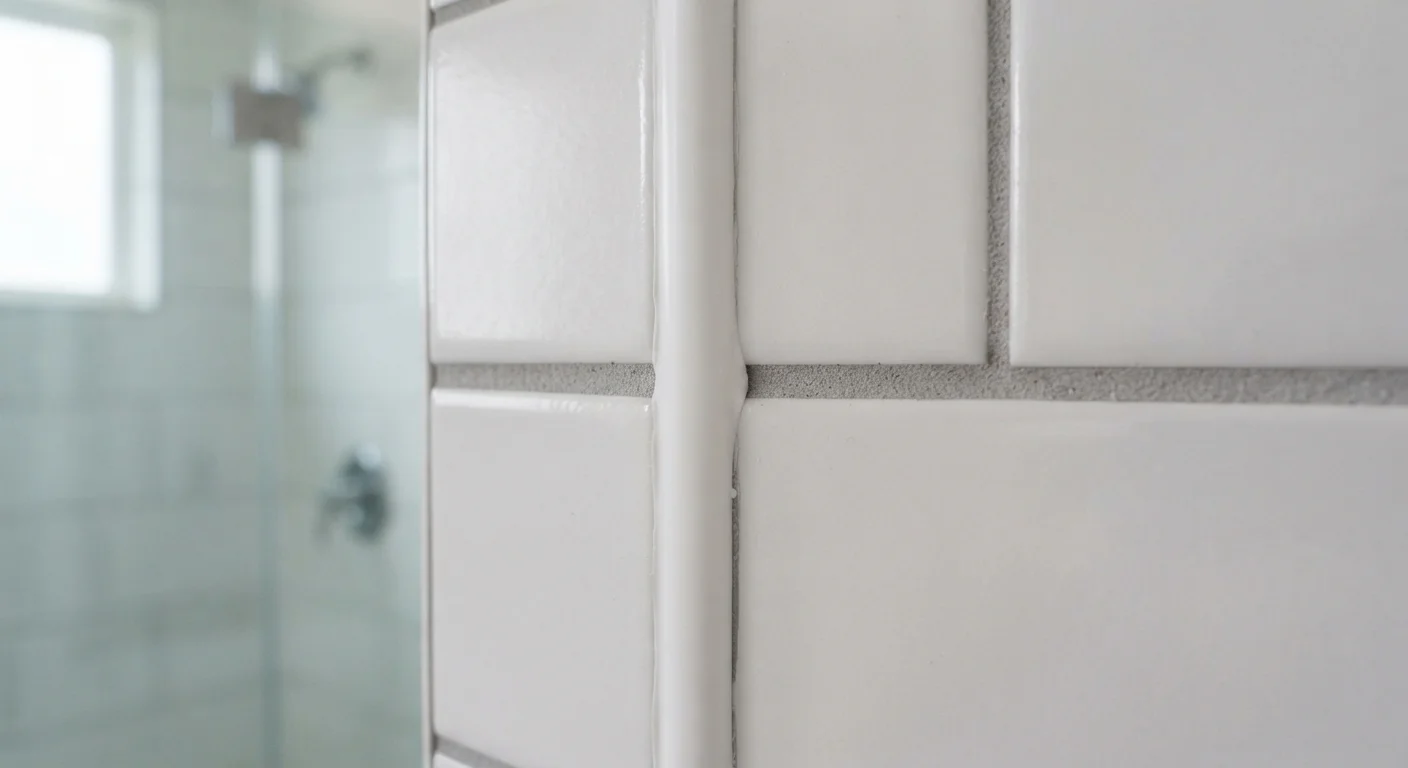
What Each Material Is Designed to Do
At first glance, caulk and grout can seem interchangeable - both fill gaps, both come in various colors, and both are sold in home improvement stores. But they are engineered for fundamentally different jobs, and confusing the two is one of the most common reasons tile work fails prematurely. For a broader look at how material mix-ups derail tile projects, see our guide on common bathroom tile mistakes.
Grout is a cement-based (or sometimes epoxy-based) filler that cures hard. It's designed to lock into the spaces between tiles, creating a rigid, cohesive surface. Because it cures solid, grout can be scrubbed, walked on, and cleaned without issue - but it cannot flex without breaking.
Caulk is a silicone or latex-based compound that remains slightly elastic after curing. That flexibility is the whole point. Where two surfaces meet at a change of plane - a floor meeting a wall, a countertop meeting a backsplash - movement happens. Temperature shifts, settling, and everyday use all cause slight expansion and contraction. Caulk absorbs those micro-movements; grout cannot.
| Criterion | Caulk | Grout |
|---|---|---|
| Composition | Silicone or latex compound | Cement or epoxy based |
| Flexibility after curing | Remains slightly elastic | Cures rigid and hard |
| Primary use location | Corners, transitions, joints between different materials | Spaces between tiles in a flat field |
| Handles movement? | Yes - designed for it | No - cracks under repeated flex |
| Waterproofing | Highly waterproof when cured | Porous unless sealed; absorbs water |
| Typical lifespan | 5-10 years before re-application | 10-20+ years in stable conditions |
| Color options | Wide range; color-matched to grout | Very wide range of standard colors |
Where Each One Belongs: The Simple Rule
A helpful rule used by tile installers: grout fills tile-to-tile joints; caulk fills every other joint. More specifically:
- Use grout between tiles in a flat field - whether on a floor, a shower wall, or a countertop surface.
- Use caulk at inside corners (where two walls meet), at the transition between a tub or shower pan and the wall tiles, at the base of a tile backsplash where it meets a countertop, and anywhere tile meets a different material like wood trim or a window frame.
Many homeowners make the mistake of grouting all the way into inside corners because it looks cleaner during installation. Within a season or two, that grout almost always cracks. The corner is a stress point, and only a flexible material can survive it long-term. Our detailed article on why grout cracks explains the underlying mechanics in depth.
~80%
Of tile failures linked to water intrusion
Industry tile installers commonly attribute a large majority of tile repair calls to water getting behind tiles through failed or missing joints, including improperly grouted corners.
5-10 years
Typical caulk replacement interval
General home maintenance guidance suggests inspecting caulk joints annually and replacing them roughly every five to ten years depending on exposure and product type.
Practical Tips for Applying Each Material
Knowing which material to use is only half the job - application technique matters too.
For grout:
- Make sure tiles are fully set and adhesive is cured before grouting (check your tile adhesive's instructions).
- Mix sanded grout for joints wider than 1/8 inch; use unsanded grout for narrower joints to avoid scratching tile surfaces.
- Work in small sections and wipe off haze promptly before it hardens on the tile face.
For caulk:
- Clean and dry the joint thoroughly before applying - caulk won't bond to damp or dirty surfaces.
- Apply in a single, steady bead, then smooth with a wet finger or caulk tool.
- Allow full curing time before exposing to water. Depending on the product type, this can range from 24 hours to several days.
- Color-matched caulk products are widely available and can be tinted to closely match your grout color so the finished look stays cohesive.
Caulk also has uses well beyond tile work. If you're dealing with drafts or gaps elsewhere in your home, our article on caulk vs. weatherstripping covers when each approach makes more sense.
When Existing Grout Is in the Wrong Place
If you have grout in a corner or tub joint that has already cracked, the right fix is to remove it completely and replace it with caulk - not to patch the crack with more grout. Grinding out the old material with a grout saw or oscillating tool takes patience, but filling the clean joint with caulk will hold far longer. Skipping the removal step and applying caulk over cracked grout rarely produces a lasting result.