
Why Choosing the Wrong One Causes Problems
Caulk and weatherstripping both stop air and moisture from moving through gaps, but they're engineered for completely different situations. Apply the wrong one and it won't just underperform - it will fail noticeably, often within a single season.
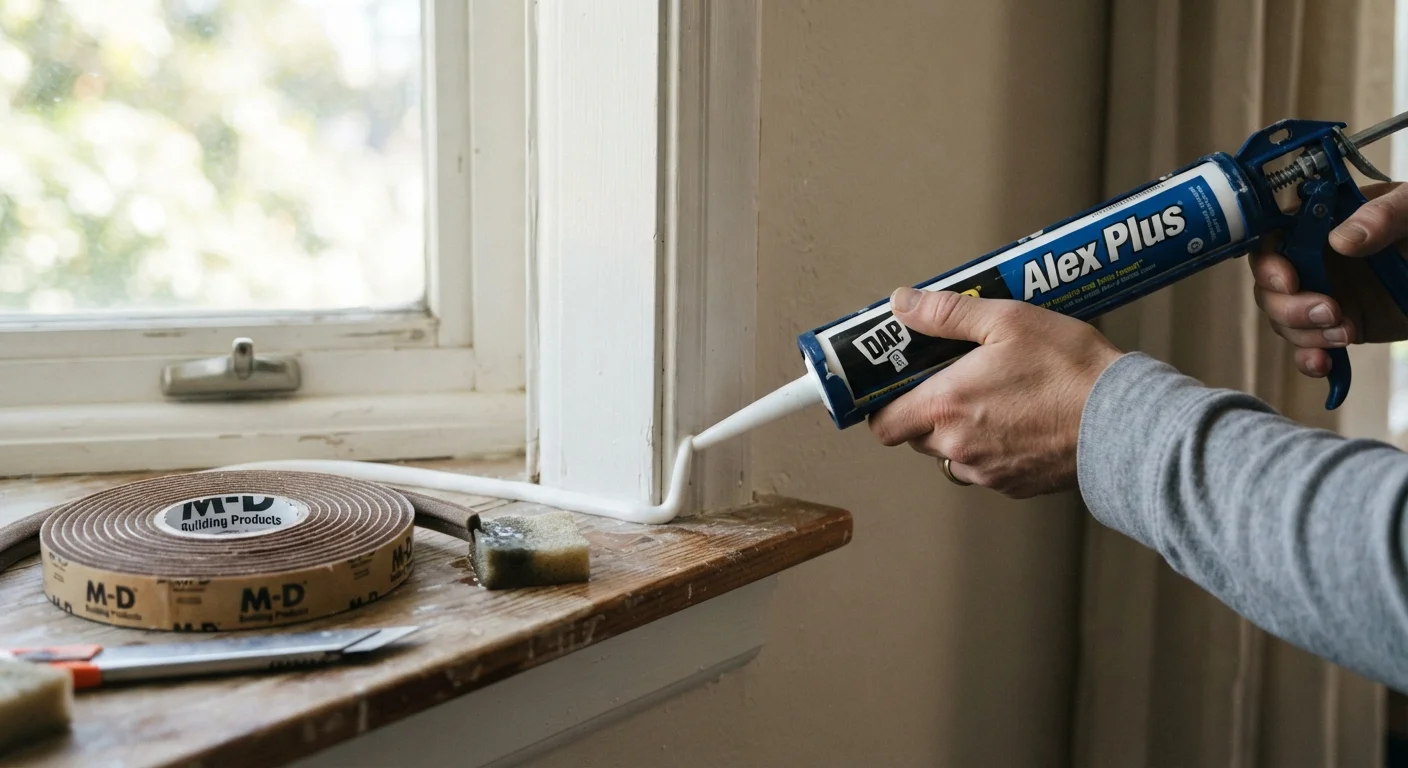
Caulk cures into a semi-rigid, adhesive bead. It bonds two surfaces together and holds that bond over years, provided those surfaces don't shift relative to each other. Weatherstripping, by contrast, compresses and rebounds. It relies on consistent contact pressure rather than adhesion, which is exactly what a moving door or window sash creates.
The core rule is simple: if the gap opens and closes, use weatherstripping; if it stays fixed, use caulk. Many draft and moisture problems can be traced back to one of these materials being used where the other belongs. For a deeper look at how air leaks around windows develop in the first place, see Draughty Windows: Causes, Fixes, and When to Worry.
| Criterion | Caulk | Weatherstripping |
|---|---|---|
| Best application | Fixed, non-moving joints and gaps | Moving gaps on doors and operable windows |
| How it works | Bonds and cures into a rigid seal | Compresses and rebounds under contact pressure |
| Durability | 5-20+ years on fixed joints | 1-5 years depending on type and use |
| Moisture resistance | High - especially silicone formulas | Varies by material; foam degrades faster |
| DIY difficulty | Low - requires a caulk gun and steady hand | Low - most types are peel-and-stick or screwed on |
| Fails if misapplied to | Moving joints - cracks and peels quickly | Fixed joints - won't bond; provides no seal |
Where Caulk Belongs - and Where It Doesn't
Caulk earns its place wherever two fixed surfaces meet with a narrow gap between them. Common examples include:
- The joint between a window or door frame and the surrounding wall (interior or exterior)
- Around pipe penetrations where plumbing or wiring passes through a wall
- Along baseboards and trim where they meet the wall or floor
- Sealing gaps in siding, around vents, or at masonry joints
The key is that none of these locations move. Once the caulk cures - typically 24 hours for silicone, less for latex - it forms a lasting seal that also keeps moisture from working its way in. This moisture-blocking function makes caulk the right exterior choice in areas exposed to rain. For more on how water finds its way into a home, understanding how damp enters homes is a useful companion read.
Where caulk fails: never apply it to the part of a door or window opening that actually moves. Caulking a door stop, for instance, will glue the door shut or crack away within weeks. Similarly, don't use caulk as a substitute for weatherstripping on operable window sashes.
Paintable vs. Silicone Caulk: A Quick Note
Latex or acrylic caulk can be painted over once cured, making it the right choice for interior trim and baseboards where appearance matters. Pure silicone caulk offers superior flexibility and water resistance but typically cannot be painted. For exterior joints exposed to weather, silicone or a siliconized acrylic formula generally holds up longer. Read the product label to confirm suitability for your specific surface and location.
Where Weatherstripping Belongs - and How to Choose a Type
Weatherstripping goes wherever a moving gap needs to close tightly. The most common locations are the four edges of an exterior door, the bottom of the door (where a door sweep or threshold seal is used), and the sash of any window that slides or cranks open.
Several types are widely available, each suited to specific gaps:
- Foam tape (open-cell or closed-cell): Easy to apply, inexpensive, and good for irregular or slightly wider gaps. Closed-cell foam resists moisture better. Works well on casement windows and less-trafficked doors.
- V-strip (tension seal): A folded plastic or metal strip that springs open to fill a gap. Durable and nearly invisible once installed; ideal for the sides of double-hung windows and door jambs.
- Door sweeps and thresholds: Attach to the bottom of the door to seal the gap at the floor. Available in brush, rubber, and vinyl styles.
- Bulb or tubular gasket: Compresses fully when the door or window closes; provides an excellent seal on doors with consistent gaps.
When replacing worn weatherstripping, match the new material's thickness to the actual gap size. Too thick and the door won't latch properly; too thin and the seal won't form.
~30%
Of home heating/cooling lost through air leaks
The U.S. Department of Energy estimates that drafts and air leaks account for roughly 25-30% of residential heating and cooling energy loss.
$0.05-$0.50
Cost per linear foot of weatherstripping
General market estimates place basic foam and V-strip weatherstripping among the most cost-effective weatherization measures available to homeowners.
Using Both Together - and Getting the Application Right
On most exterior doors and windows, caulk and weatherstripping work as a team rather than rivals. A well-sealed door might use weatherstripping along all four edges of the door stop (the moving seal) and caulk along the exterior door casing where it meets the siding (the fixed joint against water entry).
Surface prep determines how long either material lasts. For caulk, clean and dry the joint, remove any old crumbling caulk with a utility knife or caulk remover tool, and apply in a steady bead before smoothing with a dampened finger or tool. For weatherstripping, wipe the surface clean and let it dry before pressing adhesive-backed types into place. Low temperatures reduce adhesion - most adhesive weatherstripping bonds better above 50°F (10°C).
If you're also dealing with gaps between tiles or in wet areas, note that caulk and grout serve different functions in those contexts too - caulk vs. grout explains the distinction. For drafts specifically, checking both the fixed frame joints with fresh caulk and the operable edges with new weatherstripping together gives the most complete result.