
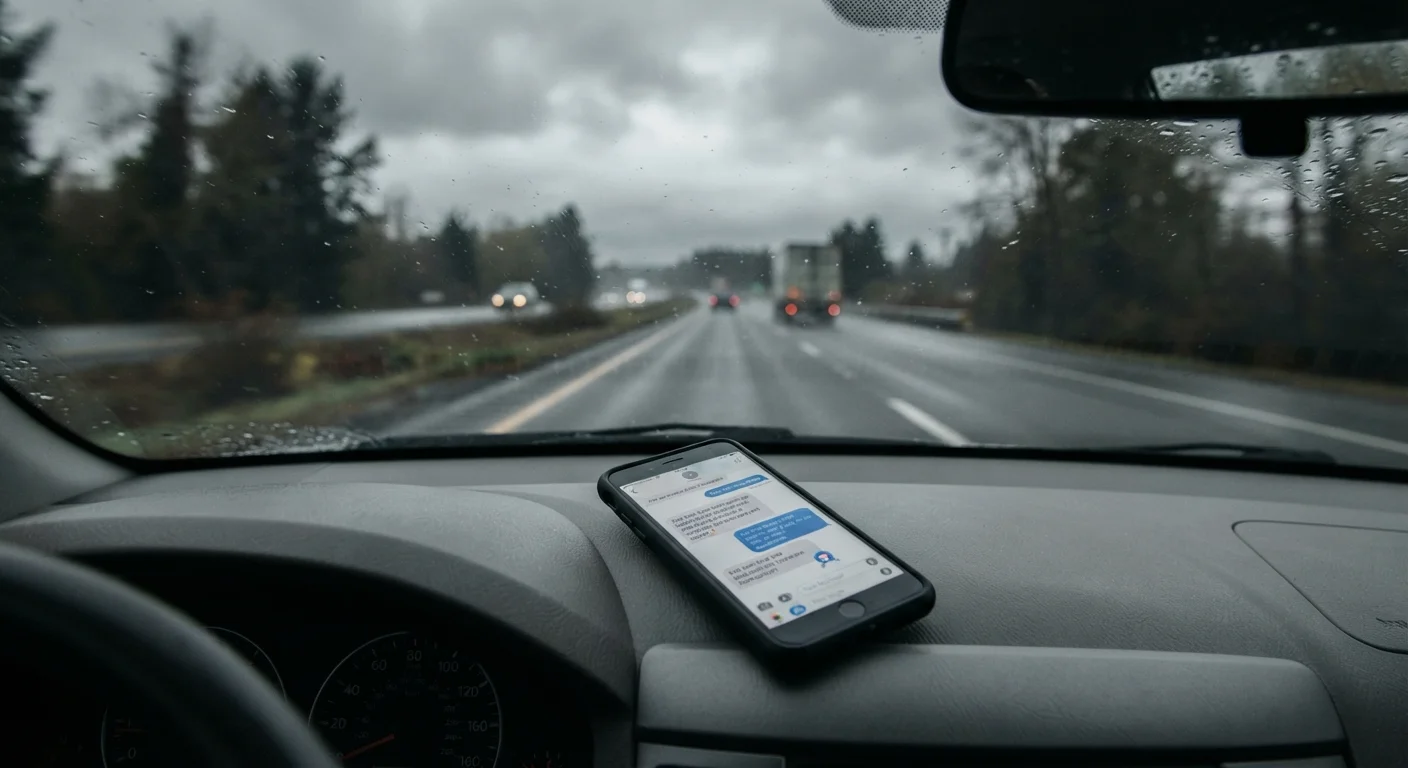
Why Phone-Related Driving Myths Are Dangerous
Misconceptions about mobile phone use behind the wheel are more than harmless folklore - they lead drivers to take real risks while believing they are acting safely. Research from the National Highway Traffic Safety Administration (NHTSA) consistently identifies distracted driving as a major contributor to road crashes and fatalities each year in the United States.
The myths below are widespread precisely because they feel intuitive. Understanding why they are wrong - and what the evidence actually shows - is the first step toward genuinely safer driving habits. For a broader look at how distraction affects your ability to drive, see our article on driver fatigue vs. distraction.
Myth
Using a hands-free device is just as safe as not using a phone at all while driving.
Fact
Hands-free calls still impose significant cognitive distraction, measurably slowing reaction times compared to driving without any phone use.
The hands-free label refers only to how the phone is held - not to how much mental attention the conversation demands. Research published by the AAA Foundation for Traffic Safety found that voice-based tasks, including hands-free calls, can impair driver response times and hazard detection for several seconds after the task ends. The problem is not your hands being off the wheel; it is your brain being pulled into a conversation while it should be focused entirely on the road.
Myth
A quick glance at my phone only takes a second - that's not enough time to cause an accident.
Fact
At 55 mph, one second of distraction means traveling roughly 80 feet without full situational awareness. A typical text glance averages around five seconds.
NHTSA data notes that sending or reading a text takes a driver's eyes off the road for an average of five seconds. At highway speeds, that translates to traveling the length of a full football field while attention is divided. Hazards - a braking car, a child entering the road, a curve - can emerge and demand response within that window. The brevity of the glance is not protective when road conditions change faster than you expect.
Myth
Experienced drivers can handle phone use better because they know how to drive on autopilot.
Fact
Experience does not protect drivers from cognitive distraction; it only automates some physical aspects of vehicle control.
Seasoned drivers do develop more automated responses for routine maneuvers - gear changes, lane-keeping on familiar roads - but the mental processing required to handle unexpected hazards remains fully dependent on available attention. Familiarity with a route does not make unpredictable events more predictable. Studies show experienced drivers are just as susceptible to the reaction-time impairment caused by phone conversations as newer drivers, even if they feel more confident.
Myth
Voice-to-text is safe because you don't have to look at your phone.
Fact
Composing messages by voice is rated among the most mentally demanding in-vehicle tasks, more so than simply talking on the phone.
The AAA Foundation's research on driver distraction rated voice-to-text as a Category 3 - high mental demand - task. Formulating a message, monitoring the transcription for errors, and correcting mistakes creates a sustained cognitive load that extends well beyond the seconds you are actively speaking. Drivers using voice-to-text showed reduced scanning behavior and slower hazard responses, even though their eyes were nominally free. The technology feels safer than it is because it removes the visible act of typing.
Myth
If I stop at a red light, it's fine to check my phone - the car isn't moving.
Fact
Phone use at a red light still delays your response when the light changes and carries legal penalties in most US states.
A stopped vehicle is not a parked vehicle. Traffic law in most US states treats phone use at a red light identically to use while moving. Beyond the legal risk, research shows that drivers who use their phones at stops take longer to respond when the signal changes, causing delayed reactions that affect traffic flow and can contribute to rear-end collisions when surrounding vehicles move unexpectedly. Mental disengagement does not end the moment your foot leaves the brake.
What the Research Actually Shows
The common thread across all of these myths is a misunderstanding of cognitive load - the mental effort your brain is spending at any given moment. Driving is not a passive activity. It requires continuous scanning, hazard prediction, speed management, and split-second decision-making.
~3,300
US distraction-related traffic deaths per year
NHTSA reports approximately this number of fatalities annually attributed to distracted driving in the United States.
5 sec
Average eyes-off-road time per text
NHTSA estimates the average text message takes a driver's eyes off the road for about five seconds.
4x
Crash risk increase with handheld phone use
Research cited by the Insurance Institute for Highway Safety suggests handheld phone use roughly quadruples crash risk.
When part of your brain is occupied with a phone conversation or composing a message, less processing capacity is available for the road. Studies from the University of Utah and the AAA Foundation for Traffic Safety have consistently shown that this mental cost occurs whether the phone is in your hand or not. Your eyes can be pointing at the windshield while your brain is effectively somewhere else - a phenomenon researchers call inattention blindness.
Understanding how risk perception develops over time as a driver can also help explain why so many people underestimate these dangers. Our piece on how risk perception develops explores this in more detail.
Legal Penalties Are Increasing Across the US
Most US states now ban handheld phone use while driving, and many have expanded restrictions to include hands-free use for certain driver categories such as new license holders. Fines, license points, and insurance rate consequences vary by state and are generally becoming more severe. Always verify current laws in your state through official DMV or state legislative sources, as regulations change frequently.
If you enjoy articles that separate fact from fiction, you may also find value in our look at car maintenance myths that affect everyday drivers.