
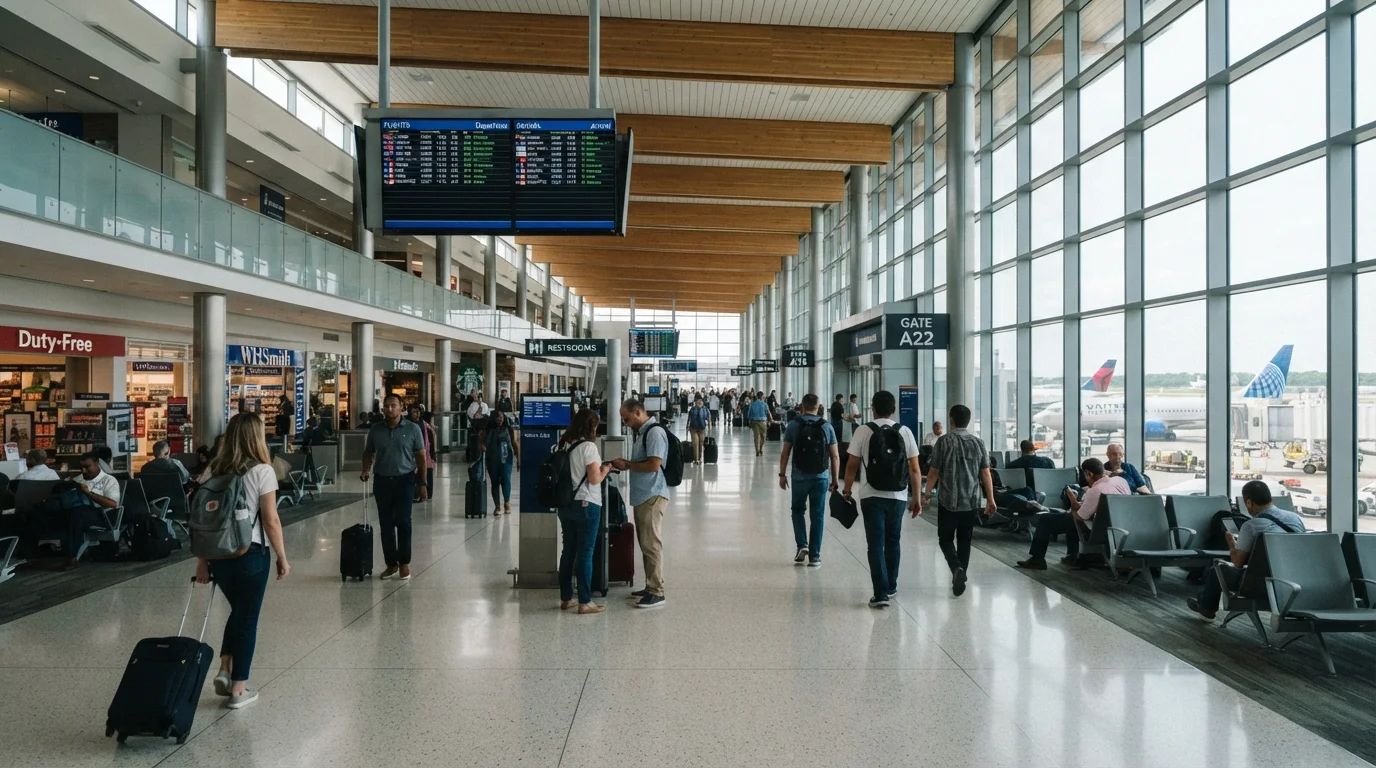
What Is a Layover?
A layover is a scheduled stop between two flight legs on a connecting itinerary. Rather than flying directly to your destination, your journey pauses at an intermediate airport — sometimes for 45 minutes, sometimes for 12 hours or more.
Layovers are common for two reasons: direct routes don't exist between every city pair, and airlines build hub-and-spoke networks that funnel passengers through major airports. Understanding what type of layover you have shapes everything from how quickly you need to move to whether you can explore the city outside.
Before diving in, it's worth reviewing the pre-flight checklist for your journey — knowing your terminal, gate, and connection requirements in advance saves significant stress on the day.
Short Layovers (Under 90 Minutes)
A short layover demands focus. Your sole priority is reaching the departure gate for your next flight. Here's what to keep in mind:
- Check your gate immediately upon landing. Departure gates can change. Look at airport monitors or your airline's app as soon as you're off the plane.
- Know your terminal. If your two flights depart from different terminals, ask a gate agent whether a shuttle or airside walkway connects them — this determines whether you need to exit and re-enter security.
- Don't check the time — check the boarding deadline. Most US domestic flights close the boarding door 10–15 minutes before departure. That's your real deadline, not the listed departure time.
If you must pass through security again, move efficiently. See our guide to common security slowdowns for reminders on what tends to cause delays in the checkpoint lane.
Move to the Front Before Landing
If you have a tight connection, politely let nearby passengers know before the plane lands — most travelers are happy to let you pass when they understand your situation. Flight attendants can also alert the gate crew so an agent meets you on the jet bridge with directions.
Standard Layovers (90 Minutes to 4 Hours)
This is the most comfortable zone for domestic connections and a reasonable buffer for straightforward international ones. You have time to use a restroom, grab food, and reach your gate without rushing — as long as you stay inside the secured area.
Use this window productively:
- Confirm your onward gate and walk there first so you know the route and distance.
- Eat or hydrate before settling at the gate; airport food lines can be slow.
- If you have lounge access, note the lounge's walking distance from your departure gate.
Screenshot your onward boarding pass and gate information before your first flight lands. Airplane mode and poor in-terminal Wi-Fi can make live app access unreliable at the worst moment.
Gate agents and airport staff regularly encounter passengers who can't pull up their boarding pass due to connectivity issues; having a local screenshot eliminates this friction entirely.
When booking a connecting itinerary involving customs, look for airports that have Global Entry or Mobile Passport Control kiosks — these can cut immigration wait times significantly for eligible travelers.
US Customs and Border Protection data consistently shows that trusted traveler program users clear the federal inspection process faster than standard queue passengers, which is a material advantage on tight international connections.
For international connections involving customs and immigration — such as a US layover on a flight arriving from abroad — 90 minutes is often insufficient. US Customs and Border Protection processing times vary widely. Build in at least two to three hours where possible.
A well-structured pre-trip checklist should include printing or downloading your onward boarding pass and confirming whether you'll need to re-check your luggage at the connecting airport.
Long Layovers (4–12 Hours): Can You Leave the Airport?
Yes — in many cases you can leave the airport during a long layover, but several conditions apply.
International Layovers Require Extra Planning
If your layover is in a foreign country — even for a few hours — you may need a transit visa depending on your nationality and passport. Failing to have the correct documentation can result in being denied boarding or detained at the airport. Always confirm entry requirements through official government sources before you travel.
For domestic US layovers, leaving is straightforward: exit through baggage claim, explore the city, then return with enough time to clear security again. Factor in at least 90 minutes to two hours before your next departure for re-entry, security screening, and walking to the gate.
For international layovers, the rules are more complex:
- You may need a transit visa for the layover country. Requirements depend on your nationality and destination — always verify with that country's official embassy or consulate website before traveling.
- You must re-clear customs and immigration when re-entering the airport's secure zone.
- Some airports have dedicated international transit zones that allow passengers to remain airside without entering the country.
Popular US hub airports — including those in Atlanta, Dallas, Chicago, and New York — are all reachable from their terminals within 30–60 minutes by transit or rideshare, making a brief city visit feasible if your layover is six hours or more.
45 min
Minimum connection time at many US hub airports
Airlines set Minimum Connection Times (MCTs) per airport; these are the floor, not a comfortable target, and do not account for long terminal walks or security re-entry.
2–3 hrs
Recommended buffer for international connections entering the US
US Customs and Border Protection processing times vary widely by volume and staffing; immigration queues alone can exceed 60 minutes at major gateway airports.
Overnight Layovers: What to Expect
An overnight layover — generally any connection spanning nighttime hours that requires you to wait until the next morning — presents its own logistics. Your main decisions are: sleep in the terminal, book an airport hotel, or find nearby accommodations.
Sleeping in the Terminal
Many major airports accommodate overnight travelers with seating areas, 24-hour food options, and sometimes dedicated rest zones. Bring a travel pillow, a layer for warmth (terminals can be cold), and a portable charger. Keep your documents and valuables secured to your body or in a locked bag.
Airport Hotels
Hotels connected to or immediately adjacent to an airport terminal are purpose-built for layover travelers. They typically offer shuttle service and are the most time-efficient choice. Book in advance during peak travel seasons, as these properties fill quickly.
Off-Airport Hotels
If no on-site hotel is available or affordable, nearby off-airport hotels often run shuttles. Allow at least two to three hours of buffer time the following morning for the return shuttle, check-in queues, and security.
Visa Requirements Change — Always Verify
Transit visa rules are set by individual countries and can change with little notice. Do not rely solely on third-party travel sites for this information. Check the official embassy or consulate website of your layover country well before your travel date, and consult your own government's travel advisory pages for up-to-date entry requirements.
Checked Baggage and Layover Rules
Whether your checked luggage travels through to your final destination depends on how your ticket is structured.
- Single itinerary (same booking): Bags are typically checked through to your final destination and transferred automatically at the connecting airport. You do not retrieve them during the layover — unless you are entering the US on an international flight, in which case US Customs requires you to collect and re-check your bags.
- Separate tickets: Each ticket is treated independently. You must collect your bags at the layover airport, exit the secured area, re-check them for the next flight, and re-clear security. Budget significant extra time for this process.
If you're uncertain how your itinerary is structured, check your booking confirmation: separate confirmation numbers on separate receipts usually mean separate tickets.
For a thorough walkthrough of what to expect when you reach the security checkpoint, see Airport Security Screening: A Plain-Language Walkthrough.
When Flights Are Delayed or Missed
If your inbound flight is delayed and causes you to miss a connection, your next step depends on who caused the disruption.
- Airline-caused delays: The airline is generally obligated to rebook you on the next available flight at no additional charge. Speak to a gate agent immediately, and simultaneously check the airline's app or website — rebooking tools often move faster than in-person queues.
- Weather or circumstances outside airline control: Airlines may rebook you but are typically not required to provide hotel vouchers or meal compensation for weather-related delays under US rules. Policies vary by carrier.
- Self-booked separate tickets: If you miss a second flight booked independently, the second carrier has no obligation to accommodate you. Travel insurance that includes trip interruption coverage can help in this scenario.
Intentionally Short Connections Carry Real Risk
Booking a very short layover to save money or time can backfire significantly. If you miss your connection because the itinerary was too tight, airlines are not always obligated to rebook you on separate-ticket arrangements. When in doubt, choose a longer connection window — especially at large, multi-terminal airports where gate changes are common.
Planning your itinerary around realistic connection times is the single most effective way to avoid missed connections. The Trip Planning Basics hub covers itinerary structuring and other foundational steps for any trip.