
What Drives Animals to Migrate
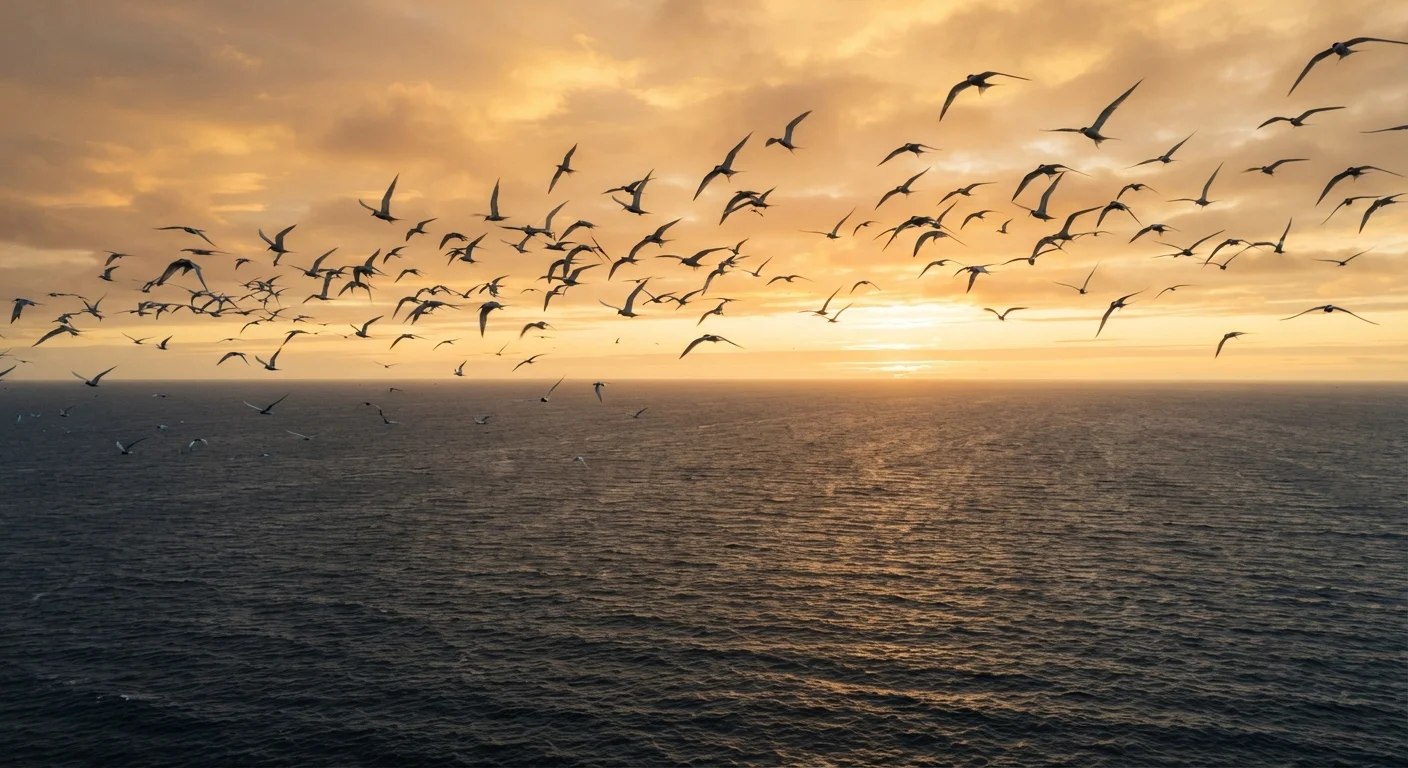
At its core, migration is a survival strategy. When resources like food, water, or suitable breeding habitat become scarce in one location, moving is often the most effective biological response. Rather than adapting physically to harsh seasonal conditions, migratory species evolved to simply leave and return when conditions improve.
The trigger for migration is usually environmental. Shortening daylight hours in autumn signal to many birds that it's time to head south. For wildebeest on the African savanna, seasonal rains and grass growth dictate the direction of movement. These cues activate hormonal changes that prepare the animal's body for the physical demands of a long journey — building fat reserves, adjusting sleep patterns, and heightening directional awareness.
Migration isn't exclusive to birds. Whales, sea turtles, fish, insects, and even some crustaceans undertake regular seasonal journeys. What they share is a biological imperative: move or risk not surviving the season.
The Navigation Toolkit: How Animals Find Their Way
The navigation abilities of migratory animals are among the most remarkable in all of biology. Rather than relying on a single system, most species use several overlapping tools that reinforce one another.
Magnetic Sensing
Many animals — including birds, sea turtles, and salmon — can detect Earth's magnetic field. Specialized cells containing magnetite (a magnetic mineral) or magnetically sensitive chemical reactions in the eye may allow these animals to perceive magnetic north much like a compass needle does. This gives them both directional heading and, in some cases, a sense of their position on the globe.
Celestial Cues
Migrating birds use the sun during the day and star patterns at night. Nocturnally migrating songbirds orient by the rotation of the night sky around the North Star, a skill they learn during their first weeks of life. Daytime migrants use the sun as a compass, adjusting for its position as hours pass — a feat that requires an accurate internal clock.
Smell and Sound
Salmon famously use their sense of smell to locate the precise river tributary where they hatched. Some seabirds may use infrasound — low-frequency sound waves produced by ocean waves and wind — to map coastlines and landmarks they cannot see.
“The navigational abilities of migratory animals represent one of the most compelling puzzles in all of sensory biology. We are only beginning to understand how they integrate multiple streams of information into seamless wayfinding.”
— Henrik Mouritsen, Professor of Neurosensory Sciences, University of Oldenburg, and leading researcher on avian magnetoreception
This layered approach means that if one system is disrupted — by cloud cover, for example — others compensate. The result is a navigational system more reliable than most human technology of just a few decades ago. For more on astonishing biological systems that work without conscious effort, see how the human body operates behind the scenes.
Remarkable Migrations Worth Knowing
~44,000 mi
Arctic tern's annual round-trip migration distance
Research tracking Arctic terns with geolocators, published in the journal PNAS, confirmed this as the longest known migration of any animal.
7,500 mi
Non-stop flight distance of bar-tailed godwit
Satellite tracking studies have documented individual bar-tailed godwits flying from Alaska to New Zealand without a single rest stop.
Over 1 billion
Birds that migrate through North America each fall
Radar-based studies by researchers at Cornell Lab of Ornithology estimate more than a billion individual bird movements occur across North America during autumn migration.
Some migrations stand out for their sheer scale or ingenuity. The Arctic tern travels roughly 44,000 miles each year — pole to pole and back — experiencing more daylight hours than any other creature on Earth. The monarch butterfly navigates from Canada to a specific pine forest in central Mexico using a time-compensated sun compass, despite no individual butterfly making the round trip twice. The humpback whale travels up to 10,000 miles between tropical breeding grounds and polar feeding areas, likely guided by a combination of magnetic sensing and ocean temperature gradients.
Each of these journeys illustrates how diverse and finely tuned migration strategies can be across species. Animals that seem otherwise unremarkable — small songbirds, for instance — may be crossing entire oceans in a single non-stop flight. These creatures belong to a broader catalog of biological wonders; animals with genuinely surprising traits push the limits of what biology seems capable of.
Threats to Migration in a Changing World
Migration evolved over millions of years in a relatively stable environment. Today, migratory animals face a suite of new pressures that their navigation systems weren't designed to handle.
How You Can Help Migratory Species
Turning off unnecessary outdoor lights during peak migration seasons (spring and fall) can meaningfully reduce bird disorientation near buildings. Planting native vegetation provides critical food and shelter at stopover sites. Even a small urban garden with native flowering plants supports insects like monarch butterflies during their journey.
Habitat loss along migratory routes eliminates the stopover sites animals depend on for rest and refueling. A bird flying thousands of miles needs safe places to land, feed, and sleep along the way — when those spots disappear, mortality rises sharply. Light pollution disrupts night navigation for birds that use star patterns, causing disorientation near cities. Climate change is altering the timing of seasons faster than many species can adapt, creating dangerous mismatches between arrival times and food availability.
Understanding these pressures is the first step toward addressing them. Conserving migratory corridors, reducing light pollution, and monitoring population trends are all areas of active scientific and policy attention. The same curiosity that drives us to ask how a monarch butterfly finds Mexico is what motivates the science working to ensure it still can.