
What a Budget Actually Is
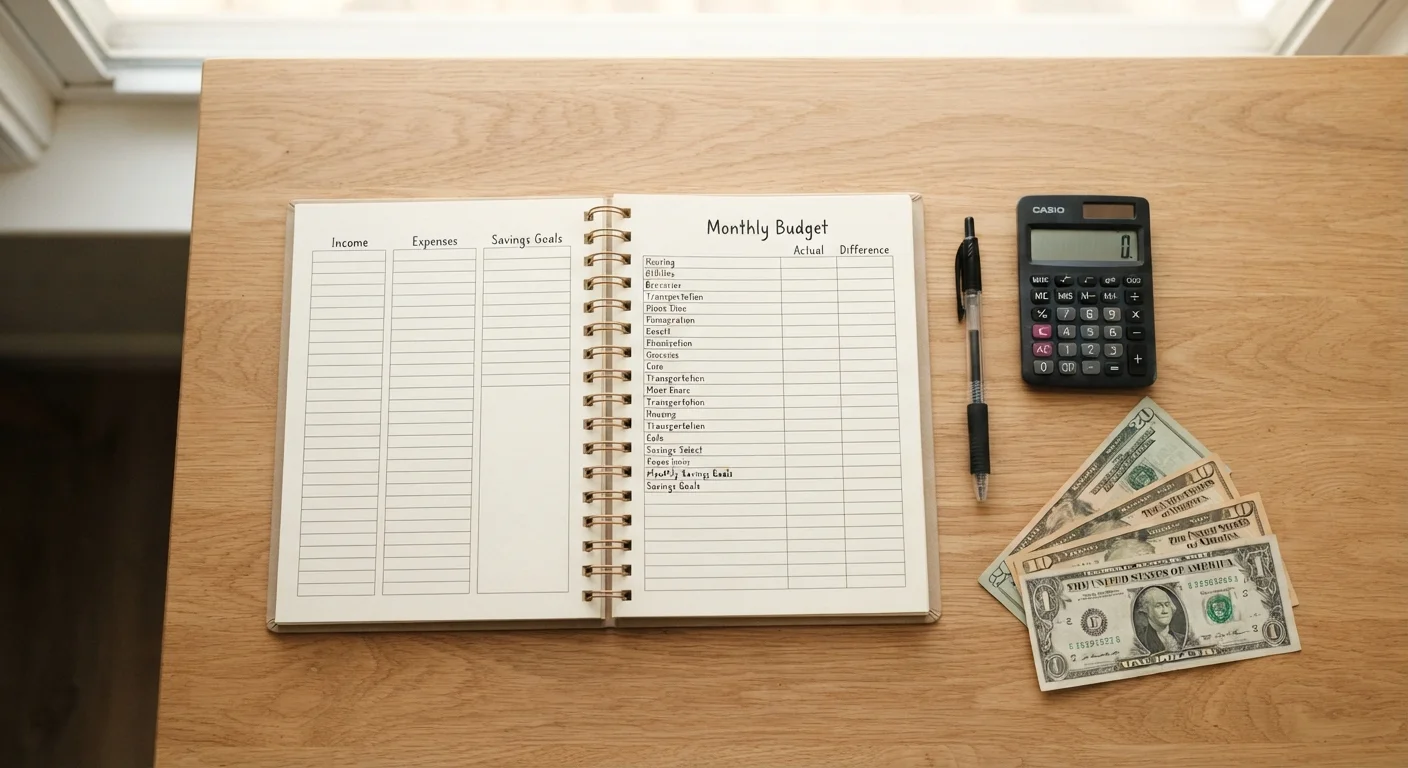
A budget is a written plan that tells your money where to go before the month begins, rather than wondering where it went afterward. That's it. It doesn't have to be complicated, color-coded, or perfectly precise - it just needs to exist.
For first-timers, the most useful mental shift is to think of a budget not as a restriction but as a decision. You're deciding in advance how to divide your income across your real priorities: rent, food, savings, and everything else. Without that plan, spending decisions happen by default - and defaults rarely match your actual goals.
The complete reference guide to personal budgeting covers every stage of the process in depth - but this walkthrough focuses on getting your very first budget built quickly and simply.
Step 1: Add Up Your Monthly Income
Your budget starts with what comes in, not what goes out. Use your take-home pay - the amount deposited into your account after taxes and any payroll deductions. This is the real number you have to work with.
- One income source: Check your most recent pay stub or bank deposit for your net monthly amount.
- Multiple sources: Add each one - a part-time job, freelance work, or regular side income all count.
- Variable income: Use your lowest month in the last three to six months as a conservative baseline.
Write this single number at the top of your budget. Everything else flows from it.
Step 2: List Every Expense
Pull up two to three months of bank and credit card statements. Your goal is a complete picture of where money actually goes - not where you think it goes.
Organize expenses into two groups:
- Fixed expenses
- Same amount every month: rent or mortgage, loan payments, insurance premiums, subscriptions.
- Variable expenses
- Change month to month: groceries, gas, dining out, clothing, entertainment.
Add a third category: irregular expenses - annual fees, car registration, holiday gifts. Divide these by 12 and set that monthly amount aside so they never catch you off guard.
Review Three Months of Statements
Looking at a single month of spending can be misleading - you might catch an unusually lean or heavy month. Reviewing two to three months gives you a more realistic average to build from. Most banks let you download transactions as a spreadsheet, which makes totaling categories much faster.
Don't filter or judge anything at this stage. An honest expense list is the foundation of a budget that actually works.
Step 3: Assign Every Dollar a Job
Subtract your total expenses from your monthly income. The goal is to reach zero - meaning every dollar is intentionally directed somewhere, whether that's spending, saving, or paying down debt. This is often called zero-based budgeting.
If income minus expenses leaves a surplus, assign that remainder to a specific goal: an emergency fund, a savings target, or extra debt payments. If you're in the negative - spending more than you earn - you need to reduce variable expenses or find ways to increase income. See how zero-based budgeting compares to percentage-based approaches if you'd like to explore other frameworks.
Common budget categories to consider:
- Housing (rent/mortgage, utilities)
- Transportation (car payment, gas, transit)
- Food (groceries and dining separately)
- Debt payments
- Savings and emergency fund
- Personal spending (clothing, entertainment, subscriptions)
For practical daily habits that stretch your budget further, the Everyday Money Tips hub is a useful companion resource.
Step 4: Track, Review, and Adjust
Building the budget is step one. Using it is step two. At the end of each week, compare what you actually spent to what you planned. At month's end, do a full review:
- Did any category go over? Why?
- Were there expenses you forgot to include?
- Did your income match your estimate?
Adjust your next month's plan based on what you learned. Budgets aren't meant to be perfect on the first try - they get more accurate over time as you learn your real spending patterns.
Tracking Frequency Is Personal
Tracking doesn't have to mean logging every coffee purchase in real time. Many people find it sufficient to check totals in each spending category once a week using their bank's transaction history. The right frequency is whatever keeps you informed without becoming a chore.
Tracking doesn't have to mean logging every coffee. Many people find it sufficient to check totals in each category once a week using their bank's transaction history. Consistency matters more than granularity.
Common First-Budget Mistakes to Avoid
Most first budgets don't fail because of bad intentions - they fail because of predictable structural problems. The most common ones:
- Forgetting irregular expenses - Annual costs blindside budgets built only around monthly bills.
- Setting unrealistic spending limits - Cutting groceries to an impossibly low number creates frustration, not savings.
- Leaving out fun money - A budget with zero flexibility gets abandoned quickly. Build in a small personal spending category intentionally.
- Not reviewing it - A budget you create once and never look at again has little effect.
For a deeper look at why budgets often stall in the first 30 days, see why budgets fail in the first month - understanding those patterns ahead of time gives you a meaningful head start.
This article is for general informational and educational purposes only. It does not constitute personalized financial advice. For guidance tailored to your individual circumstances, consider speaking with a qualified financial professional.