
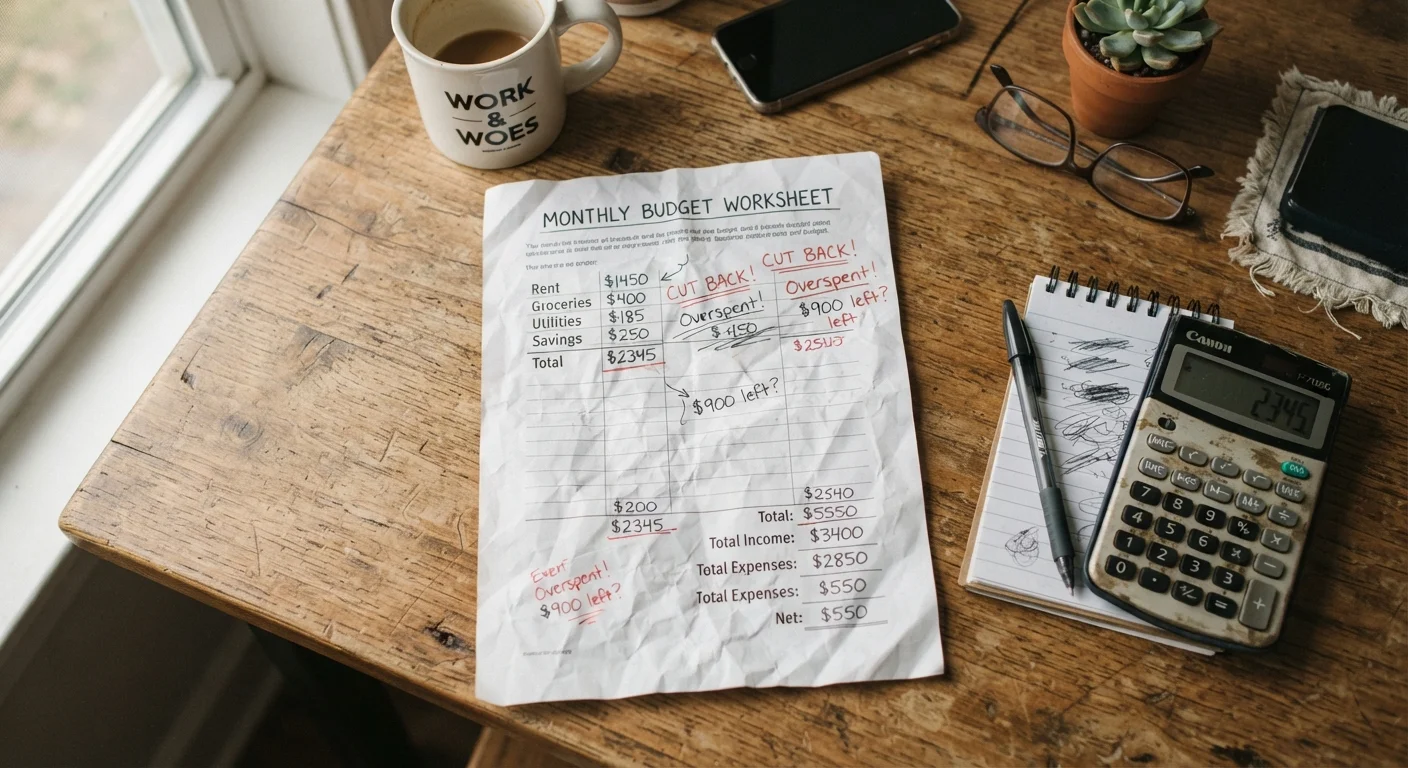
Why the First Month Is the Hardest
Starting a budget for the first time is a little like learning to drive - there's more going on than it looks, and small errors in the beginning can feel like total failures. The good news is that the mistakes most people make in month one follow very predictable patterns. Understanding them in advance dramatically improves your odds of sticking with a plan.
If you haven't built a budget before, the step-by-step walkthrough for first-time budgeters is a practical place to start. But even with a solid framework, certain design errors make budgets unworkable before the month ends.
Don't Skip the Expense Audit Step
Before setting any spending limits, review at least two to three months of real bank and credit card statements. Skipping this step means your budget is built on guesswork rather than your actual financial behavior. Numbers you invent from memory are almost always lower than reality, which sets you up to 'fail' before you even start.
The Most Common Budgeting Mistakes - and How to Fix Them
The errors below aren't signs of poor financial character. They're structural problems with how most budgets get built the first time. Each one has a concrete solution.
Estimating expenses from memory instead of reviewing actual spending history.
Why it happens: It feels faster and easier to guess, and most people assume they already know where their money goes. Memory, however, consistently underestimates everyday spending on food, transportation, and small purchases.
Leaving out irregular or annual expenses such as car registration, insurance premiums, or holiday gifts.
Why it happens: These costs don't appear every month, so they're easy to overlook when you're focused on recurring bills. When they hit, they feel like emergencies - and can blow a tight budget entirely.
Setting spending limits so tight that one unplanned cost causes the whole budget to collapse.
Why it happens: First-time budgeters often set ambitious targets - cutting dining out to zero, eliminating all discretionary spending - believing willpower will fill the gap. Rigid budgets leave no room for real life.
Tracking spending only at the end of the month rather than throughout the month.
Why it happens: The intention is to review, but without mid-month check-ins, overspending in one category goes unnoticed until it's too late to course-correct. The budget becomes a post-mortem, not a tool.
Treating the first draft of a budget as the final, permanent version.
Why it happens: People assume that a well-made budget should work exactly as written. When reality doesn't match, they feel they've failed the budget rather than recognizing the budget needs refinement.
Your Budget Is a Plan, Not a Punishment
A budget's job is to reflect reality, not impose an ideal version of your spending habits overnight. If your first budget feels impossible to follow, that is a signal to revise the plan - not to abandon it. Unrealistic budgets don't build discipline; they build discouragement. Adjust early and often, especially in the first few months.
It's also worth examining any assumptions you have about budgeting itself. Many people delay starting because of misconceptions about who budgets are for or how complicated they need to be. The common budgeting myths that hold people back are worth reading alongside this piece.
What a Successful First Month Actually Looks Like
A successful first budget month doesn't mean you stayed perfectly within every limit. It means you tracked your spending consistently, noticed where reality differed from your plan, and used that information to revise. That's it.
~65%
Americans without a formal monthly budget
Surveys by the National Foundation for Credit Counseling have consistently found that a majority of U.S. adults do not follow a detailed household budget.
Month 1
When most new budgets are abandoned
Financial planning practitioners widely observe that the first 30 days are the highest-risk period for budget abandonment, often before habits form.
The goal for month one is data collection as much as behavior change. You're learning how you actually spend - which is information you can only get by paying attention in real time. For ongoing guidance on turning that data into better decisions, explore practical everyday money habits that work alongside any budget system.
This article is for general informational and educational purposes only and does not constitute personalized financial advice. Consider consulting a qualified financial professional for guidance specific to your situation.