
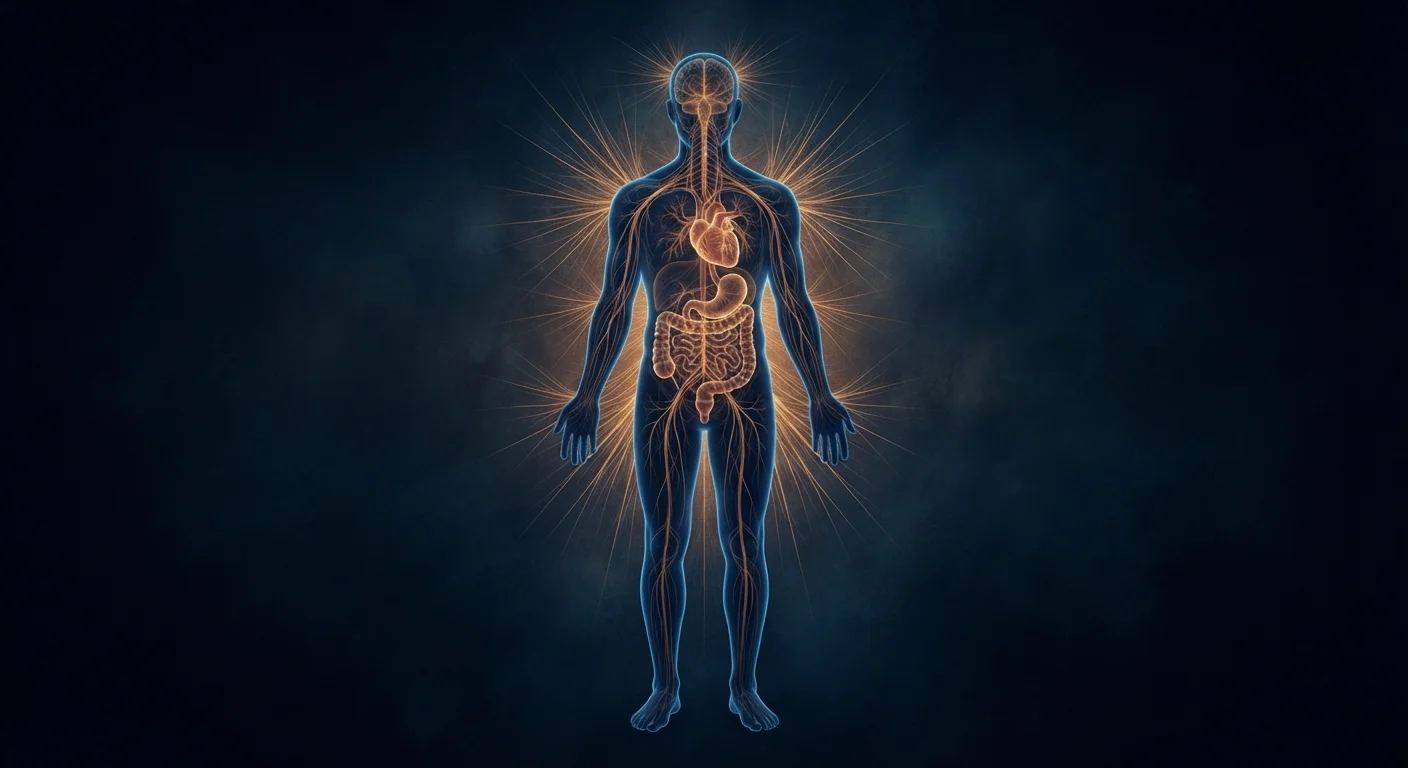
The Body's Stress Response: Built for Survival, Not Marathon Running
When the brain perceives a threat, it triggers the hypothalamic-pituitary-adrenal (HPA) axis and the sympathetic nervous system in tandem. The result is a rapid release of adrenaline and cortisol - hormones that sharpen focus, increase heart rate, redirect blood to muscles, and temporarily suppress non-essential functions like digestion and immune activity. This is the famous fight-or-flight response, and in short bursts, it is precisely what the body needs.
The problem arises when the trigger doesn't go away. Modern stressors - financial pressure, workplace demands, relationship strain - don't resolve the way a predator encounter does. The alarm system stays on. And a body that was designed to sprint, not to jog indefinitely, begins to show the strain.
Understanding this distinction is central to understanding why chronic stress carries different health implications than ordinary, momentary tension. For more on how duration shapes the meaning of symptoms, see our explainer on acute vs. chronic symptoms.
Cardiovascular and Immune System Effects
Among the most well-documented physiological consequences of prolonged stress is its effect on the cardiovascular system. Sustained elevation of cortisol and adrenaline keeps heart rate and blood pressure higher than baseline for extended periods. Over time, this places added mechanical load on arterial walls and the heart muscle itself.
The immune system tells a similarly complicated story. Short-term stress can briefly enhance certain immune functions; chronic stress does the opposite. Persistently elevated glucocorticoids - the class of hormones that includes cortisol - can suppress the production and activity of white blood cells, reduce the body's inflammatory response in some areas, and paradoxically drive systemic low-grade inflammation in others. This combination can leave the body less effective at fighting infection while simultaneously generating internal inflammatory signals that affect tissue health over time.
77%
Adults who report physical stress symptoms
According to the American Psychological Association's Stress in America survey, a substantial majority of U.S. adults report experiencing physical symptoms they attribute to stress.
2-3×
Increased risk of cardiovascular events with high chronic stress
Multiple epidemiological studies have found that individuals with persistently high occupational or psychosocial stress show elevated cardiovascular risk compared to low-stress counterparts.
~60%
Doctor visits with a stress-related component
Estimates from health research literature suggest that a significant proportion of primary care visits involve conditions where stress is a contributing or exacerbating factor.
It's worth noting that stress rarely acts as a sole cause of illness - it interacts with genetics, lifestyle, sleep, and other factors. If you notice persistent physical symptoms, the guidance of a qualified healthcare provider is essential. You may also find it useful to review our overview of body signals that deserve closer attention.
The Gut, the Brain, and the Stress Connection
Digestive discomfort is one of the most common physical complaints associated with chronic stress - and it has a clear physiological basis. The gut contains its own extensive nervous system, sometimes called the enteric nervous system, which communicates bidirectionally with the brain via the vagus nerve. This relationship means that psychological stress is felt, quite literally, in the gastrointestinal tract.
Under chronic stress, the gut's motility (how quickly food moves through it) can be disrupted, stomach acid secretion may be affected, and the balance of the gut microbiome may shift. This can manifest as nausea, bloating, constipation, diarrhea, or exacerbation of pre-existing digestive conditions. For a broader look at this two-way communication system, our article on the gut-brain connection provides a plain-language overview.
“The body keeps the score. Stress is not merely a psychological phenomenon - it is written into the physiology of every organ system over time.”
— Bessel van der Kolk, Psychiatrist and researcher, author of 'The Body Keeps the Score'
Interestingly, the relationship runs in both directions - gut health appears to influence stress reactivity as much as stress influences gut health, making this one of the more active areas of ongoing physiological research.
Musculoskeletal Tension, Sleep, and Compounding Effects
Chronic stress tends to manifest in the muscles as persistent tension - particularly in the neck, shoulders, and jaw. This isn't metaphorical; the stress response primes muscles for rapid action, and when that action never comes, the tension lingers. Over extended periods, this can contribute to tension-type headaches, disrupted posture, and musculoskeletal discomfort.
Sleep is another critical variable. Elevated cortisol, which should naturally fall in the evening to allow the body to wind down, can remain elevated under chronic stress conditions - delaying the onset of sleep and reducing sleep quality. Poor sleep, in turn, reduces the body's ability to regulate cortisol the following day, creating a reinforcing cycle.
Talking to a Doctor About Stress Symptoms
If you're experiencing persistent physical symptoms - fatigue, recurring headaches, digestive changes, or disrupted sleep - it's worth raising them with a healthcare provider, even if you suspect stress is the cause. A professional evaluation can rule out other contributing conditions and help you explore appropriate, evidence-based approaches to managing chronic stress.
Compounding effects are a key reason clinicians take chronic stress seriously as a health factor. Each system that stress disrupts - cardiovascular, immune, digestive, musculoskeletal - also interacts with the others. It's also worth noting that a sedentary lifestyle can amplify some of these effects; our article on what prolonged sitting does to the body explores how movement fits into the picture.
This article is for general informational purposes only and is not a substitute for professional medical advice, diagnosis, or treatment. Always consult a qualified healthcare provider with any questions you may have about your health or a medical condition.