
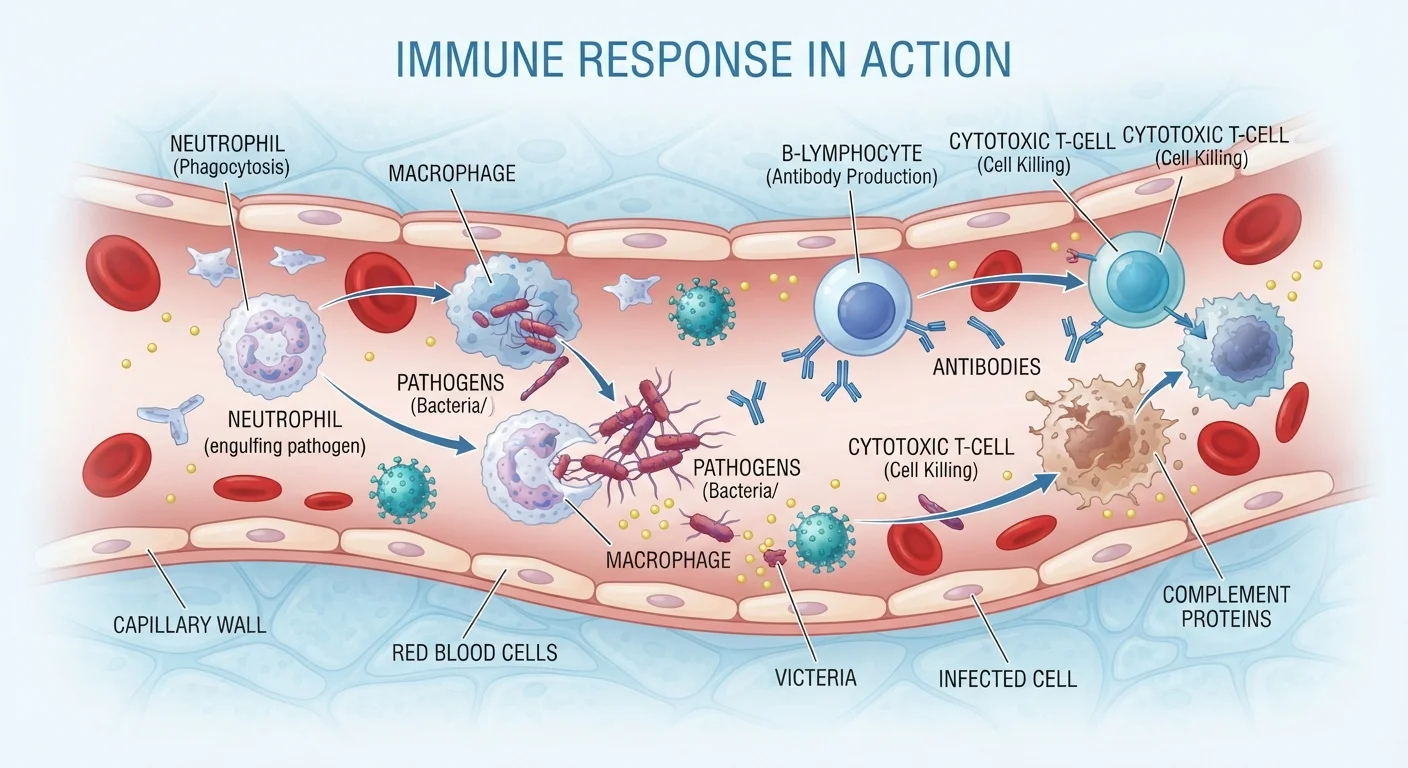
The First Line of Defense: Immediate, Non-Specific Protection
Before your immune system ever encounters a pathogen in the bloodstream, it has to get past physical barriers. Skin, mucus membranes, and tiny hair-like structures called cilia in your airways work as the immune system's first gatekeepers - trapping, blocking, and expelling foreign particles before they can cause damage.
When a pathogen does break through, the innate immune system responds within minutes. Specialized cells called macrophages and neutrophils rush to the site of invasion and begin engulfing and destroying pathogens through a process called phagocytosis. At the same time, signaling proteins called cytokines are released - these act like distress flares, alerting the rest of the immune system and triggering the hallmarks of early illness: inflammation, warmth at the site of infection, and general malaise.
This innate response is broad and fast. It doesn't need to recognize a specific pathogen - it responds to general warning signs that something foreign has entered the body. As part of the remarkable background activity your body maintains without conscious effort, this rapid mobilization happens entirely below your awareness.
Innate Immunity Acts in Minutes, Not Days
A common misconception is that the immune system takes days to respond. In fact, the innate immune system begins reacting within minutes of detecting a pathogen. The slower timeline people associate with illness relates to the adaptive response - which builds targeted defenses over several days. The early symptoms you feel on day one are already evidence of active immune work.
Fever, Fatigue, and Inflammation: Symptoms as Strategy
Many people assume that feeling miserable during an illness means the pathogen is winning. In reality, most of those symptoms are the immune system executing a deliberate strategy.
Fever is a regulated rise in core body temperature triggered by cytokines acting on the brain's hypothalamus. Higher temperatures slow the replication of many viruses and bacteria while accelerating the activity of immune cells. It is an evolved response, not a malfunction.
Fatigue is similarly intentional. Producing billions of immune cells, synthesizing antibodies, and running an elevated metabolism takes enormous energy. The body reduces voluntary activity - making you feel tired - to redirect those resources toward recovery.
Inflammation is the immune system's way of flooding a site with resources. Blood vessels dilate and become more permeable, allowing immune cells and proteins to move rapidly into affected tissue. The redness, swelling, and heat you see at a wound or infection site are all signs that this delivery system is operating. For a broader view of how symptoms across body systems reflect underlying processes, see this guide to common symptoms across body systems.
~100 billion
New immune cells produced daily
The human body produces roughly 100 billion new blood cells - including white blood cells - every day, with production ramping up significantly during active infections.
5-10 days
Typical adaptive immune response window
Immunological research consistently shows the adaptive immune response reaches full mobilization roughly five to ten days after first encountering a new pathogen.
1°F-4°F
Typical fever temperature rise
Most medically recognized fevers involve a core body temperature rise of one to four degrees Fahrenheit above normal baseline, which is sufficient to impair many pathogens' ability to replicate.
The Adaptive Response: Targeted Precision and Immune Memory
While the innate system buys time, a slower but far more powerful response is building in parallel. The adaptive immune system identifies the specific invader and builds weapons uniquely designed to neutralize it.
This process involves two key cell types. B cells produce antibodies - proteins that bind to specific targets on a pathogen's surface, marking it for destruction or blocking its ability to infect cells. T cells serve multiple roles: some help coordinate the broader immune response, while others directly kill infected cells before they can spread the pathogen further.
The most remarkable feature of adaptive immunity is memory. After the infection clears, a subset of these cells - called memory B and T cells - remain in the body for years or even a lifetime. If the same pathogen appears again, the immune system can recognize and neutralize it so quickly that you may never notice the exposure. This is the biological principle behind vaccination: introducing a harmless version of a pathogen to generate protective memory without causing illness.
Support Your Immune System During Recovery
Adequate sleep, hydration, and nutrition are among the best-supported ways to help your immune system function effectively. During illness, the body's need for fluids and rest increases significantly. Reducing unnecessary physical stress while sick allows the body to direct more resources toward immune activity and recovery.
When Recovery Happens - and What to Watch For
For most common infections, the full adaptive response takes five to ten days to peak. This aligns with why many respiratory illnesses follow a predictable arc: worsening symptoms in the first few days, followed by gradual improvement as adaptive immunity gains the upper hand.
As the pathogen is cleared, anti-inflammatory signals scale back the immune response, inflammation subsides, and the body gradually returns to baseline. Appetite returns, energy rebuilds, and fever resolves.
It is important to remember that this article describes general immune function in healthy adults - individual responses vary considerably based on age, underlying health conditions, and the nature of the pathogen involved. If symptoms are severe, prolonged, or unexpected, consulting a qualified healthcare professional is always the appropriate step. Self-diagnosis or self-treatment based on general health information is not a substitute for personalized medical evaluation.
This article is for general informational and educational purposes only and does not constitute medical advice. Always consult a qualified healthcare professional for guidance about your personal health, symptoms, or medical decisions.