
The Science Behind the Gap
When a car ahead of you brakes suddenly, two things must happen before your vehicle slows: your brain has to perceive the danger and send a signal to your foot, and then your brakes need time to physically stop the car. The first part - perception and reaction - takes most adults roughly 1.5 seconds under normal conditions. Add braking time on top of that, and you understand why a gap that looks large can close alarmingly fast.
The two-second rule accounts for this biological reality. By keeping at least two seconds of travel time between you and the car ahead, you build in a buffer that covers both your reaction delay and the early phase of braking. It's not a perfect formula for every situation, but it is a reliable minimum under clear, dry conditions at typical road speeds.
What makes the rule elegant is that it scales automatically with speed. Two seconds at 30 mph is about 88 feet; at 60 mph it doubles to roughly 176 feet. You don't need to estimate distances - you just count time.
~1.5 sec
Average driver perception-reaction time
Commonly cited in traffic safety research as the baseline time from hazard recognition to brake application.
29%
Of all crashes are rear-end collisions
According to NHTSA data, rear-end crashes consistently represent a large share of police-reported traffic crashes in the US.
176 ft
Two-second gap at 60 mph
At highway speeds, two seconds of following distance translates to well over half a football field of separation.
How to Apply It in Real Traffic
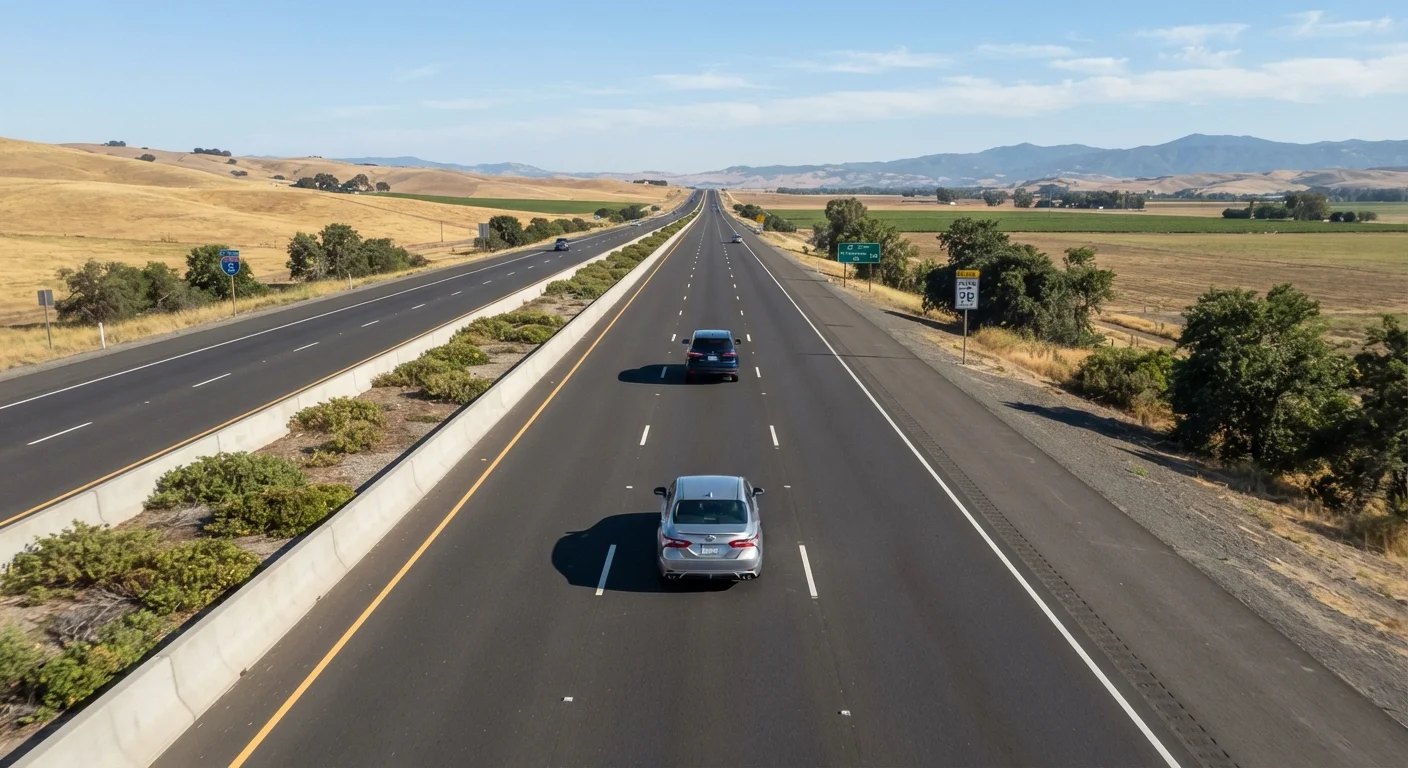
Applying the rule is straightforward. Find a stationary reference point ahead - a road sign, a bridge pillar, or a lane marking. The moment the vehicle in front of you passes that point, start counting: one one-thousand, two one-thousand. If your front bumper reaches the same reference point before you finish counting, you're too close.
In heavy city traffic, the gap will attract other drivers to merge in front of you - and that's fine. Rather than tailgating to prevent it, simply adjust your count from the new vehicle. The goal is your own reaction cushion, not preventing lane changes.
Count Consistently Every Time
Make checking your following distance a habit at the start of every drive, not just when traffic is heavy. Building the count into your regular driving routine means you'll apply it automatically in high-pressure moments when you have less mental bandwidth to think about it.
It also helps to think ahead rather than just at the car directly in front of you. Scanning further down the road lets you begin braking earlier and more gently, which is easier on your vehicle and gives drivers behind you more warning time as well.
When Two Seconds Isn't Enough
The two-second rule is a minimum for ideal conditions. Several factors demand a longer buffer:
- Wet or icy roads: Stopping distances can double or triple on rain-slicked pavement and increase dramatically on ice. A three- to four-second gap is commonly recommended in wet conditions.
- Reduced visibility: Fog, heavy rain, or darkness shrink the time you have to identify a hazard. Night driving introduces fatigue and glare that further slow your perception response, making extra following distance essential.
- Towing or hauling: A loaded trailer dramatically extends braking distance. Even a moderate-speed stop can require significantly more road than an unloaded passenger car.
- Distraction or fatigue: If your attention is split, your reaction time is longer - and the two-second buffer may not compensate. The safest answer is to eliminate distractions, but a larger gap adds some margin.
It's also worth remembering that posted speed limits are set for baseline conditions. As discussed in Speed Limits Are Not Targets, driving at the limit doesn't guarantee safety when conditions deteriorate - and the same logic applies to following distance.
Why Drivers Still Tailgate
If the rule is so simple, why do so many drivers ignore it? Research on driver behavior points to a few consistent patterns. Drivers often underestimate how fast they're traveling and overestimate their own reaction speed. Close following can also feel normal - especially on congested roads where everyone is bunched together - creating a false sense that it must be acceptable.
There's also a psychological dynamic at play: some drivers follow closely to signal frustration or pressure a slower vehicle to move over. This is not only ineffective but genuinely dangerous. The driver in front cannot stop faster because someone is tailgating; they can only become anxious and less predictable.
Tailgating Increases Risk for Everyone
When a driver follows too closely, they also reduce reaction time for the vehicle behind them - creating a chain effect through traffic. A sudden stop by the lead vehicle can trigger a multi-car pileup if everyone is following too closely. Maintaining your own safe gap contributes to the safety of the entire traffic flow around you.
Understanding the two-second rule is ultimately about recognizing what you can and cannot control. You cannot predict when the driver ahead will brake. You can control the gap that determines whether you have time to respond.