
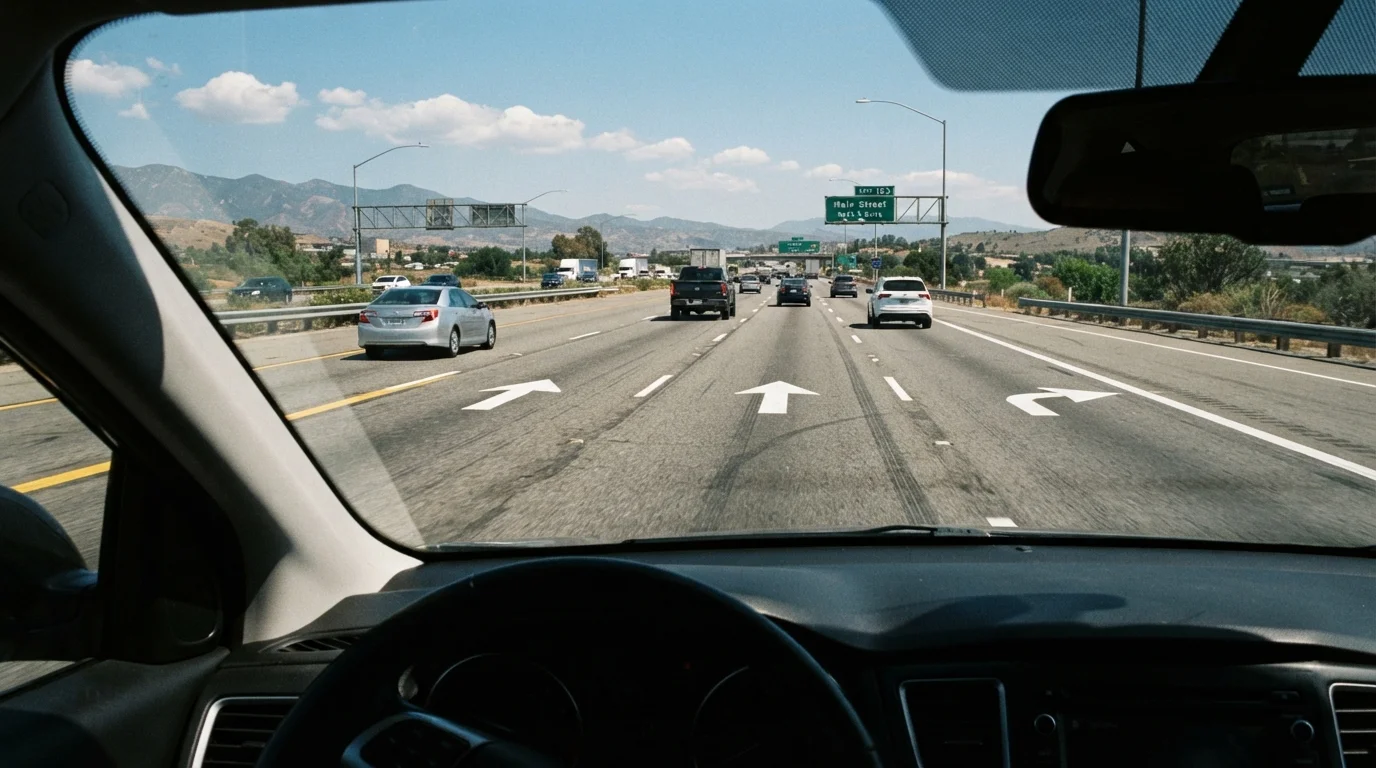
Why Road Markings Matter
Road markings are a silent layer of traffic law. Unlike signs, they appear directly in your path, giving guidance in real time - when to stay in your lane, when passing is legal, and where the road edge is. Misreading them is one of the most common causes of preventable collisions, particularly for newer drivers. Understanding markings is a core piece of developing risk perception behind the wheel.
In the United States, road marking standards are primarily governed by the MUTCD - the Manual on Uniform Traffic Control Devices - which sets color, pattern, and placement rules for all public roads. White markings generally separate traffic moving in the same direction; yellow markings separate traffic moving in opposite directions.
| Standard authority | MUTCD (Manual on Uniform Traffic Control Devices) (Federal Highway Administration, USA) |
| White markings indicate | Same-direction traffic separation |
| Yellow markings indicate | Opposite-direction traffic separation |
| Solid line general rule | Do not cross or pass |
| Broken line general rule | May cross when safe |
| Edge line color (right side) | White |
Line Types and What Each One Means
The pattern of a line - broken, solid, or double - tells you what you're permitted to do.
Longitudinal marking
A road marking that runs parallel to the direction of travel, such as lane lines and edge lines. These govern lane positioning and passing rules.
Transverse marking
A marking that runs across the road surface, perpendicular to traffic flow. Stop lines, yield triangles, and crosswalk lines are all transverse markings.
Fog line
The solid white line painted along the right edge of a travel lane. It helps drivers maintain their position during rain, fog, or nighttime conditions.
HOV lane
A High-Occupancy Vehicle lane reserved for vehicles carrying a minimum number of passengers (typically two or more). Marked by a diamond symbol on the pavement.
No-passing zone
A section of road - usually marked with double solid yellow lines - where overtaking other vehicles is prohibited due to limited sight distance or safety hazards.
Longitudinal (along-the-road) Lines
- Broken white line: Separates lanes of same-direction traffic. Lane changes are permitted when it is safe to do so.
- Solid white line: Discourages lane changes; crossing is not recommended except in emergencies. Common at intersections, merge zones, and on the right edge of the road (the fog line).
- Double solid yellow lines: No passing in either direction. Found on undivided roads with limited sight distance.
- Broken yellow line: Passing permitted when the way is clear. Each driver sees the broken line on their side if passing is legal from their direction.
- One solid + one broken yellow: The driver next to the broken line may pass; the driver next to the solid line may not.
Transverse (across-the-road) Lines
- Solid white stop line: Marks exactly where a vehicle must stop at a sign or signal.
- Yield line (triangles): A row of white triangles pointing toward approaching drivers, indicating where to yield.
- Crosswalk lines: Parallel white bars marking the pedestrian crossing zone; drivers must yield to pedestrians within them.
Arrows, Symbols, and Edge Markings
Beyond lines, pavement symbols carry specific instructions that complement overhead signs - sometimes replacing them entirely in high-traffic environments.
~50%
Of crashes involve roadway departure
According to the Federal Highway Administration, roadway departure crashes account for roughly half of all traffic fatalities in the United States.
3 colors
Used in US road markings
The MUTCD specifies white, yellow, and red as the three permitted pavement marking colors, each with a distinct traffic meaning.
Pavement Arrows
- Straight arrow: The lane must proceed straight through the intersection.
- Turn arrow: The lane is designated for turning only in the direction shown.
- Shared arrow (straight + turn): The lane may proceed straight or turn - driver's choice based on their destination.
Other Common Symbols
- Diamond (◆): Marks a high-occupancy vehicle (HOV) or bus lane. Entry rules vary by jurisdiction.
- Bicycle symbol: Designates a dedicated or shared bike lane; motor vehicle travel or parking is typically prohibited.
- RR crossbuck / railroad marking: A large X with "RR" warns of an approaching rail crossing ahead.
Edge Lines
White edge lines run along the right side of the road to define the travel lane boundary - especially useful in poor visibility. Yellow edge lines appear on divided highways and one-way roads to mark the left edge. Both help drivers maintain position when street lighting is absent. Understanding these markings pairs naturally with other vehicle basics covered in our Car Systems Glossary.
State Variations Can Apply
While the MUTCD sets national standards, individual states may adopt supplements or interpret certain markings differently - particularly for HOV lanes, bike facilities, and temporary construction zones. When in doubt, consult your state's driver handbook or the relevant department of transportation. Always defer to posted signs when a marking and a sign appear to conflict.