
Why Filters Matter in Your Car
Your car relies on clean air and clean fuel to run properly - and it relies on filters to deliver both. Think of filters as the gatekeepers between the outside world and your engine (or your lungs). When they're working well, you probably don't notice them. When they're neglected, you notice the symptoms first: reduced power, poor fuel economy, or a cabin that smells stale.
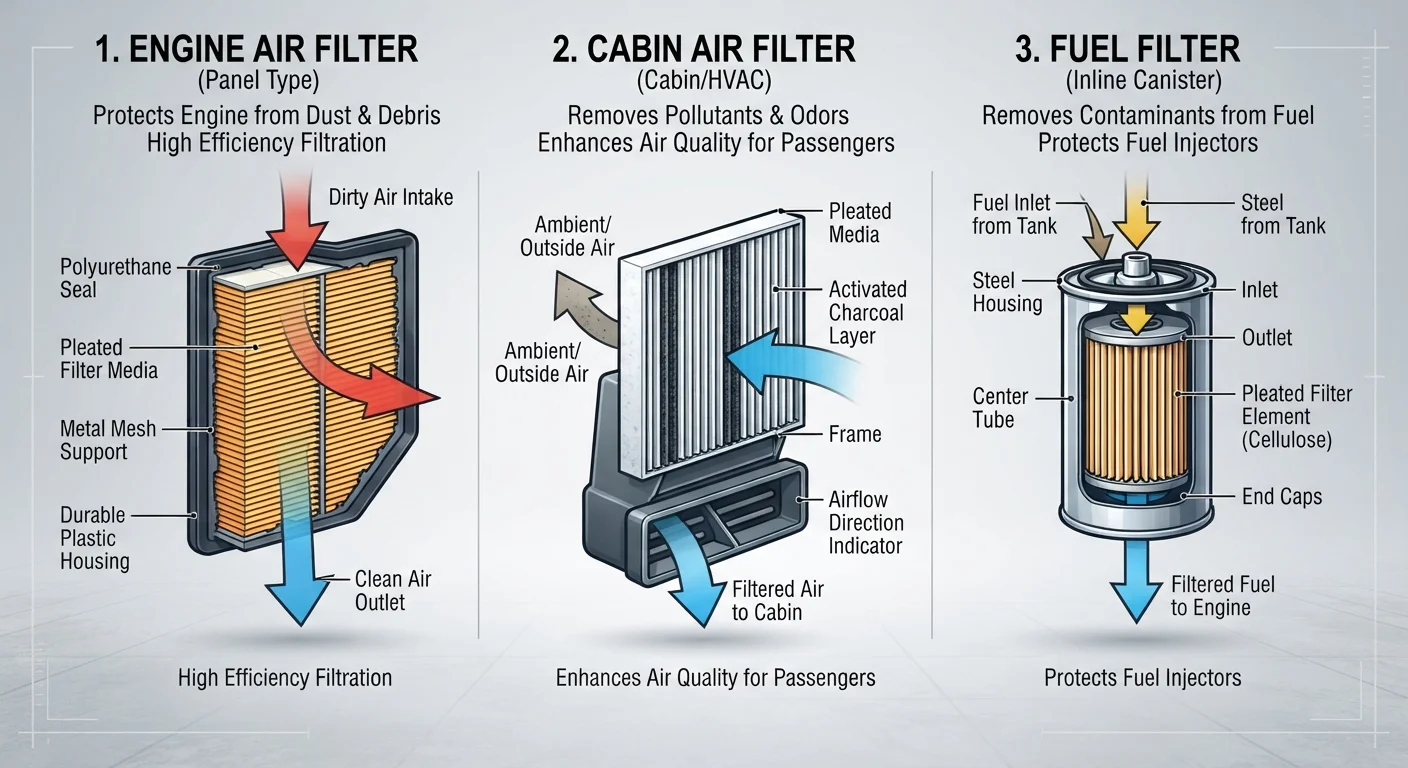
Most passenger vehicles carry three main filters: an engine air filter, a cabin air filter, and a fuel filter. They serve very different purposes, sit in different locations, and follow different service schedules. Understanding what each one does helps you stay ahead of maintenance rather than reacting to problems.
| Engine Air Filter Purpose | Prevents debris from entering the engine's combustion chamber |
| Cabin Air Filter Purpose | Cleans air entering the passenger compartment via HVAC system |
| Fuel Filter Purpose | Removes sediment and particles from fuel before it reaches injectors |
| Engine Air Filter Interval | Typically every 15,000-30,000 miles (Varies by manufacturer and driving conditions) |
| Cabin Air Filter Interval | Typically every 15,000-25,000 miles (More frequent in high-pollen or high-pollution areas) |
| Fuel Filter Interval | Every 20,000-30,000 miles (inline); integrated filters vary (Check owner's manual for your specific vehicle) |
Engine Air Filter: Protecting the Heart of Your Car
The engine air filter sits between the outside air intake and your engine's intake manifold. Its job is to trap dust, pollen, insects, and debris before they can reach the combustion chamber. Engines need a precise mixture of air and fuel to run efficiently - contaminated air throws that balance off.
A clogged engine air filter restricts airflow, forcing the engine to work harder. Common signs it's overdue include a noticeable drop in acceleration, reduced fuel efficiency, or a rough idle. In severe cases, a very dirty filter can trigger a check engine light.
Typical replacement interval: Every 15,000 to 30,000 miles, though dusty driving environments (unpaved roads, construction zones) may shorten that window. Always check your owner's manual for the manufacturer's recommendation.
This filter is also directly relevant to how your engine burns fuel - see how the full fuel system works for context on why clean airflow matters throughout the combustion process.
Cabin Air Filter: Protecting the People Inside
The cabin air filter cleans the air that enters your car's passenger compartment through the heating, ventilation, and air conditioning (HVAC) system. It catches pollen, dust, mold spores, exhaust particles, and other airborne contaminants before they reach the vents you breathe from.
Unlike the engine air filter, a dirty cabin filter doesn't hurt your engine - but it does affect your comfort and health. Signs it's time for a change include musty or unpleasant odors from the vents, reduced airflow even at high fan settings, or noticeably more dust settling on the dashboard.
Typical replacement interval: Every 15,000 to 25,000 miles, or roughly once a year for average drivers. Allergy sufferers and those in high-pollution areas may benefit from more frequent changes.
Cabin Filter and Air Quality
Some cabin air filters include an activated carbon layer that helps absorb odors and certain gases, not just particulate matter. If you frequently drive in heavy traffic or near industrial areas, look for this type when it's time to replace yours. Check your vehicle's specification to confirm which filter type is compatible.
Cabin filter replacement is one of the easier DIY tasks on many vehicles - the filter often sits behind the glove box or under the dashboard. That said, access varies by make and model, so check your owner's manual before starting.
Fuel Filter: Keeping the Fuel Supply Clean
The fuel filter screens contaminants - rust particles, sediment, and other debris - out of the fuel before it reaches the fuel injectors or carburetor. Clean fuel delivery is essential for consistent engine performance. Even small particles can clog injectors, which are precision components with very tight tolerances.
On many modern vehicles, the fuel filter is integrated into the fuel pump assembly inside the tank, which means it's typically serviced less frequently or only when the pump itself is replaced. On older vehicles, inline fuel filters mounted along the fuel line are more common and more accessible.
Typical replacement interval: Varies widely - some inline filters are recommended every 20,000 to 30,000 miles; integrated pump-mounted filters may last the life of the pump. Consult your owner's manual, and have a qualified mechanic inspect it if you notice hard starting, engine hesitation, or loss of power under acceleration. For a broader look at how fuel moves from tank to engine, see the fuel system journey explained.
Filter maintenance is a core part of any routine service. Understanding what a service interval covers helps you know exactly what you're paying for - and when to ask about filters specifically.
Combustion Chamber
The enclosed space inside an engine cylinder where the air-fuel mixture is ignited to produce power. Clean air and fuel are essential for efficient combustion.
HVAC System
Heating, Ventilation, and Air Conditioning - the system that controls climate and airflow inside the passenger cabin. The cabin air filter is part of this system.
Fuel Injector
A precision valve that sprays a measured amount of fuel into the engine's combustion chamber. Injectors have very tight tolerances and can be damaged by fuel contamination.
Intake Manifold
A component that distributes the air-fuel mixture to each engine cylinder. The engine air filter is positioned upstream of the intake manifold to protect it.
Inline Fuel Filter
A standalone fuel filter mounted along the fuel line between the tank and the engine. Common on older vehicles and easier to service than pump-integrated designs.