
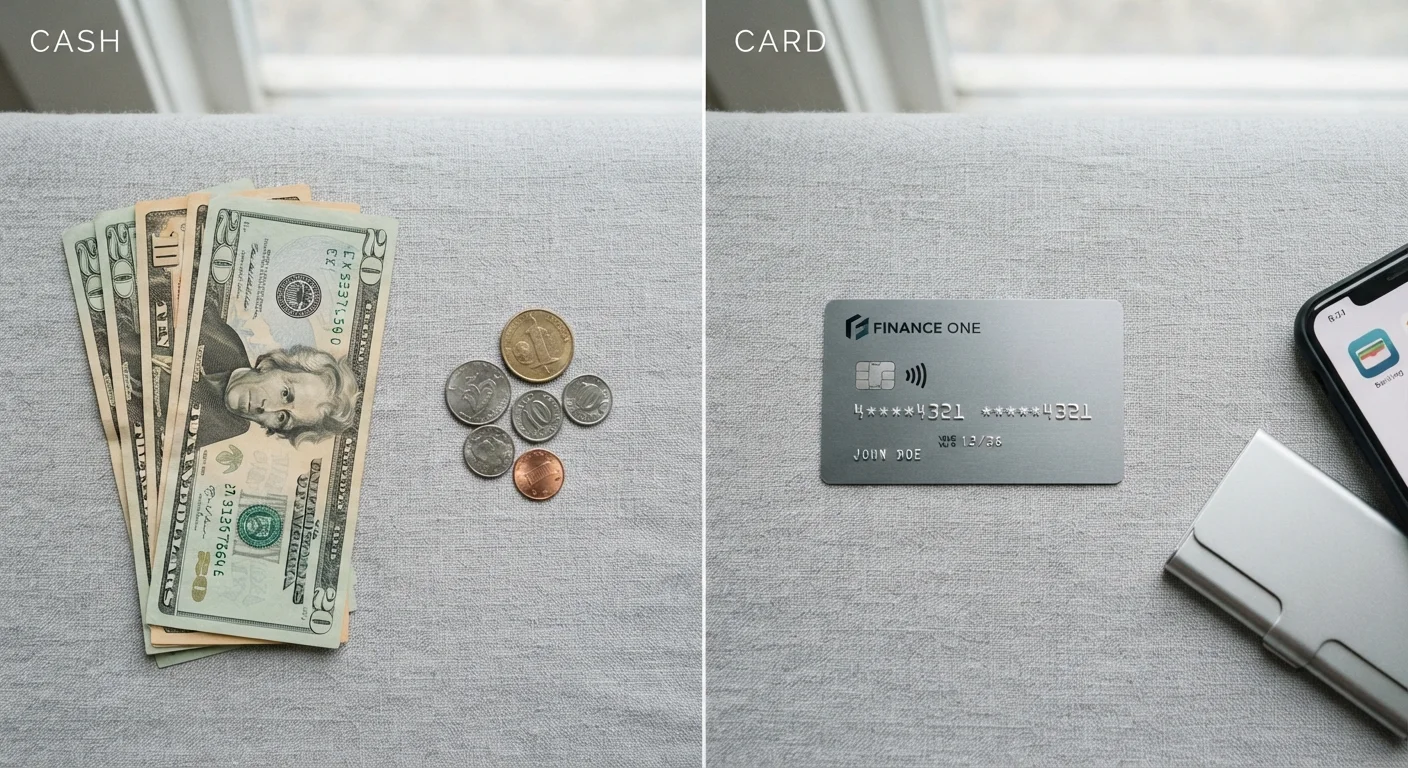
The Psychology of Spending: Why the Method Matters
How you pay affects more than just the mechanics of a transaction - it can shape how much you spend and how you feel about spending it. Studies in consumer behaviour, including widely cited research by Drazen Prelec and Duncan Simester published in the early 2000s, found that people are willing to pay significantly more for the same item when using a card rather than cash. The theory is that handing over physical money triggers a stronger emotional response - sometimes called the "pain of paying" - which makes spending feel more real and consequential.
With a card tap or swipe, that psychological friction is largely removed. The amount leaves your account invisibly, often hours or days later in a statement you may only glance at. This doesn't mean cards are "bad" - but understanding this difference helps you make deliberate choices rather than defaulting to habit. Your daily payment habits are quietly shaping your financial patterns over time.
~83%
U.S. adults who used a debit or credit card in the past week
According to a 2023 Federal Reserve report on consumer payment choices, cards remain the dominant payment method for most Americans.
12-18%
Estimated spending increase when using card vs. cash
Multiple consumer behaviour studies suggest people tend to spend noticeably more per transaction when paying by card rather than cash, though exact figures vary by study design.
Record-Keeping: Where Cards Have a Clear Edge
One of the most practical differences between cash and card is what happens after the transaction. Every card purchase generates a digital record: merchant name, date, category, and amount. That record appears in your bank or credit card statement and can be pulled automatically into budgeting apps or spreadsheets. If you've ever wondered where your money actually goes each month, card statements give you a ready-made starting point.
Cash purchases, by contrast, leave no automatic trail. If you hand over $40 at a farmer's market, that transaction exists only in your memory - or in a receipt you may or may not keep. This isn't necessarily a problem if you use a cash envelope system or log purchases manually, but it does require more deliberate effort. If you're exploring different tracking methods, it's worth considering how your payment method affects how much data you're working with from the start.
| Criterion | Cash | Card (Debit or Credit) |
|---|---|---|
| Spending friction | High - physical loss is felt immediately | Low - payment feels abstract |
| Automatic record-keeping | None - manual tracking required | Full - every transaction logged digitally |
| Fraud protection | None - lost cash is unrecoverable | Strong - dispute rights under federal law |
| Privacy | High - no identity-linked data trail | Low - transaction data shared with multiple parties |
| Accepted everywhere | Not always - fewer online or remote options | Near-universal, including online purchases |
| Budget enforcement | Hard limit - you can't spend what you lack | No automatic limit (especially with credit) |
Privacy, Security, and What Each Method Protects
Cash and card each carry distinct risk profiles. Cash is private - a transaction at a café or hardware store leaves no digital footprint linked to your identity. However, if cash is lost or stolen, it's typically gone with no recourse. There's no fraud protection, no dispute process, and no way to reverse the loss.
Card payments work in reverse: they offer meaningful consumer protections. In the U.S., federal law limits your liability for unauthorized debit card transactions if you report them promptly, and credit cards generally carry even stronger protections. The trade-off is a data trail. Card transactions are recorded by your bank, the payment network, and the merchant's processor. This data may be used in ways you don't always see - from targeted advertising to credit assessments.
Debit vs. Credit: Not the Same Card
Debit cards draw directly from your bank balance, while credit cards extend a line of credit you repay later. Both leave a digital transaction record, but their fraud liability rules and impact on your credit history differ meaningfully. Credit cards in the U.S. generally carry stronger consumer protections under the Fair Credit Billing Act. If you carry a balance on a credit card, interest charges can significantly affect the true cost of purchases - a factor worth weighing carefully. See saving and credit basics for more on how credit works.
For everyday purchases, most people find the fraud protection of cards outweighs the privacy benefit of cash. But for those who value financial privacy or are working to contain spending in specific categories, cash remains a legitimate and practical tool - not just a relic. A balanced approach, part of a broader everyday personal finance strategy, often uses both methods intentionally.
This article is for general informational and educational purposes only. It does not constitute personalised financial advice. For guidance specific to your situation, consider consulting a qualified financial professional.