
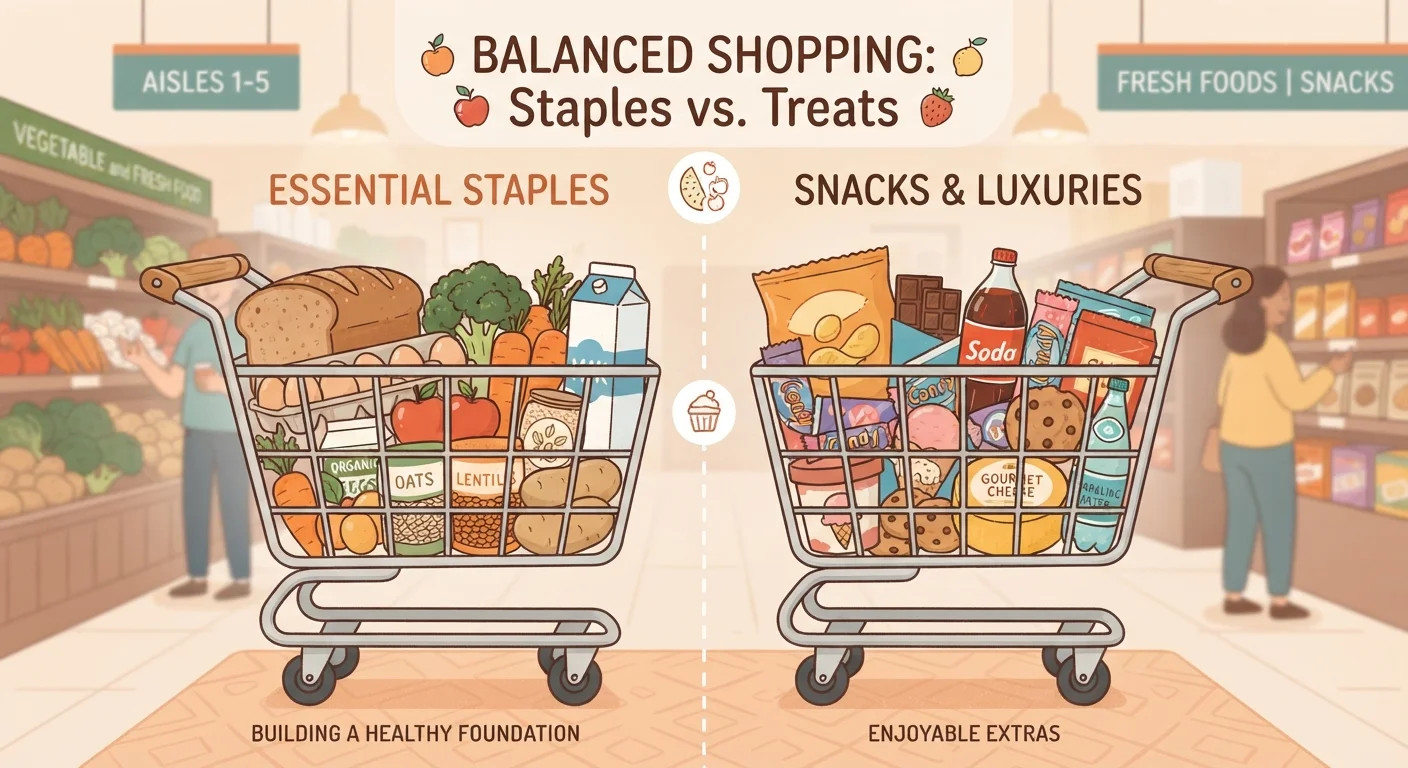
Why This Distinction Is the Starting Point of Every Budget
Before you can build a budget that actually works, you need to know where your money must go versus where it could go. That's the core purpose of separating needs from wants - not to make spending feel like a moral test, but to give you a clear picture of your financial floor.
A personal budget is essentially a plan for allocating income across different priorities. Without understanding which expenses are non-negotiable, it's nearly impossible to make informed trade-offs. The needs-vs-wants framework gives you a starting structure, even if the categories aren't always neat.
Think of it this way: your needs define the minimum your budget must cover. Everything else - your wants - is where financial flexibility lives.
What Counts as a Need?
A need is any expense that, if left unpaid, would meaningfully threaten your health, housing stability, or ability to earn income. Common examples include:
- Housing: Rent or mortgage payments, renter's or homeowner's insurance
- Food: Groceries and basic nutrition (not dining out)
- Utilities: Electricity, heat, water, and in many cases internet access
- Transportation: Whatever gets you to work - a car payment, insurance, or transit pass
- Healthcare: Insurance premiums, prescriptions, and necessary medical care
- Minimum debt payments: Keeping accounts in good standing to avoid penalties
Notice that this list is about function, not comfort. A car may be a genuine need if public transit doesn't reach your workplace - but a newer model with a higher payment may not be.
50%
Of after-tax income suggested for needs
The 50/30/20 guideline - widely referenced in personal finance education - allocates roughly half of take-home pay to essential expenses.
~1 in 3
Americans with no formal monthly budget
Surveys by the National Foundation for Credit Counseling have consistently found that a significant share of U.S. adults do not track spending against a plan.
What Counts as a Want?
Wants are expenditures that add enjoyment, convenience, or status but don't threaten your baseline stability if skipped. Examples include streaming subscriptions, dining out, gym memberships, vacations, hobby supplies, and upgraded versions of things you already have that work fine.
That said, calling something a "want" doesn't mean it's frivolous or that you shouldn't spend on it. Budgeting isn't about eliminating wants - it's about spending on them intentionally, after needs are covered. A gym membership might feel like a want on paper but serve a real role in your mental health and productivity. That context is worth acknowledging.
For a deeper look at why this line gets complicated in everyday life, see why the needs-vs-wants line is blurrier than it sounds.
The Gray Zone: Expenses That Are Hard to Categorize
Many real-world expenses resist a clean label. Consider these common gray areas:
- Internet access
- Once a clear want, reliable internet has become functionally necessary for remote work, job searching, telehealth, and schoolwork for many households.
- A car in a car-dependent city
- In a place with no viable public transit, a vehicle is a need. In a walkable city with good transit, it may be a want.
- Work clothing
- Basic professional attire for a job is a need. Designer versions of the same clothing are a want.
The honest question to ask is: Would skipping this expense put my health, housing, or livelihood at risk? If yes, it leans toward a need. If not, it's likely a want - even if it feels important.
Understanding how expenses interact also helps. Fixed vs. variable expenses is another useful lens: many needs are fixed (rent, insurance), while many wants are variable (entertainment, dining), which has practical implications for where you can flex your spending.
Try the "What Happens If I Skip It?" Test
When you're unsure whether an expense is a need or a want, ask yourself: if I didn't pay this for one month, what would the real consequence be? If the answer involves losing housing, income, or health access, it's a need. If the answer is inconvenience or disappointment, it's likely a want. This simple test cuts through the rationalizations most of us make about our spending.
Putting the Framework into Practice
You don't need perfect categorization to benefit from this exercise - you need honest categorization. Here's a simple approach:
- List every monthly expense you currently have.
- Mark each one: Need, Want, or Unsure.
- For the "Unsure" items, apply the risk question: Would skipping this meaningfully harm my stability or income?
- Total your needs. This is your financial floor - your income must cover this first.
- Whatever remains is available for wants and savings.
If you share expenses with a partner or housemates, the categorization may require a conversation. What one person treats as a need, another may see as optional. Approaches to splitting household bills fairly can help navigate those differences constructively.
Once you have a clear sense of your needs and wants, the next step is understanding what it actually takes to keep spending within your income. What living within your means requires builds directly on this foundation.
This article is for general informational and educational purposes only and does not constitute personalized financial advice. Consider consulting a licensed financial professional for guidance tailored to your specific situation.