
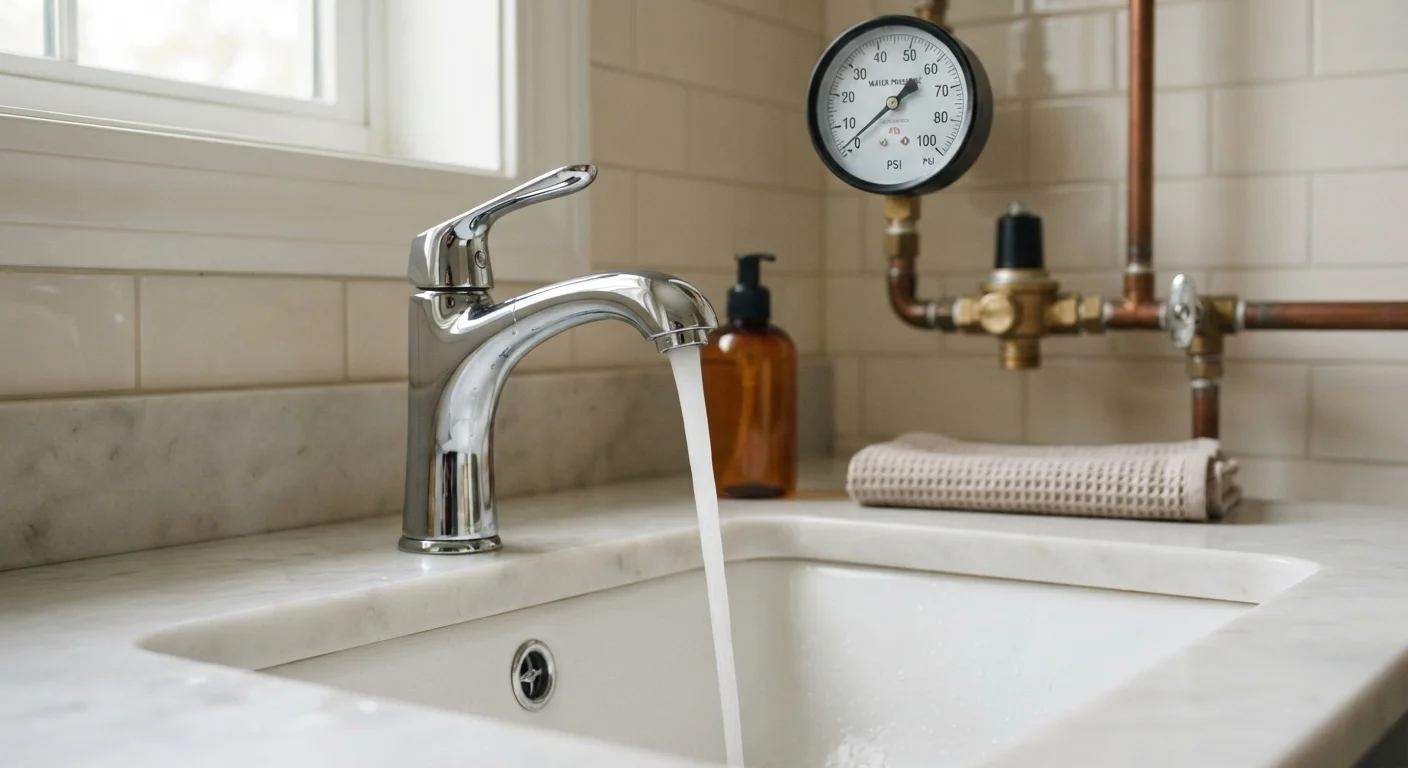
How to Read What Your Pressure Is Telling You
Water pressure is one of the most overlooked indicators of your plumbing system's health. When it changes - gradually or suddenly - it is usually telling you something specific. The key is knowing how to match the symptom to the likely cause.
Think of pressure as a signal, much like how common home maintenance myths can mask real problems hiding in plain sight. Before calling a plumber, a $10 pressure gauge attached to any hose bib gives you a concrete starting point. Here is what different readings and patterns typically mean.
40-80 PSI
Recommended residential water pressure range
The Uniform Plumbing Code and most municipal water authorities cite this range as the safe operating window for home plumbing systems.
80 PSI+
Pressure level that accelerates pipe and fixture wear
Plumbing industry guidance consistently identifies pressure above 80 PSI as a risk factor for premature joint failure and appliance damage.
~$15
Typical cost of a threaded pressure gauge
A basic threaded dial gauge available at hardware stores lets homeowners test their own PSI without any plumbing tools.
Low Pressure at One Fixture vs. the Whole House
Location is the most useful first clue. Low pressure isolated to a single faucet or showerhead almost always has a local cause:
- Clogged aerator: The mesh screen at the faucet tip collects mineral deposits over time. Unscrew it, rinse it, and pressure often returns immediately.
- Worn cartridge or valve: Older fixtures have internal valves that degrade and restrict flow. Replacing the cartridge is usually a straightforward DIY task.
- Supply stop valve: Check the shutoff valve under the sink - it may be only partially open after a past repair.
If low pressure affects every fixture at once, the problem is upstream. Common culprits include a partially closed main shutoff valve, a failing PRV, or a restriction in your service line. Municipal supply interruptions are also possible - a quick call to your water utility can rule that out fast.
Test Pressure Before You Troubleshoot Anything
Grab a threaded dial pressure gauge from any hardware store and screw it onto an outdoor hose bib or laundry faucet. Turn the water on fully and read the PSI. Do this first - it takes less than two minutes and immediately tells you whether you have a low-pressure, high-pressure, or normal-range situation, saving time on every step that follows.
High Pressure: The Silent Threat
Many homeowners worry about too little pressure but rarely think about too much. Pressure consistently above 80 PSI is harder on your plumbing than most people realize. It stresses pipe joints, causes faucet washers to wear prematurely, and is a leading cause of pinhole leaks in copper pipes.
Appliances suffer too. Washing machine fill hoses, dishwasher inlet valves, and water heater pressure relief valves all operate under design limits. Chronic overload shortens their service life and can cause sudden failures.
If your gauge reads above 80 PSI, a licensed plumber can install or adjust a PRV - a device that automatically caps incoming pressure at a safe level. Most PRVs are set to around 50-60 PSI at installation.
PRV Location in Your Home
The pressure reducing valve is typically found near where the main water line enters the house - often in a basement, utility room, or crawl space. It looks like a bell-shaped fitting on the supply pipe, usually with an adjustment screw on top. Not all homes have one; if your supply pressure from the street is naturally within range, a PRV may not have been installed.
Fluctuating or Surging Pressure
Pressure that rises and falls unexpectedly - or surges when you turn taps on or off - points to a different set of issues.
- Water hammer: That loud banging when you shut off a faucet quickly is pressure surge in action. It stresses joints over time and can usually be addressed with hammer arrestors or air chambers.
- PRV cycling: A PRV that is wearing out may allow pressure to spike intermittently rather than failing all at once.
- Thermal expansion: In closed plumbing systems, water heating in the water heater expands with nowhere to go, causing brief pressure spikes. An expansion tank is the standard solution.
If you notice pressure swings while watering outdoors, your irrigation habits may also play a role - see our guide on how much water your garden actually needs to avoid compounding the problem with excessive outdoor demand.
When to Stop Diagnosing and Call a Professional
Some pressure problems are safe to investigate yourself; others require licensed expertise. Contact a plumber if you observe any of the following:
- House-wide low pressure with no obvious cause after checking the main valve and municipal supply
- Pressure above 80 PSI that persists after adjusting the PRV
- Visible pipe corrosion, pinhole leaks, or damp drywall alongside pressure changes
- A PRV that is more than 10 years old, as these have a limited service life
- Any work that requires cutting into supply lines or altering the main service connection
Water pressure issues share something with other household signals - ignoring them rarely makes them cheaper to fix. Catching a failing PRV early is a minor repair; replacing burst pipes is not. When in doubt, a diagnostic visit from a licensed plumber is money well spent.
This article is for general informational purposes only and does not constitute plumbing or professional engineering advice. Always consult a licensed plumber for diagnosis and repair of your home's plumbing system. Requirements and standards vary by location - check with your local building authority for code-specific guidance.