
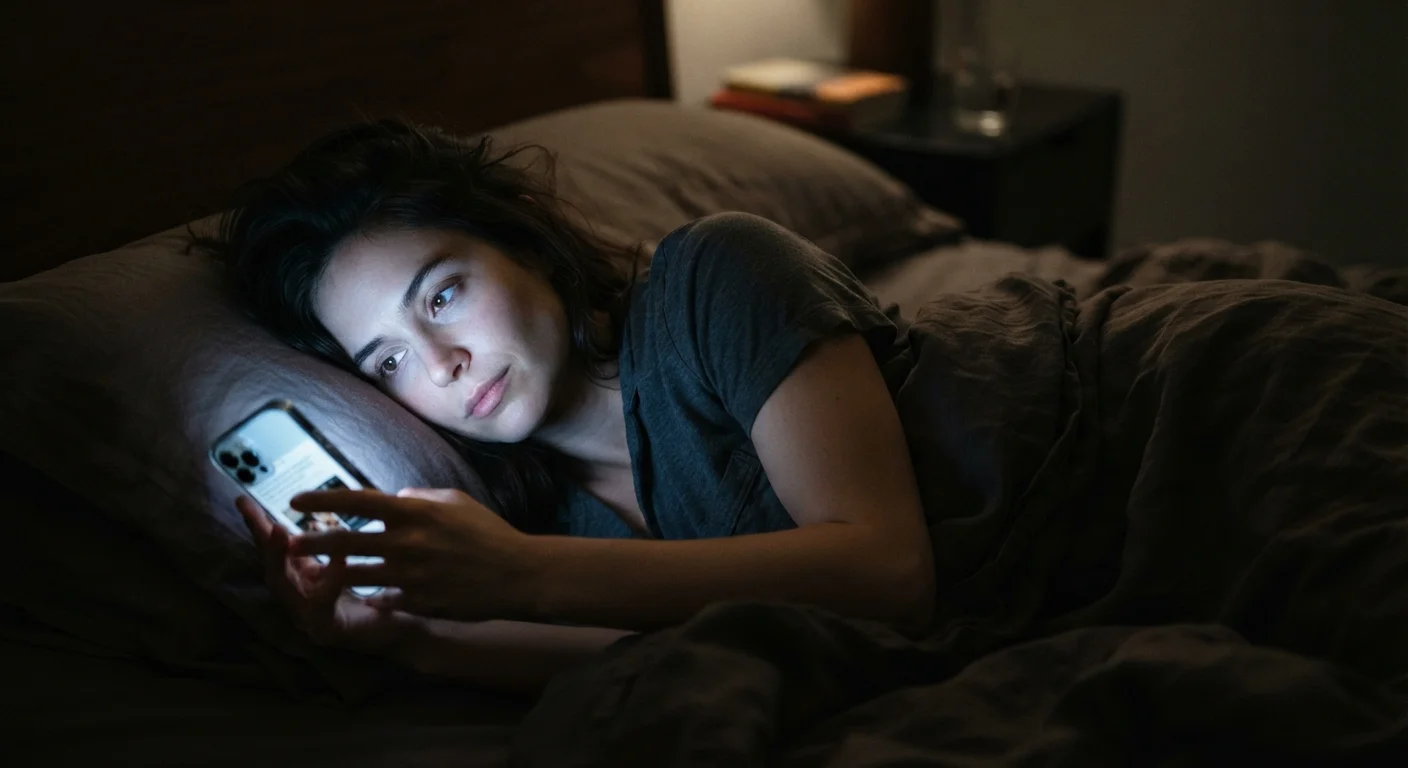
Why the Blue Light Story Became So Dominant
The blue light narrative gained traction for good reason: laboratory research clearly shows that short-wavelength light suppresses melatonin production through the retina's intrinsically photosensitive cells. Tech companies amplified the concern - and then conveniently offered night-mode settings as a fix. What got lost in translation was the difference between a measurable biological effect and a clinically meaningful one.
The size of the melatonin suppression produced by a typical phone screen in real-world conditions is considerably smaller than that produced by, say, a brightly lit office or an overhead light left on at night. Context matters enormously, and the condensed framing of "blue light = bad sleep" stripped that context away.
Myth
Blue light from phones is the main reason screens ruin your sleep.
Fact
Blue light is a contributing factor, but the stimulating content on screens - not the light alone - is often the bigger disruptor.
Blue light (short-wavelength visible light) does signal to the brain that it's daytime by suppressing melatonin, the hormone that promotes sleepiness. However, several controlled studies have found that filtering blue light with night mode or orange-tinted glasses produces only modest improvements in sleep onset. A 2021 randomized trial published in Sleep Medicine found that blue-light glasses did not significantly improve sleep compared to placebo lenses in young adults with normal sleep. The cognitive arousal triggered by engaging content - social media arguments, suspenseful shows, work emails - appears to be an equally or more powerful sleep thief.
Myth
Using night mode or dark mode on your phone makes evening screen use safe for sleep.
Fact
These settings reduce blue light output, but they don't eliminate the mental stimulation or overall brightness that can delay sleep.
Night mode shifts the display's color temperature toward warmer tones, which does lower blue wavelength emission. That's a net positive. But screens in night mode still emit light of meaningful brightness, and the content on them remains just as engaging. Think of it this way: reading stressful news in sepia tones is still stressful. Sleep researchers generally frame night mode as a harm-reduction measure rather than a green light to scroll indefinitely.
Myth
Watching TV before bed is less harmful than using a phone or tablet.
Fact
Distance from the screen matters, but the type of content and viewing duration are at least as important as the device itself.
A TV placed across the room delivers less direct light to the eyes than a phone held close to the face. That physical distance does reduce light exposure. However, a binge-watching session that runs two hours past your intended bedtime causes a sleep-timing shift that no distance advantage can offset. The body's circadian system is sensitive to behavioral cues as much as light cues, and consistently late viewing can gradually shift your internal clock later.
Myth
Everyone is equally affected by screen use before bed.
Fact
Sensitivity to evening light and stimulation varies considerably across individuals due to genetics, age, and chronotype.
People with a naturally early chronotype ("morning larks") tend to be more sensitive to evening light exposure than those with a late chronotype ("night owls"). Older adults generally produce less melatonin overall and may experience different effects than younger people. Some individuals report falling asleep easily after extended screen use; others find even brief exposure disruptive. This variability is why blanket rules - "no screens after 8 p.m. for everyone" - are an oversimplification of what the science actually shows.
Myth
The only thing that matters for better sleep is cutting screen time.
Fact
Screen time is one of several interacting factors; sleep timing consistency, stress, and the bedroom environment all play substantial roles.
Sleep quality is shaped by a web of influences: common daily habits like inconsistent wake times, caffeine consumed late in the day, room temperature, and anxiety all affect how quickly you fall asleep and how restorative that sleep is. Focusing exclusively on screen time while ignoring these factors is unlikely to produce dramatic improvements. A calming pre-sleep routine that addresses several of these variables together tends to be more effective than any single intervention.
What the Evidence Actually Supports
When researchers move beyond lab light-exposure studies and look at how people actually use devices - for how long, doing what, and at what emotional pitch - a more complicated picture emerges. The stimulating, interactive nature of social media feeds, the emotional engagement of streaming drama, and the work-related stress of late-night email checking all activate the nervous system in ways that delay sleep onset independently of any light wavelength.
Understanding how your body clock functions helps explain why timing is so central: melatonin release is sensitive to light in the two hours before your natural sleep window, but chronic behavioral delays to that window may be the larger long-term concern.
90%
Adults who use a device in the hour before bed
A National Sleep Foundation poll found roughly nine in ten American adults reported using an electronic device within an hour of bedtime at least a few nights per week.
~10 min
Average sleep-onset delay linked to pre-bed screen use
Meta-analyses of laboratory studies estimate pre-sleep screen exposure delays sleep onset by around 10 minutes on average - a real but often overstated effect.
Practically speaking, this means that someone who watches a calming documentary on a dimmed screen for 30 minutes before a consistent bedtime is likely to experience very different effects from someone who stress-scrolls social media for two hours past their usual sleep time - even if both technically "used a screen before bed."
Children and Adolescents Need Extra Consideration
Research suggests younger people may be more sensitive to evening light exposure and sleep disruption from screen use than adults. Parents and caregivers should consult a pediatrician or family physician for guidance tailored to a child's age and circumstances.
Practical Steps Grounded in the Evidence
Rather than chasing a total screen ban - which the evidence doesn't strongly support as necessary for most adults - consider the following adjustments that address the strongest mechanisms at play:
- Reduce brightness and use night mode in the 60-90 minutes before bed. It's a low-effort, real (if modest) benefit.
- Choose low-arousal content. A relaxing podcast or a gentle documentary is categorically different from a heated comment thread.
- Keep a consistent sleep and wake time even on weekends - this is arguably the single most evidence-supported sleep behavior of all.
- Create a buffer. Putting the phone down 20-30 minutes before you intend to sleep, rather than scrolling until your eyes close, gives your nervous system time to downshift.
These practical habits connect to the broader principle of a structured wind-down routine, which sleep researchers consistently identify as one of the most effective behavioral tools for improving sleep quality. Screening out hidden sleep disruptors throughout the day - not just in the final hour - also compounds the benefit.
This Is General Information, Not Medical Advice
The information in this article is intended for general educational purposes only. If you are experiencing persistent sleep difficulties that affect your daily functioning, speak with a qualified healthcare professional. Do not adjust medications or treatments based on this content.
This article is for general informational and educational purposes only and does not constitute medical advice. If you have concerns about sleep quality or related symptoms, consult a qualified healthcare professional.