
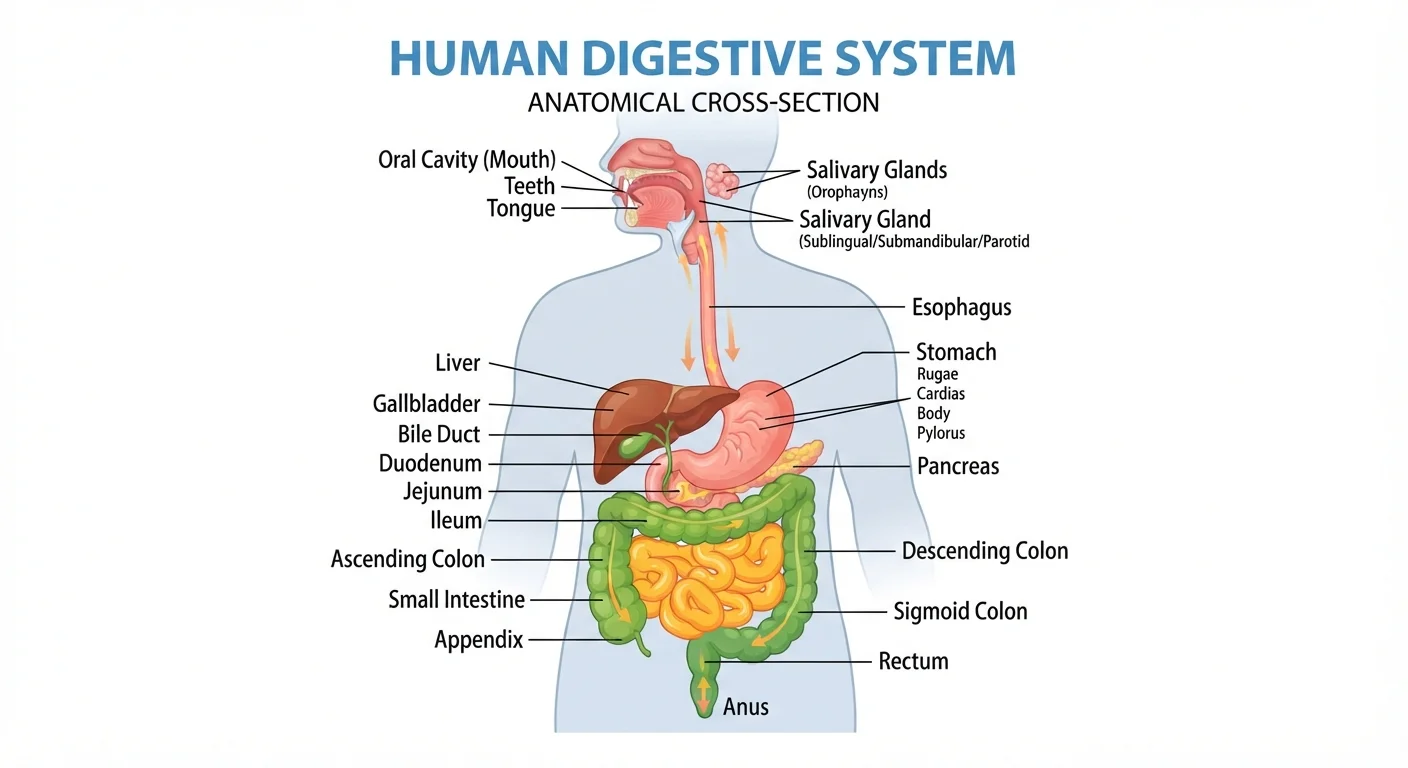
The Digestive System at a Glance
Your digestive system is essentially a long, muscular tube - roughly 30 feet from end to end - engineered to break down everything you eat and drink into molecules small enough to enter your bloodstream and fuel your body. The process is both mechanical and chemical, involving coordinated organ action that most of us never consciously notice.
Understanding how digestion works can help explain why certain foods leave you energized, why timing matters, and what digestive symptoms may signal. For a broader look at how gut-related signals fit into overall health, see our guide to common symptoms across body systems.
What you will need
Step-by-Step: How Food Travels Through Your Body
The digestive journey unfolds in a precise sequence. Each organ hands off its work to the next, much like a relay race. Here is how that process plays out from the first bite to final elimination.
The Mouth: Chewing and Enzyme Action
Digestion starts the moment food enters your mouth. Your teeth mechanically break food into smaller pieces - a process called mastication - while salivary glands release saliva containing amylase, an enzyme that begins breaking down starches into simpler sugars. The tongue shapes chewed food into a soft mass called a bolus, which is then swallowed.
The Esophagus: Muscular Transit
The bolus travels down the esophagus, a muscular tube about 10 inches long. Coordinated muscle contractions called peristalsis propel the food downward toward the stomach. At the base of the esophagus, the lower esophageal sphincter - a ring of muscle - opens to allow food through and then closes to prevent stomach acid from rising back up.
The Stomach: Acid Bath and Churning
The stomach is a muscular sac that stores food and subjects it to powerful churning movements alongside gastric acid (primarily hydrochloric acid) and enzymes, notably pepsin, which begins protein breakdown. This process converts the bolus into a semi-liquid called chyme. The stomach can hold up to about one liter of material at a time and typically empties over two to four hours, depending on the meal's composition.
The Small Intestine: The Absorption Powerhouse
Chyme enters the small intestine - approximately 20 feet long - where the majority of nutrient absorption occurs. The pancreas releases digestive enzymes (lipase, protease, amylase) and the liver produces bile, stored in the gallbladder, which emulsifies dietary fats. The intestinal lining is covered in tiny finger-like projections called villi and even smaller microvilli, creating an enormous surface area designed to absorb carbohydrates, proteins, fats, vitamins, and minerals into the bloodstream and lymphatic system.
The Large Intestine: Water Recovery and Waste Formation
Whatever the small intestine cannot absorb - mainly indigestible fiber and water - passes into the large intestine (colon), which is about five feet long. Here, the colon reabsorbs water and electrolytes back into the body, and beneficial gut bacteria ferment remaining fiber, producing short-chain fatty acids that nourish colon cells. The remaining material is compacted into stool and stored in the rectum.
Elimination: The Final Step
When the rectum fills, stretch receptors signal the urge to defecate. The internal and external anal sphincters coordinate to allow voluntary elimination. The entire journey - from swallowing to elimination - typically takes between 24 and 72 hours, though this varies considerably between individuals based on diet, hydration, activity level, and individual physiology.
Hydration Supports Every Stage
Water plays a role throughout the digestive process - from softening food in the stomach to enabling nutrient transport and preventing constipation in the colon. Most adults benefit from consistent fluid intake across the day rather than large amounts at once. Check with a healthcare provider for guidance suited to your individual needs.
What Can Disrupt the Journey?
The digestive process is remarkably robust, but it is sensitive to disruption. Stress activates the body's fight-or-flight response, which can slow or accelerate gut motility - the muscular movement that propels food along. Diets low in fiber deprive the large intestine of the bulk it needs to move waste efficiently. Dehydration makes stool harder and more difficult to pass.
Certain medications, including antibiotics, can alter the gut microbiome - the community of trillions of bacteria that support digestion, immune function, and even mood. An imbalanced microbiome has been linked in research to conditions ranging from irritable bowel syndrome to broader inflammatory responses, though this is a rapidly evolving area of science and not all findings are fully established yet.
Don't Ignore Persistent Digestive Symptoms
Occasional bloating or indigestion is common and usually harmless. However, ongoing symptoms such as chronic abdominal pain, blood in stool, significant changes in bowel habits, or unintended weight loss should always be evaluated by a qualified healthcare professional. Early assessment of digestive symptoms can be important for catching underlying conditions.
If you experience persistent digestive discomfort, changes in bowel habits, unexplained weight loss, or blood in your stool, consult a qualified healthcare professional rather than attempting self-diagnosis. These symptoms can have many causes, some of which warrant medical evaluation.
This article is for general informational and educational purposes only and is not a substitute for professional medical advice, diagnosis, or treatment. Always consult a qualified healthcare provider with questions about your digestive health or any medical condition.