
Why Engines Generate So Much Heat
Every time your engine fires, tiny explosions of fuel and air occur inside the cylinders - hundreds of times per minute. That combustion process releases enormous amounts of heat energy. Only about one-third of that energy actually moves the car; the rest becomes waste heat that must go somewhere or it will destroy the engine from the inside out.
Engine components like pistons, cylinder walls, and valves are made of metal, and metal exposed to unchecked heat expands, warps, and eventually welds itself together. The cooling system's entire job is preventing that outcome. Think of it as the engine's built-in temperature management crew, working constantly in the background. For a broader picture of how all vehicle systems connect, see this start-from-zero guide to how cars work.
~4,000°F
Peak combustion temperature inside a cylinder
Combustion gases briefly reach extreme temperatures; engine components rely on cooling and lubrication to survive this environment.
195°-220°F
Typical healthy engine operating range
Most passenger car engines are engineered to run efficiently within this temperature window, regulated by the thermostat.
50/50
Standard coolant-to-water mix ratio
A 50% antifreeze, 50% distilled water mixture is the most commonly recommended ratio for year-round protection in most U.S. climates.
The Main Players: Coolant, Radiator, Water Pump, and Thermostat
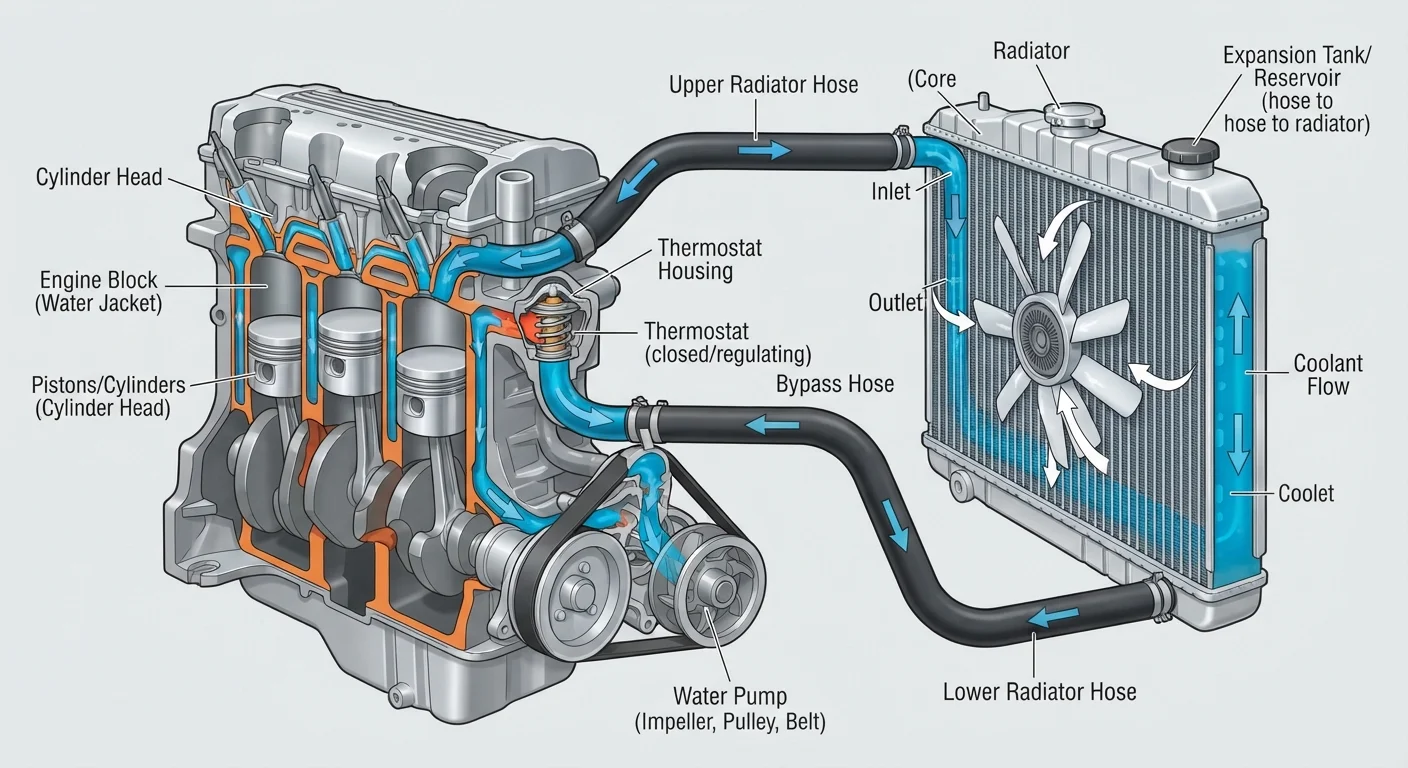
The cooling system is a closed loop with four key components working in sequence:
- Coolant - A mixture of antifreeze and water that flows through passages cast directly into the engine block and cylinder head, absorbing heat along the way.
- Water pump - A belt-driven pump that keeps coolant moving through the loop. If it fails, coolant sits still and temperatures climb fast.
- Thermostat - A spring-loaded valve that stays shut while the engine is cold, letting it reach operating temperature efficiently. Once warm, it opens to route coolant through the radiator.
- Radiator - A flat, grid-like heat exchanger mounted at the front of the car. Hot coolant passes through narrow tubes; air flowing through the fins strips the heat away and releases it outside the vehicle.
A cooling fan - either engine-driven or electric - provides additional airflow through the radiator when the car is moving slowly or idling.
Check Coolant Level When the Engine Is Cold
Always inspect the coolant reservoir when the engine has been off for at least an hour. Opening a pressurized radiator cap on a hot engine can cause boiling coolant to spray out and cause serious burns. The reservoir is a translucent plastic tank with MIN and MAX markings - simply look, don't open.
How the Loop Actually Works
When you start a cold engine, the thermostat is closed. Coolant circulates only through a small internal loop within the engine, warming up quickly so the engine reaches its efficient operating temperature faster. This also explains why your heater takes a few minutes to blow warm air - the cabin heater core uses that same hot coolant.
Once temperatures hit the thermostat's set point (typically around 195°F), it opens. Now coolant flows out of the engine, through rubber hoses, and into the radiator. As it passes through the radiator's thin tubes, the heat transfers to the surrounding fins and then into the air stream. The cooled coolant returns to the engine and repeats the cycle, continuously.
The system also includes a small overflow reservoir. As coolant heats up it expands, pushing excess into the reservoir. As the engine cools, that fluid is drawn back in - a design that keeps the system full and pressurized at all times.
Warning Signs Your Cooling System Needs Attention
Catching cooling system problems early can prevent a minor repair from becoming an engine replacement. Watch for these indicators:
- Temperature gauge rising toward the red zone - pull over safely if this happens.
- Sweet smell inside or outside the car - coolant has a distinctive sweet odor and a leak should be investigated promptly.
- White steam from under the hood - a sign coolant is boiling or leaking onto hot surfaces.
- Coolant reservoir running low repeatedly - indicates a leak somewhere in the system.
- Heater blowing cold air unexpectedly - can signal low coolant level or a stuck thermostat.
If you notice any of these signs, have a qualified mechanic inspect the system before driving further. Cooling system work that involves pressurized hoses or draining fluids is generally within reach for experienced DIYers, but diagnosing internal leaks or replacing a water pump often warrants professional attention. Just as the alternator quietly keeps your car's electrical systems running, the cooling system works invisibly - until something goes wrong. Learn more about other hidden helpers in The Role of the Alternator.
Cooling System Pressure Matters
The system runs under pressure - typically 13-16 psi - which raises the boiling point of the coolant and improves efficiency. A worn or cracked radiator cap that can't hold pressure causes coolant to boil at lower temperatures, mimicking the symptoms of overheating even when fluid levels are fine. Replacing a faulty radiator cap is one of the least expensive fixes in automotive repair.