
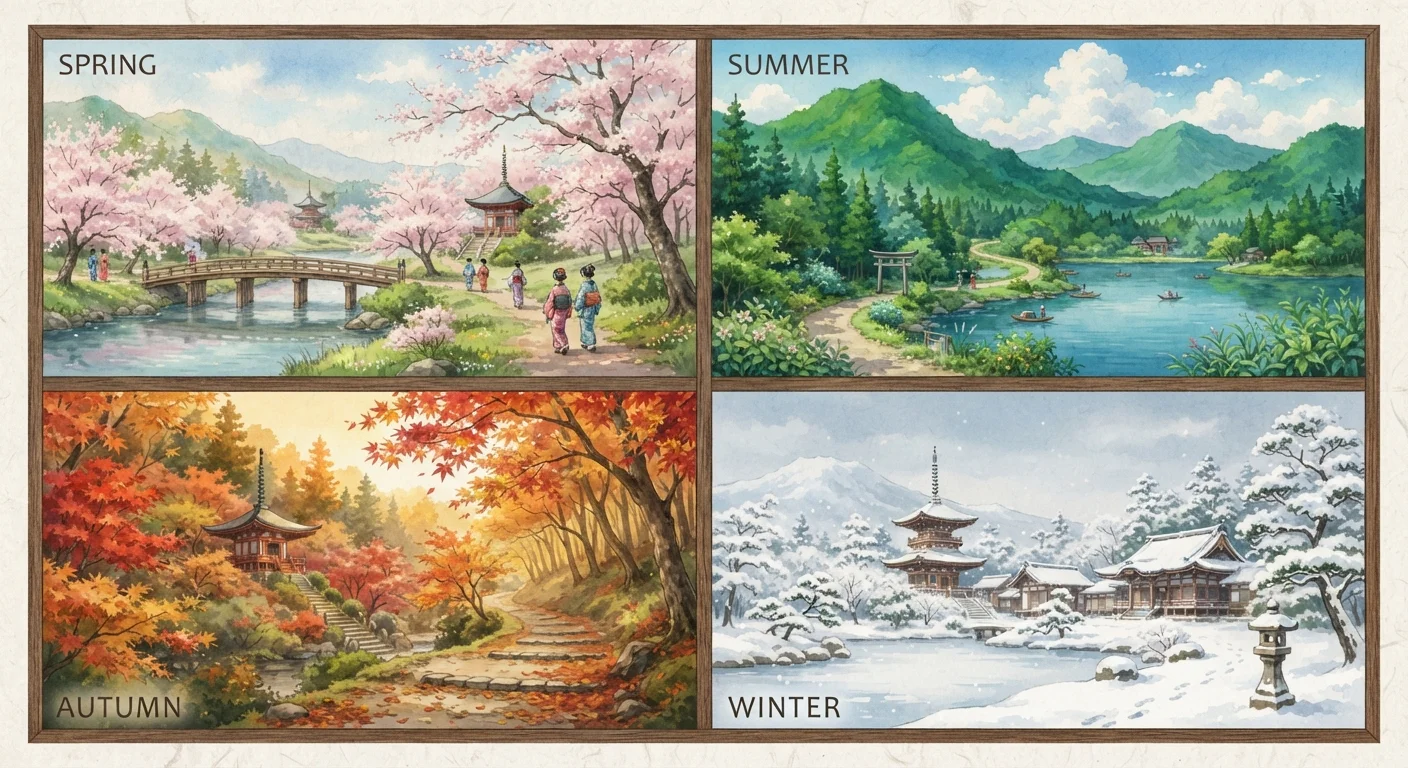
The Geography Behind the Seasons
Japan's position in the Pacific helps explain why its seasons are so pronounced. The country spans roughly 3,000 kilometers from the cold, snowy north of Hokkaido to the warm, coral-fringed coasts of Okinawa. This range means that while Sapporo may still be buried in snow, Naha might already be enjoying warm spring temperatures.
Seasonal change is also driven by alternating monsoon systems. A wet summer monsoon brings heat and humidity to most of the main islands, while winter cold fronts from Siberia deliver heavy snowfall to the Japan Sea coast. These are not gradual transitions — they are dramatic, well-defined shifts that Japanese society has tracked and celebrated for over a thousand years.
~3,000 km
Length of Japan's archipelago north to south
This geographic span creates significant climate variation between Hokkaido and Okinawa in any given season.
1–2 weeks
Typical cherry blossom peak bloom window
The Japan Meteorological Corporation tracks the annual sakura front, which moves northward from late March through May.
6,852
Islands that make up the Japanese archipelago
According to Japan's Geospatial Information Authority, the variety of island climates contributes to Japan's rich seasonal diversity.
Spring and Summer: Renewal and Energy
Spring (haru) is the season most associated with Japan internationally. Cherry blossoms — sakura — bloom for roughly one to two weeks, and the entire country pauses to observe them. The practice of hanami (flower viewing) involves gathering under blossoming trees for picnics and reflection. This is not merely aesthetic; it is a philosophical moment tied to mono no aware, the Japanese sensitivity to the beauty of transience. The blossoms fall quickly, and that brevity is the point.
Summer (natsu) shifts from quiet contemplation to communal energy. The Obon festival in August honors ancestors through dance, lanterns, and family reunions. Regional fireworks festivals (hanabi taikai) draw massive crowds. Summer also marks a turn in diet — chilled noodles, kakigori (shaved ice), and seasonal vegetables take prominence on menus across the country.
Plan Around Cultural Events, Not Just Weather
When choosing when to visit Japan, consider the festivals and cultural rituals tied to each season rather than temperature alone. Attending a summer Obon festival or a winter shrine visit on New Year's Eve offers insights into Japanese life that no museum can replicate. Check regional event calendars from Japan's official tourism resources well in advance.
Autumn and Winter: Reflection and Rest
Autumn (aki) rivals spring in visual drama. Maple and ginkgo trees transform mountainsides into waves of red, orange, and gold — a spectacle called koyo. Temples across Kyoto and Nikko become pilgrimage sites for foliage viewers, much as they do during cherry blossom season. Autumn is also harvest time, bringing prized seasonal foods: matsutake mushrooms, chestnuts, Pacific saury (sanma), and new-crop rice.
Winter (fuyu) slows the pace. Japan's hot spring (onsen) culture peaks in winter, with soaking in mineral-rich baths while snowflakes fall outside considered a near-spiritual experience. The season closes with elaborate New Year's (oshogatsu) preparations — one of the most significant events in the Japanese cultural calendar — including shrine visits, traditional foods, and a deliberate farewell to the previous year.
“In Japan, the seasons are not just weather — they are a rhythm of life, a system of meaning that tells people when to celebrate, when to grieve, and when to begin again.”
— Donald Richie, Author and cultural commentator known for extensive writing on Japanese society and aesthetics
Why Seasonal Awareness Still Shapes Modern Japan
Even in contemporary Japan, seasonal consciousness is woven into daily life in ways visitors often find striking. Department store window displays change with the seasons. Restaurant menus rotate around seasonal ingredients as a point of culinary pride. Clothing stores rotate stock in a more regimented way than in many Western countries, reflecting an expectation that consumers will dress according to the season, not just the temperature.
This awareness also has roots in classical Japanese poetry. The haiku form traditionally requires a kigo — a seasonal reference word — anchoring the poem to a specific time of year. This convention reflects a broader cultural belief that meaning is inseparable from its seasonal context.
For travelers, understanding Japan's seasonal culture transforms a trip from sightseeing into genuine cultural engagement. Knowing why a particular flower or dish matters — not just that it exists — deepens every experience.
This article provides general cultural and geographic information. Travel conditions, event schedules, and seasonal timing can vary; verify current details with official tourism sources before your trip.