
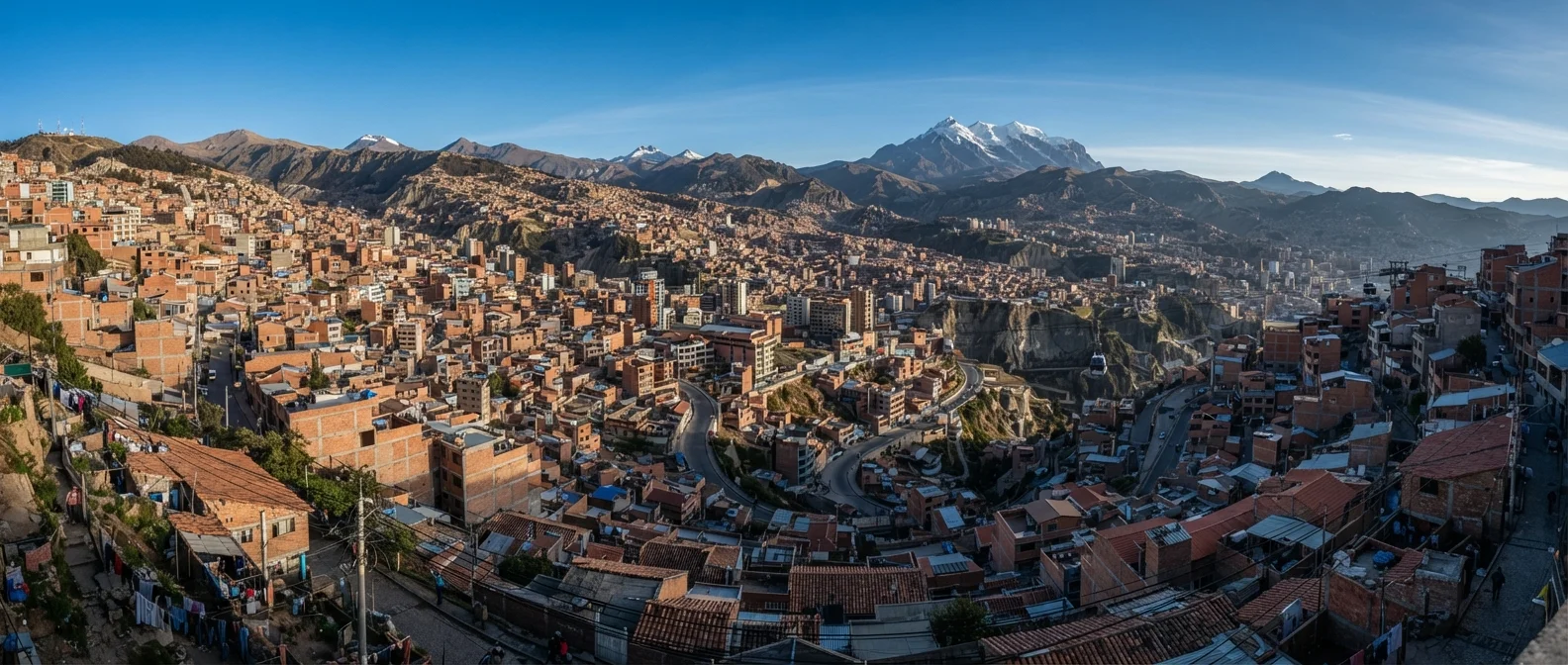
Two Countries, One Shared Reality: Life Above 3,500 Metres
Most of the world's population lives close to sea level, where air pressure and oxygen density are familiar constants. But in Bolivia's Andean cities and Nepal's Himalayan highlands, millions of people wake up each morning in conditions that would leave most visitors breathless — literally.
La Paz, Bolivia's seat of government, sits at roughly 3,650 metres (nearly 12,000 feet) above sea level. The neighboring city of El Alto reaches above 4,000 metres. In Nepal, trading hubs like Namche Bazaar — the gateway to the Everest region — sit at around 3,440 metres, with many villages climbing considerably higher.
These aren't tourist curiosities. They are functioning, complex societies where altitude is simply a background condition of everyday existence. Understanding what that looks like — practically, physically, and culturally — offers genuine insight for anyone planning to visit or simply curious about how geography shapes human life. If you're still deciding where to go, factors like altitude and climate deserve careful thought alongside visas and seasonality.
Side-by-Side: How Altitude Shapes Daily Life
While Bolivia and Nepal differ enormously in language, religion, and history, their high-altitude communities share surprisingly parallel adaptations across several categories of everyday life.
| Criterion | Bolivia (La Paz / El Alto) | Nepal (Highland Communities) |
|---|---|---|
| Typical elevation | 3,600–4,100 metres | 3,400–4,500 metres |
| Primary adaptation type | Increased hemoglobin concentration | More efficient oxygen metabolism (EPAS1 gene) |
| Staple foods | Quinoa, chuño, potato stew | Dal bhat, tsampa, buckwheat |
| Primary transport challenge | Steep urban terrain; cable cars used | Remote trails; yak and porter transport |
| Building style | Dense brick, multi-story urban blocks | Stone construction, small windows |
| Religious/cultural identity | Andean indigenous and Catholic blend | Tibetan Buddhism, mountain reverence |
| Visitor acclimatization support | Pharmacies stock supplemental oxygen | Local ascent-rate knowledge, tea houses |
Both regions demonstrate that altitude isn't simply an obstacle — it's a design parameter around which entire ways of life have been engineered over centuries.
The Body at Altitude: Adaptation, Health, and Practical Norms
The most immediate difference between high-altitude and lowland populations is physiological. At 3,500 metres, atmospheric pressure is roughly 65% of what it is at sea level, meaning each breath delivers significantly less oxygen. Long-term residents of both Andean and Himalayan communities show measurable biological differences: elevated red blood cell counts, more efficient oxygen uptake, and in some populations, structural lung differences.
Research published through institutions studying Andean and Tibetan genetics has identified distinct genetic variants in each population — meaning the Andean and Himalayan adaptations evolved independently, through separate mechanisms. Tibetan highlanders, for example, carry variants of the EPAS1 gene associated with more efficient oxygen use at low partial pressure, while Andean populations adapted through increased hemoglobin concentration.
~65%
Atmospheric pressure at 3,500 m vs. sea level
At this elevation, each breath contains roughly a third less available oxygen than at sea level, a constant reality for high-altitude residents.
4,150 m
Elevation of El Alto, Bolivia
El Alto, adjacent to La Paz, is one of the highest major cities in the world, with a population exceeding 1 million people.
~3,440 m
Elevation of Namche Bazaar, Nepal
Namche Bazaar serves as the main trading hub and acclimatization stop for trekkers heading into the Khumbu region of the Himalayas.
Everyday health norms reflect this reality. In La Paz, pharmacies routinely stock supplemental oxygen for visitors experiencing acute mountain sickness (AMS). In Nepali highland villages, local knowledge about gradual ascent — moving no faster than the body can adapt — is passed down practically from childhood. Neither population treats altitude as a health threat in the way a lowland visitor might; it is simply the environment they know.
This article provides general geographic and cultural information only. Anyone with pre-existing cardiovascular or respiratory conditions should consult a qualified healthcare professional before traveling to high-altitude destinations.
Architecture, Food, and the Practicalities of Thin-Air Living
At high altitude, water boils at a lower temperature — around 90°C at 3,000 metres compared to 100°C at sea level. This affects cooking times for grains, legumes, and root vegetables, all of which form the dietary backbone of both Bolivian and Nepali highland cuisines. Cooks in both regions have developed recipes and techniques that compensate, often relying on pressure cooking or extended simmering.
In Bolivia, the staple diet in highland areas centers on quinoa, chuño (freeze-dried potato, made possible by the nightly cold), and hearty stews. In Nepal's highland communities, dal bhat (lentils and rice) and tsampa (roasted barley flour) provide calorie-dense fuel suited to the physical demands of mountain life.
Architecturally, both regions favor dense, low-profile construction that retains heat against cold nights. In El Alto, the iconic use of exposed brick and multi-story buildings reflects both economic pragmatism and the practicality of building in thin air with heavy materials. In Nepal's highland villages, stone construction with small windows minimizes heat loss at elevations where temperatures can drop sharply after sunset.
Why Nights Get Cold So Quickly at Altitude
At high elevation, the thinner atmosphere holds less heat after sunset. In both Andean and Himalayan highland areas, daytime temperatures may feel mild in sunlight, but temperatures can drop well below freezing after dark — even in summer months. Residents and visitors alike should prepare layering strategies accordingly. Always verify current seasonal conditions through local or official sources before travel.
Transportation is another revealing lens. La Paz's famous Mi Teleférico cable car network — one of the world's longest urban cable car systems — exists precisely because the city's dramatic elevation changes make conventional road infrastructure challenging. In Nepal's highlands, trails and suspension bridges remain the primary infrastructure, with yak and porter transport still common where roads haven't reached.