
How the Pacific Is Divided
The Pacific Ocean is the largest body of water on Earth, covering roughly one-third of the planet's surface. Within it lie thousands of islands — some large enough to host major cities, others barely visible above the waterline. To make sense of this vast expanse, geographers and anthropologists organize the region into three broad zones: Polynesia, Melanesia, and Micronesia.
These divisions are based on a combination of geography, cultural heritage, and ethnic background, though they are imperfect — Pacific communities are far more diverse internally than any single label suggests. Think of them as a starting framework, not a rigid classification.
Polynesia
A large region of the central and southern Pacific Ocean defined by a triangle of islands from Hawaii to New Zealand to Easter Island, whose peoples share related languages and cultural traditions.
Melanesia
A region of the southwestern Pacific that includes Papua New Guinea, Fiji, and the Solomon Islands, known for exceptional ethnic and linguistic diversity.
Micronesia
A region of small islands mostly north of the equator in the western Pacific, including Palau, the Marshall Islands, and Guam, characterized by vast ocean territories relative to tiny land areas.
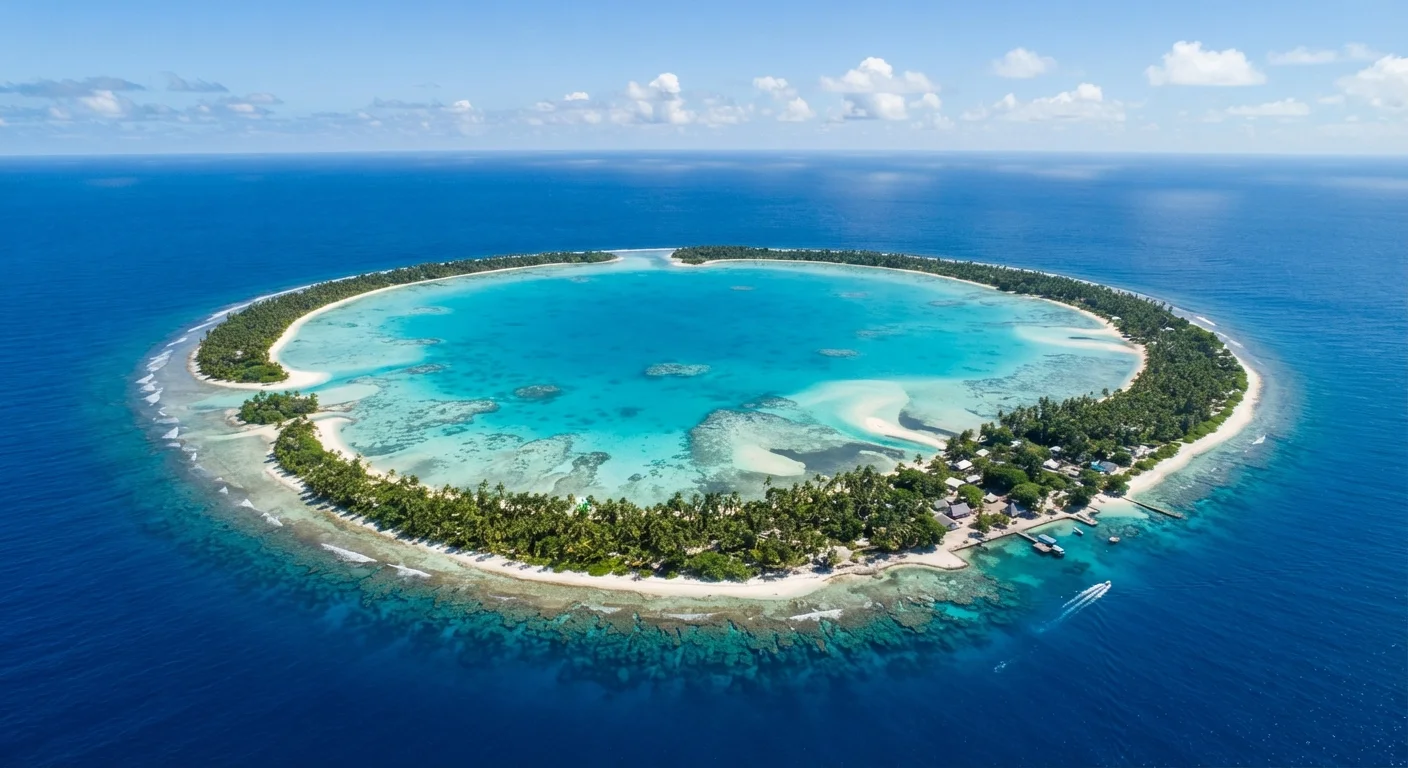
Atoll
A ring-shaped coral island or chain of islands surrounding a central lagoon. Atolls sit very low above sea level and are especially vulnerable to rising seas.
Austronesian
A large family of languages spoken across a huge area from Madagascar to Hawaii, linking many Pacific and Southeast Asian peoples through a shared prehistoric ancestry.
Compact of Free Association
A political arrangement between an island nation and the United States that grants the island nation sovereignty while allowing its citizens to live and work in the US and providing certain US services and funding.
Island types across the Pacific also shape how communities live. High islands — formed by volcanic activity — feature mountains, rivers, and fertile soil, supporting larger populations and more complex agriculture. Low islands, or atolls, are ring-shaped coral formations surrounding a lagoon. Atolls rarely rise more than a few meters above sea level, limiting fresh water and agriculture but often providing rich marine resources.
Polynesia: The Vast Triangle
Polynesia spans an enormous triangle of ocean defined by three points: Hawaii to the north, New Zealand (Aotearoa) to the southwest, and Easter Island (Rapa Nui) to the southeast. Inside this triangle sit nations and territories including Samoa, Tonga, Tahiti (part of French Polynesia), the Cook Islands, and Tuvalu.
Polynesian peoples share closely related languages, navigational traditions, and cultural practices. Their ancestors were extraordinary open-ocean voyagers who settled this vast region over centuries using stars, ocean swells, and bird patterns for navigation — long before European contact.
Today, Polynesian nations vary widely in political status. Hawaii is a US state. The Cook Islands is a self-governing territory in free association with New Zealand. Samoa and Tonga are independent nations. French Polynesia remains an overseas collectivity of France. Travelers should research each destination individually, as currency, language of government, and visa rules all differ.
Research Political Status Before You Go
Polynesian destinations span a wide spectrum of political arrangements — independent nations, US territories, French collectivities, and freely associated states. This affects everything from the currency you'll need and the language of signage to whether your US phone plan works without roaming charges. A quick check before booking saves significant confusion on arrival.
Melanesia and Micronesia: Equally Rich, Less Familiar
Melanesia lies to the west and southwest of Polynesia and includes Papua New Guinea, Fiji, the Solomon Islands, Vanuatu, and New Caledonia. The name historically referred to the darker skin tones of the region's inhabitants — a colonial label that many scholars now view critically. Melanesia is home to extraordinary ethnic and linguistic diversity. Papua New Guinea alone contains over 800 distinct languages, making it one of the most linguistically complex places on Earth.
Fiji is perhaps the most visited Melanesian nation, known for its tourism infrastructure. It also has a significant Indo-Fijian population descended from laborers brought by British colonial rulers in the 19th century — a reminder that Pacific demographics have been deeply shaped by colonial history.
Micronesia sits primarily north of the equator and west of the International Date Line. It includes the Federated States of Micronesia, Palau, the Marshall Islands, Kiribati, Nauru, and the US territories of Guam and the Northern Mariana Islands. Despite small land areas, these nations control vast ocean territories rich in marine resources. Several have unique political arrangements — Palau, the Marshall Islands, and the Federated States of Micronesia each have Compacts of Free Association with the United States.
Climate Vulnerability Is a Real Travel Factor
Several Pacific island nations — particularly low-lying atolls in Micronesia and Polynesia — are acutely affected by rising sea levels and increasingly intense tropical storms. Infrastructure in smaller, remoter nations may be limited after weather events. Check your government's official travel advisory for any destination before finalizing plans, and consider travel insurance that covers disruptions.
Languages, Peoples, and Shared Threads
Despite their differences, many Pacific peoples share a linguistic ancestry. Most Pacific languages — from Hawaiian to Fijian to Malagasy, spoken off the coast of Africa — belong to the Austronesian language family, one of the world's largest. This family reflects the extraordinary prehistoric migrations of seafaring peoples who spread across the Indian and Pacific Oceans over thousands of years.
Colonial history added English, French, and in some areas Spanish as official or co-official languages. In practice, many Pacific nations are multilingual: local indigenous languages are used at home and in community life, while English or French serves government, education, and international business.
Cultural practices across the Pacific often center on reciprocal gift-giving, communal land ownership, and strong kinship networks. These values can differ significantly from the individualistic norms many Western travelers are used to. Showing respect for local customs — including asking permission before photographing ceremonies or entering villages — goes a long way.
Pacific Community (SPC)
The Pacific Community is an intergovernmental organization that publishes data and reports on Pacific island nations, covering demographics, health, fisheries, and culture — a reliable reference for background research.
US Department of State Travel Advisories
The State Department publishes up-to-date travel advisories for every country, including Pacific island nations, covering safety, entry requirements, and health notices relevant to US travelers.
CIA World Factbook — Oceania
The World Factbook's Oceania section provides concise, reliable geographic, demographic, and political overviews of every Pacific island nation and territory — useful for building foundational knowledge quickly.
Practical Orientation for Travelers
Getting to the Pacific typically means flying through a regional hub. Nadi International Airport in Fiji and Honolulu in Hawaii serve as the most common gateways for travelers heading deeper into the region. From these hubs, smaller airlines connect to more remote island groups, though schedules can be limited and should be confirmed well in advance.
Climate across the Pacific is generally tropical, with a wet season and a dry season that vary by location. Cyclone season typically runs from November through April in the South Pacific, which can affect travel plans significantly. Always check seasonal conditions and government travel advisories — both your home country's and the destination nation's — before finalizing arrangements.
Health considerations vary by destination. Some nations may require proof of vaccination for certain diseases; consult a travel health professional well before departure. Currency, electrical standards, and driving conventions (left-hand vs. right-hand traffic) also differ across nations, so basic pre-trip research prevents surprises.
This article is for general educational purposes only. Entry requirements, health advisories, and travel conditions change frequently — always verify current information through official government and public health sources before traveling.