
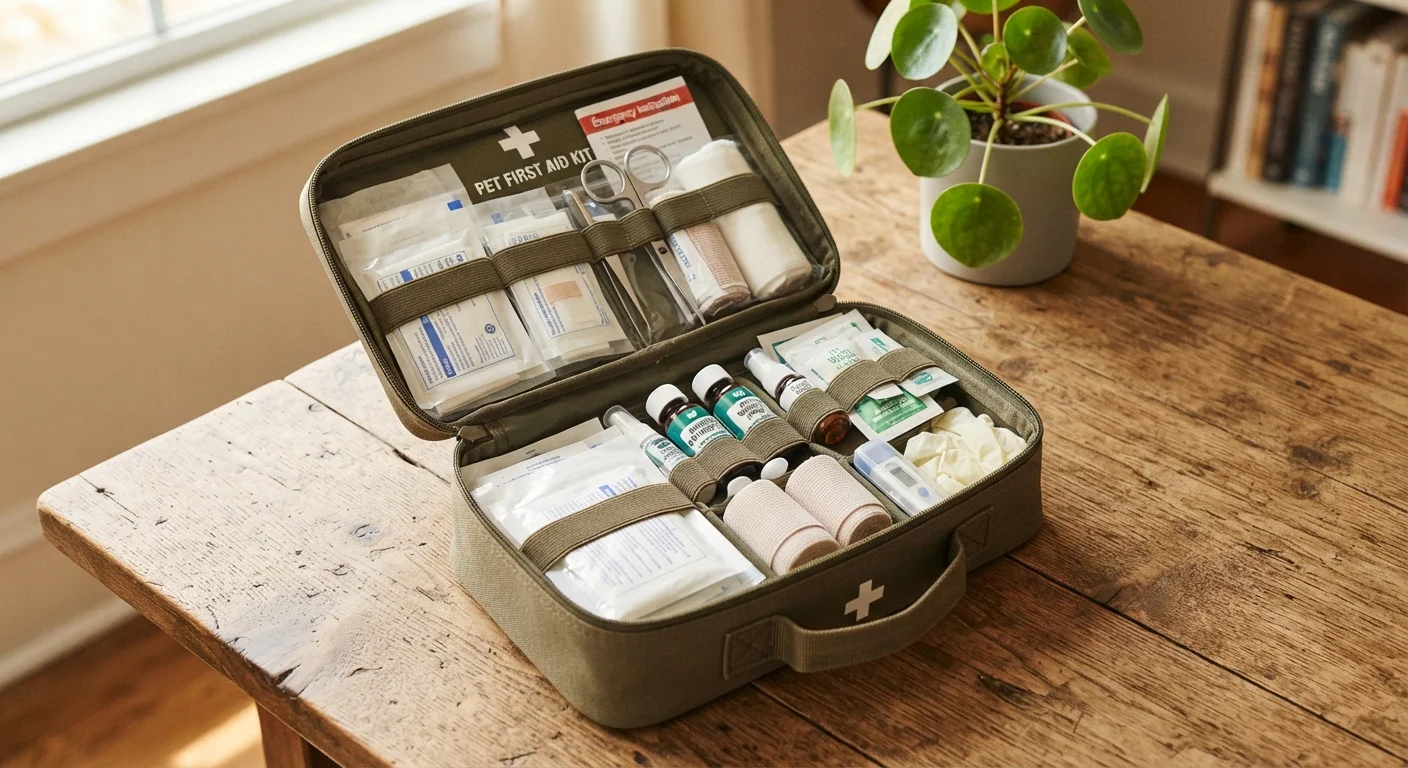
Why Every Pet Household Needs a First Aid Kit
Accidents don't announce themselves. A dog can slice a paw pad on a walk, a cat might swallow something it shouldn't, or a rabbit could take a tumble from a table. In those first minutes before you can reach a veterinarian, having the right supplies close at hand — and knowing how to use them — can reduce pain, limit infection, and buy critical time.
A pet first aid kit isn't a substitute for veterinary care. It's a bridge. Think of it the same way you think of a household first aid kit for people: useful for stabilizing situations, not for replacing professional diagnosis or treatment. If you're ever unsure whether your pet's situation is an emergency, contact your veterinarian or an emergency animal hospital immediately.
Part of responsible daily ownership is being prepared before something goes wrong. See our guide to what pets need every day for a broader look at proactive care routines.
What to Put in Your Kit: A Room-by-Room Checklist
Most veterinary organizations, including the American Veterinary Medical Association (AVMA), recommend a core set of supplies for pet first aid. Below is a practical breakdown of what belongs in any kit, grouped by function.
Wound Care and Bandaging
- Sterile gauze pads and rolls — for covering wounds and controlling bleeding
- Self-adhesive bandage wrap (such as cohesive bandaging) — wraps without sticking to fur
- Medical adhesive tape — to secure dressings
- Blunt-tipped scissors — safe for cutting bandage material near skin
- Sterile saline solution — for flushing wounds and eyes
Examination and Monitoring Tools
- Rectal thermometer — normal body temperature for dogs and cats is roughly 100–102.5°F; consult your vet for your specific pet
- Petroleum jelly — for lubricating the thermometer
- Penlight or small flashlight — for examining the mouth, ears, and eyes
- Magnifying glass — helpful for locating splinters or ticks
Restraint and Safety Supplies
- Muzzle (pet-sized) — even gentle pets may bite when in pain; use only on conscious animals that are breathing normally
- Extra leash — for controlling a frightened animal
- Thick towel or small blanket — for warmth, wrapping a distressed cat, or improvising a stretcher
Additional Essentials
- Tweezers — for removing visible splinters or ticks (consult your vet on safe tick removal technique)
- Disposable gloves — protect both you and your pet from contamination
- Eyedropper or small syringe (needleless) — for administering fluids orally when directed by a vet
- Activated charcoal — only use under direct veterinary instruction; never administer without guidance
- Copies of your pet's medical records, vaccination history, and your vet's phone number
Never Medicate Without Veterinary Guidance
Several common human medications — including aspirin, ibuprofen, and acetaminophen — are toxic to dogs and cats. Do not add any over-the-counter human medications to your pet's first aid kit without explicit guidance from your veterinarian. The same applies to activated charcoal and hydrogen peroxide: both are sometimes referenced in older first aid guides but should only be used when a vet specifically instructs you to do so.
Maintaining, Storing, and Using Your Kit
A first aid kit only works if it's ready when you need it. Store it in a clearly labeled, waterproof container kept at room temperature — extreme heat or cold can degrade some supplies. Place it somewhere you and other household members can find quickly.
Check Your Kit Regularly
Set a reminder every six months to inspect all contents. Replace anything that's expired, depleted, or damaged. Sterile saline and medical tape have shelf lives; don't assume they're still effective because they look fine.
Know Before You Need To
Owning the supplies is only half the equation. Consider taking a pet first aid course — the American Red Cross and several veterinary colleges offer them. Knowing how to assess your pet's gum color, breathing rate, and pulse before a crisis happens means you'll perform better under stress when it counts.
If you're planning travel or extended time away, kit preparation is part of a broader readiness plan. Our article on preparing your pet for your absence covers how to keep your pet safe when you're not home.
This article provides general informational guidance only and is not a substitute for professional veterinary advice, diagnosis, or treatment. Always consult a licensed veterinarian for questions about your pet's health or in any emergency situation.