
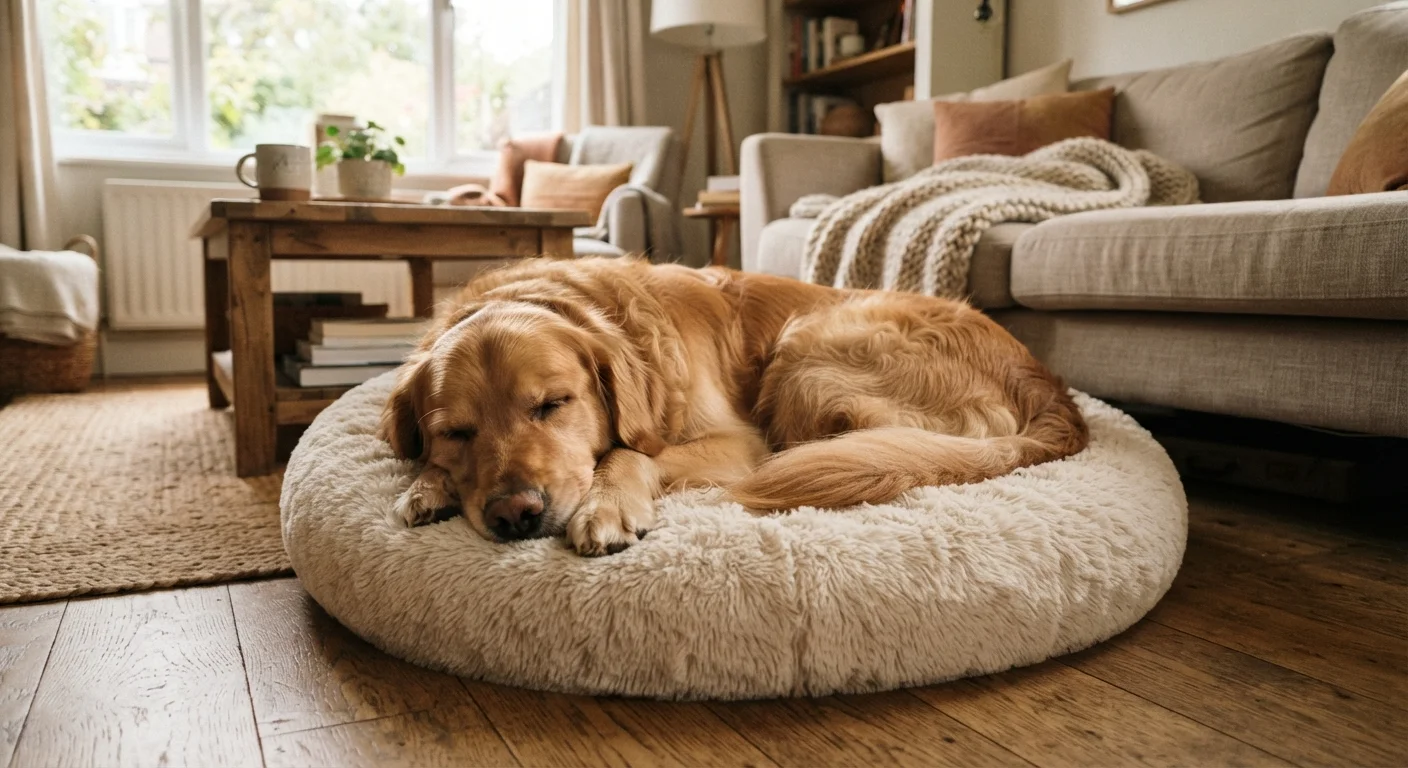
The Common Sleeping Positions and What They Reflect
Dogs cycle through several recognizable sleep poses, and each one is largely driven by physical comfort, temperature regulation, and how safe a dog feels in its environment — not a secret window into its emotions or character.
| Primary driver of sleep position | Temperature regulation and physical comfort |
| Sleep stages in dogs | SWS (slow-wave sleep) and REM, similar to humans (Veterinary sleep research) |
| Average daily sleep (adult dog) | 12–14 hours (American Kennel Club) |
| Twitching during sleep | Normal REM activity; not a sign of distress |
| Most exposed sleeping position | Back/paws-up; indicates thermal comfort and security |
| Breeds most prone to belly-up sleeping | Lean, thin-coated breeds (e.g., Whippets, Greyhounds) |
The Curl ("Donut" Position)
When a dog tucks its nose toward its tail and draws its limbs inward, it is conserving body heat and protecting its abdomen — the most vulnerable part of the body. This is common in colder rooms or in dogs that are new to a space and haven't fully relaxed yet. It is an instinctive posture inherited from wild ancestors that slept in open environments.
The Side Sprawl
A dog lying fully on its side with legs extended is comfortable enough to leave its belly exposed. This position is associated with deep, restful sleep and is common in dogs that feel secure in their environment. You'll often notice twitching, paddling legs, or soft vocalizations during this pose — signs of active dreaming during the REM sleep phase.
The Superman (Belly Flop)
Flat on the stomach with legs stretched front and back, this pose is especially popular with puppies and energetic dogs. It allows a dog to spring back to its feet quickly, which may explain why active dogs favor it during lighter naps. It also helps cool the belly against a cool floor surface.
The Back Float (Paws Up)
Sleeping on the back with paws in the air exposes the belly completely and allows maximum heat release through the paw pads. Dogs that sleep this way are typically very comfortable and not thermally stressed. Despite popular belief, this pose doesn't reliably indicate any specific personality type.
What Sleeping Positions Don't Tell You
A common misconception is that sleeping positions map directly onto a dog's personality, mood, or emotional bond with its owner. The evidence doesn't strongly support this. While comfort and security influence posture, individual variation is enormous — breed, body shape, age, coat thickness, and room temperature all play significant roles.
Anatomy Shapes Posture, Too
A dog's breed and body structure can physically limit which positions are comfortable. Brachycephalic breeds (like Bulldogs or Pugs) often avoid positions that restrict their airways. Deep-chested breeds may find back-sleeping awkward. Never assume a dog "should" sleep a certain way based on general charts — individual anatomy matters.
For example, a dog sleeping curled up isn't necessarily anxious or unhappy. It may simply be cold, or sleeping on a surface that doesn't accommodate a sprawl. Similarly, a dog that never sleeps on its back isn't less relaxed than one that does — anatomy alone (particularly in barrel-chested breeds) can make that position uncomfortable.
Many widely repeated ideas about pet behavior don't hold up to scrutiny, and sleep pose "personality charts" circulating online fall into this category. Treat them as entertaining speculation, not behavioral science.
What does matter behaviorally is change. If a dog that normally sleeps sprawled begins consistently curling tightly, or starts sleeping in unusual locations, or seems restless and unable to settle, those shifts are worth noticing. Sudden changes in sleep habits can occasionally signal discomfort or illness. See our guide on how pets show they're unwell for a broader look at behavioral red flags.
Sleeping Near You: What Co-Sleeping Proximity Means
Many dogs choose to sleep pressed against their owner or in the same room. This behavior is rooted in social bonding — dogs are pack animals and find proximity to trusted companions reassuring. It reflects attachment and a sense of safety, but it doesn't indicate that dogs sleeping separately are less bonded or content.
Where a dog sleeps is also heavily shaped by training, household rules, and what the dog has been allowed to do from puppyhood. A dog that sleeps in its own bed across the room may be just as secure as one curled at your feet.
Many proximity behaviors owners interpret as signs of dependence or dominance are actually much simpler expressions of comfort-seeking. Context matters more than the behavior in isolation.
If you notice your dog is restless at night, frequently changing positions, or whimpering during sleep, consult your veterinarian. Occasional twitching, paddling, or quiet barking during sleep is normal REM activity and generally not a cause for concern.
REM Sleep
Rapid Eye Movement sleep is a deep sleep stage in which dreaming occurs. Dogs in REM may twitch, paddle their legs, or vocalize softly — this is normal and healthy.
Slow-Wave Sleep (SWS)
A lighter sleep stage during which the body rests but the brain remains somewhat alert. Dogs can rouse quickly from SWS, which is why they often seem to wake at slight sounds.
Thermoregulation
The process by which a dog's body manages its internal temperature. Sleep positions often adjust to help dogs stay warm or cool, depending on the environment.
Social Bonding (in dogs)
The attachment dogs form with humans or other animals they live with. Proximity during sleep is one expression of this bond, though it varies widely by individual dog and household.