
What Is Animal Dormancy?
When conditions become too harsh — extreme cold, scorching heat, or prolonged drought — many animals enter a state of dormancy to conserve energy and survive. Dormancy isn't a single behavior; it's an umbrella term covering several distinct physiological states, each with different triggers, depths, and durations.
The three most commonly discussed forms are hibernation, torpor, and estivation. Understanding how they differ helps clarify what's actually happening inside an animal's body during these remarkable survival strategies.
| Primary trigger for hibernation | Cold temperatures and food scarcity |
| Primary trigger for estivation | Extreme heat and drought |
| Torpor duration | Typically hours to a few days |
| Deepest hibernators | Ground squirrels, groundhogs, little brown bats |
| Longest estivation recorded | African lungfish — up to several years |
| Bear winter sleep classification | Lighter torpor, not true hibernation |
Hibernation: The Deep Winter Sleep
True hibernation is a prolonged, metabolically suppressed state triggered primarily by cold temperatures and food scarcity. During hibernation, an animal's body temperature drops dramatically — sometimes to just a few degrees above the surrounding environment — and its heart rate, breathing, and metabolic rate slow to a fraction of their normal levels.
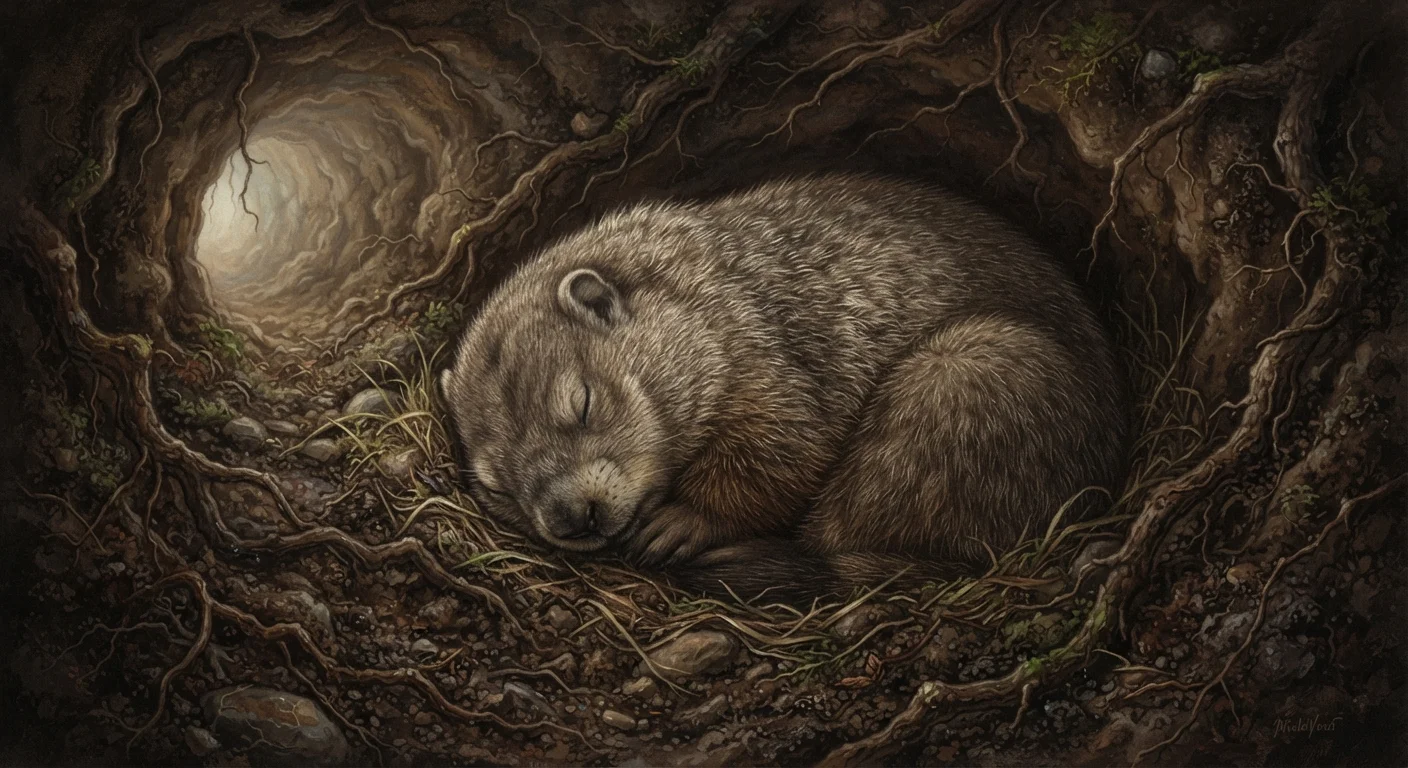
Classic hibernators include groundhogs (woodchucks), ground squirrels, and little brown bats. A hibernating groundhog may drop its heart rate from roughly 80 beats per minute to as few as 5, and its body temperature can fall below 40°F (4°C). This deep state can last weeks or months, sustained almost entirely by fat reserves built up before dormancy began.
Interestingly, bears are often called hibernators, but their winter sleep is technically closer to a lighter torpor — their body temperature doesn't fall as sharply, and they can be roused more easily. Scientists sometimes use the term carnivore lethargy to distinguish this from true hibernation.
Hibernation
A prolonged, deep dormancy state triggered by cold and food scarcity, during which an animal's body temperature, heart rate, and metabolism drop dramatically for weeks or months.
Torpor
A shorter, shallower form of dormancy that can be triggered daily or opportunistically by cold or food shortage. Animals can rouse from torpor much faster than from true hibernation.
Estivation
A dormancy state triggered by heat and drought rather than cold, used by animals to minimize water loss and survive high temperatures or dry seasons.
Metabolic rate
The speed at which an organism converts food and stored energy into fuel for bodily processes. Dormancy significantly reduces metabolic rate to conserve energy.
Desiccation
Extreme drying out of the body due to water loss. Estivation is largely a defense against desiccation in hot, arid conditions.
Torpor: Short-Term and Flexible
Torpor is a shallower, shorter, and more flexible form of dormancy. Rather than lasting an entire season, torpor can occur daily or opportunistically — triggered by an immediate drop in temperature or a temporary food shortage.
Hummingbirds are a well-known example. On cold nights when foraging isn't possible, a hummingbird's heart rate can plunge from over 1,000 beats per minute to as low as 50, and its body temperature falls sharply. By morning, it rewarns itself and resumes normal activity. Many small mammals, including some species of mice and shrews, also use daily torpor to ride out cold spells.
The key distinction from hibernation is reversibility and duration. Torpor episodes typically last hours rather than months, and an animal can rouse itself relatively quickly. This flexibility makes torpor a highly adaptable survival tool across many climates and species.
The concept of brief, restorative rest periods in animals has an interesting parallel in human physiology — much like how short versus long naps affect human alertness differently, the depth and duration of an animal's dormancy state determines how long recovery takes.
Estivation: Dormancy in the Heat
While hibernation and torpor are usually responses to cold, estivation (also spelled aestivation) is a dormancy state triggered by heat and drought. Animals that estivate enter a slowed metabolic state to avoid desiccation — losing dangerous amounts of body water — during hot, dry conditions.
Lungfish are among the most dramatic estivators. When their aquatic habitat dries up, African lungfish burrow into the mud, secrete a mucus cocoon around themselves, and can remain dormant for months — even years — until rains return. Land snails seal the opening of their shells with a dried mucus plug and become inactive during dry seasons. The spadefoot toad of North America also estivates underground, emerging only when triggered by rainfall.
During estivation, heart rate and breathing slow significantly, and the animal relies on stored energy and, crucially, strategies to minimize water loss. This makes estivation physiologically distinct from cold-weather dormancy, even though the outward behavior looks similar.
~5 bpm
Hibernating groundhog heart rate
A groundhog's heart rate can fall from around 80 beats per minute to as few as 5 during deep hibernation.
50 bpm
Hummingbird heart rate in torpor
A hummingbird's heart rate can drop from over 1,000 beats per minute to roughly 50 during nightly torpor.
Several years
Longest documented estivation
African lungfish have been documented surviving in a dormant, mud-encased state for multiple years without water.
Side-by-Side: Key Differences at a Glance
The three dormancy states share the common feature of reduced metabolism, but their triggers, depths, and durations set them apart in meaningful ways.
| Feature | Hibernation | Torpor | Estivation |
|---|---|---|---|
| Primary trigger | Cold, food scarcity | Cold or food shortage | Heat and drought |
| Duration | Weeks to months | Hours to days | Weeks to months |
| Metabolic drop | Very deep | Moderate to deep | Moderate to deep |
| Arousal speed | Slow (hours) | Fast (minutes) | Slow |
| Example animals | Groundhogs, bats | Hummingbirds, mice | Lungfish, snails |
All three strategies reflect millions of years of evolutionary adaptation, allowing animals to endure conditions that would otherwise be lethal. Just as fatigue and tiredness are distinct states in humans despite both involving low energy, the differences between dormancy types matter — both for the animal's survival and for our understanding of animal biology.