
Why Grocery Habits Matter More Than One-Time Deals
For most households, groceries represent one of the largest flexible expenses in the monthly budget. Unlike rent or utilities, grocery spending is something you actively influence every week - which makes it one of the most practical places to build better money habits.
The challenge is that grocery stores are carefully designed environments. Product placement, packaging, and pricing strategies all encourage spending more than planned. Building consistent habits provides a counterweight to those pressures. As part of a broader approach to everyday financial decisions, the choices you make in the grocery aisle are small individually but significant in aggregate.
Write a meal plan before you write a grocery list.
Buying ingredients without a plan leads to partial use, forgotten items, and duplicate purchases. A meal plan anchors your list to actual consumption, which is one of the most direct ways to reduce food waste - a major hidden grocery cost.
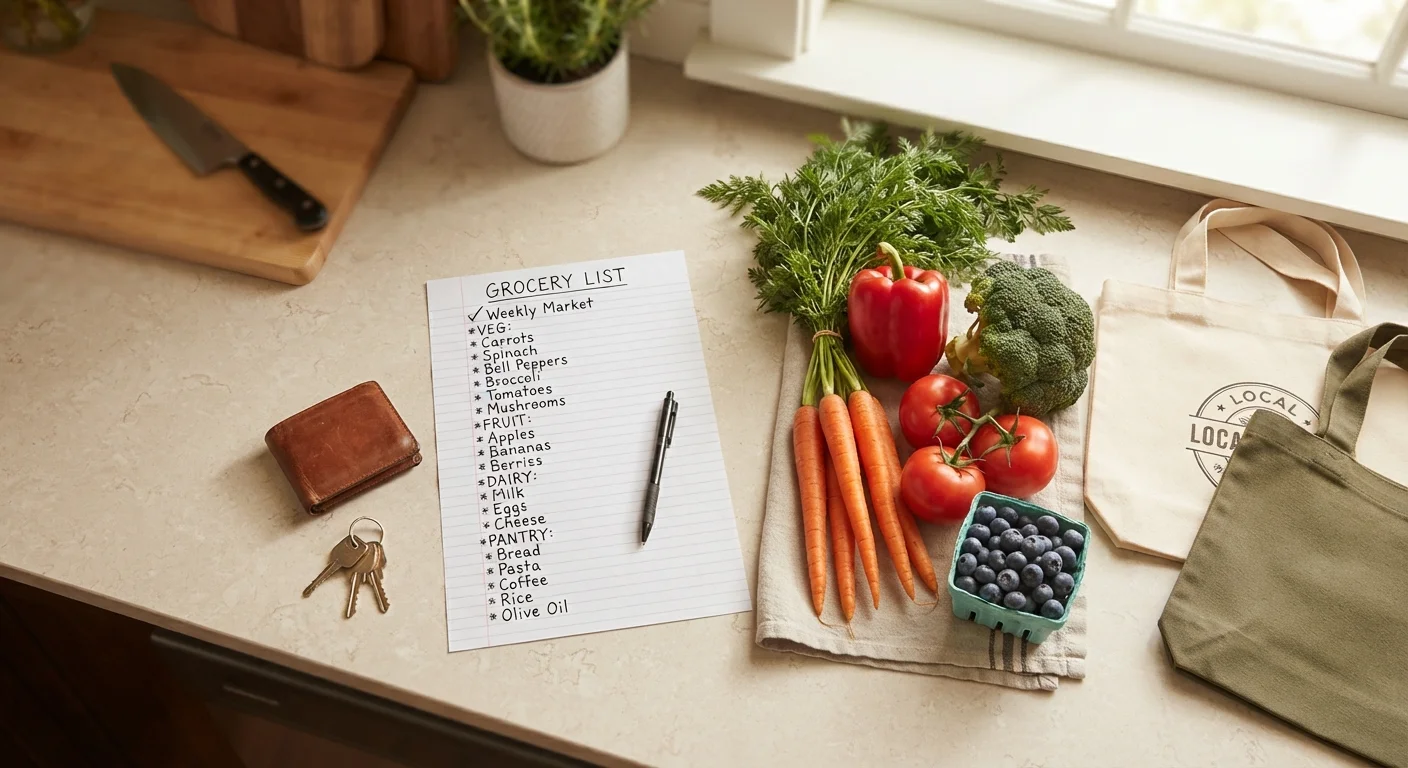
Always shop with a written list and stick to it.
Unplanned purchases - also called impulse buys - account for a substantial share of overspending at the grocery store. A list shifts your decision-making from the store aisle, where marketing cues are strongest, to your home, where you're thinking clearly about needs.
Compare unit prices rather than package prices.
A larger package doesn't automatically offer better value, and a sale price on a smaller size can be misleading. Unit price - cost per ounce, pound, or count - is the accurate comparison point and is typically displayed on shelf labels.
Eat before you shop, and set a realistic time limit.
Shopping while hungry is well-documented as a factor in overspending on snacks and convenience items. Feeling rushed also leads to skipping price comparisons. Arriving fed and with a reasonable timeframe supports more deliberate choices.
Build a realistic weekly budget for groceries and track it.
Without a target number, there's no feedback loop. A weekly grocery budget - even an approximate one - gives you a reference point that makes overspending visible. Tracking doesn't need to be elaborate; a simple running total works.
Practical Habits to Keep Costs in Check
The following practices are grounded in widely recognized budgeting principles. None require extreme couponing or dramatic lifestyle changes - just a bit of structure applied consistently.
For a broader look at how spending decisions fit into personal finance, see our practical overview of everyday personal finance.
Store Brands Are Worth a Closer Look
Many store-brand or generic products are manufactured by the same suppliers as name brands and meet comparable quality standards. For staple items like canned goods, dried pasta, or flour, the price difference between store brand and name brand can be 20-40% with little difference in quality. That said, personal preference matters - test a few substitutions and decide based on your own experience.
Connecting Grocery Habits to Your Bigger Financial Picture
Keeping grocery costs manageable isn't just about spending less - it frees up money for savings goals and reduces financial stress. Even modest weekly savings of $15-$25 add up to hundreds of dollars per year that could support an emergency fund or other priorities.
~$270
Monthly food waste cost per average U.S. household
Research from ReFED and related studies suggests the average American household loses a significant amount annually to food that is purchased but never consumed.
~60%
Share of supermarket purchases that are unplanned
Studies on in-store shopping behavior consistently find that a majority of purchases were not on the shopper's original list, underscoring the value of shopping with a firm plan.
If you're working on savings alongside tighter grocery budgets, building a savings habit when money feels tight offers complementary guidance. And if you want to avoid counterproductive patterns, it's worth understanding savings habits that quietly erode progress.
“The best grocery budget isn't the lowest one - it's the one you can actually predict and repeat each week without stress.”
— Money Basics Editorial Team, Personal finance educators focused on everyday budgeting
This article is for general informational purposes only and does not constitute personalized financial advice. For guidance specific to your situation, consider speaking with a qualified financial professional.