
Why a Pre-Exam Checklist Works
Preparing for an exam involves more than reviewing notes at the last minute. Research in cognitive science consistently shows that distributed practice - spreading study over several days - leads to stronger memory than a single long session. A checklist helps you put that evidence into action by breaking preparation into manageable stages.
The items below are organised into three phases: what to do 3-5 days before the exam, the night before, and on exam morning. Work through each group methodically rather than all at once.
For a useful contrast, consider how the same principle - systematic pre-event verification - applies in other areas, like the structured review travellers run before a flight. The goal is always the same: eliminate avoidable surprises.
3-5 Days Before
Night Before
Exam Morning
Tools You'll Need
Before working through the checklist, gather the resources below. Having everything in one place removes friction and keeps your study sessions focused.
Past exam papers
Practising under realistic conditions is the single most effective preparation activity - source these from your institution or official exam board.
Flash cards or a spaced-repetition app
Used to drill key terms, formulas, and concepts through active recall rather than passive reading.
A timer
Keeps study blocks focused and simulates timed exam conditions during practice tests.
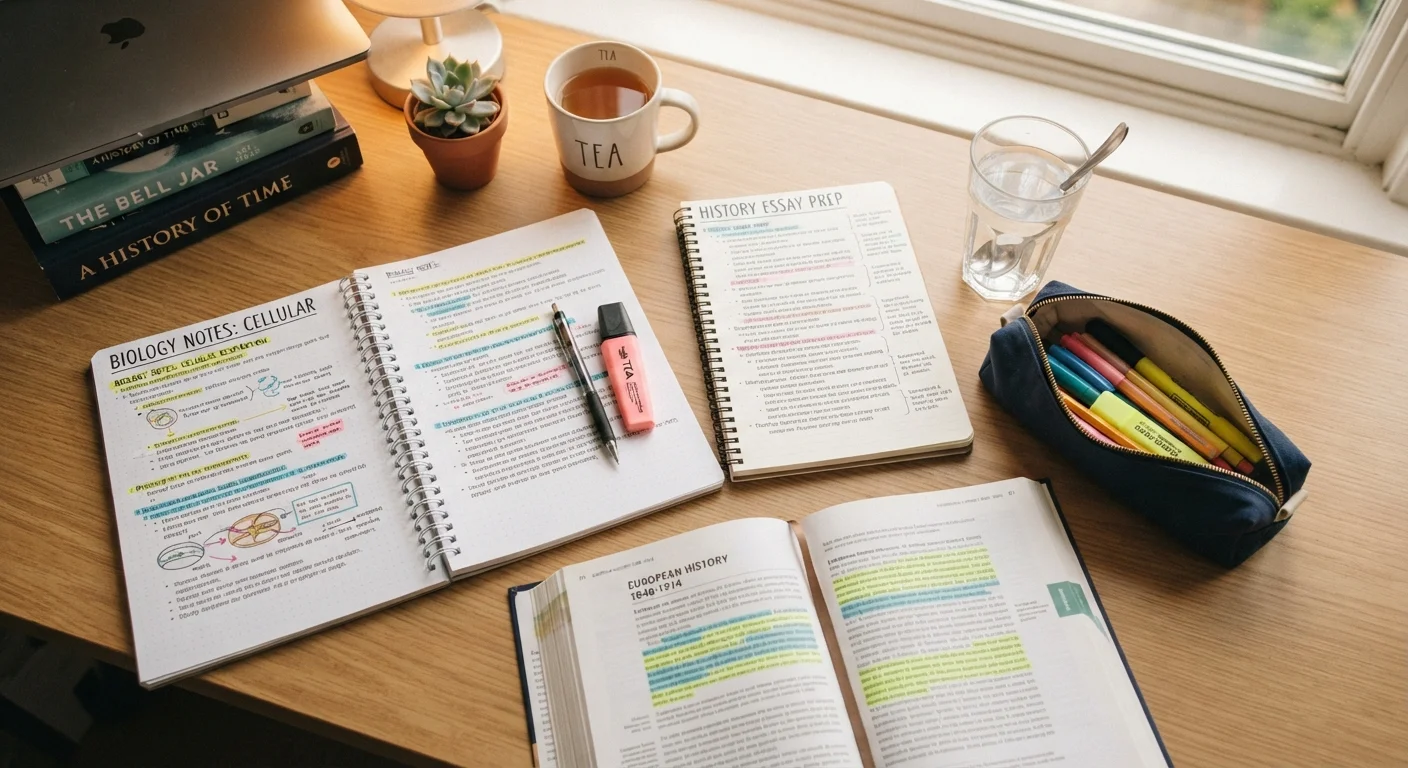
Highlighters and coloured pens
Useful for annotating notes and distinguishing key concepts when reviewing written materials.
A planner or calendar
Helps you map out your study schedule across the days leading up to the exam.
Noise-cancelling headphones or earplugs
Reduces environmental distraction during focused study sessions.
A Note on Cramming - and Why This Checklist Avoids It
Don't Leave It All to the Last Night
Attempting to cover a full course the evening before an exam is one of the most common - and least effective - study strategies. Sleep deprivation compounds the problem: memory consolidation happens largely during sleep, so cutting it short to study longer actively works against retention. If you find yourself with limited time, prioritise high-yield topics, get adequate rest, and plan to start earlier for future exams.
Many learners default to cramming the night before an exam because it feels productive. In practice, massed studying at the end tends to produce fragile, short-lived recall. Our related article on why cramming undermines long-term learning explains the brain science in detail.
This checklist is built on spaced repetition and active retrieval instead - techniques supported by decades of educational research. If you're working through this list the night before your exam, focus on the Night Before and Exam Morning groups, and resolve to start earlier next time.
Check Exam Rules Before You Sit
Different exams have strict and varying rules about what materials, devices, and identification are permitted in the room. Bringing a prohibited item - even unintentionally - can result in disqualification. Always read the official exam regulations from your institution or exam board, and confirm what is and is not allowed well in advance of exam day.