
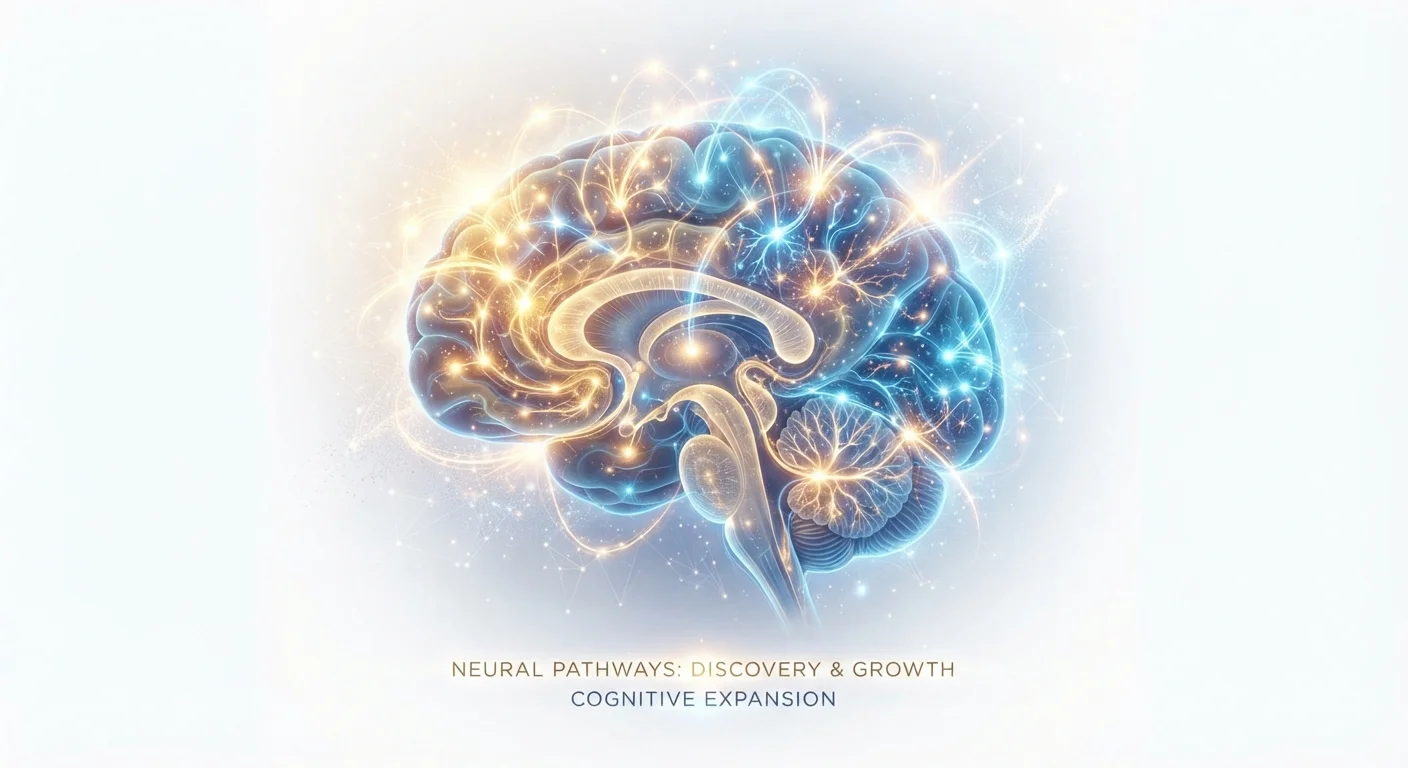
The Old Myth: A Fixed Adult Brain
For much of the 20th century, the prevailing scientific view held that the brain reached a fixed state in early adulthood and largely stopped changing. Once childhood development wrapped up, it was believed, the neural architecture was essentially set. Learning could still happen, the thinking went, but the brain's structure itself was stable.
That view has been overturned. Decades of neuroscience research have established that the adult brain retains a remarkable capacity for structural and functional change. This doesn't mean adult brains learn identically to children's brains - the mechanisms differ - but the potential for meaningful growth persists across the lifespan.
Understanding this has significant implications for anyone who thinks it's "too late" to pick up a new skill, change a habit, or pursue an unfamiliar area of knowledge. See what lifelong learning actually means for a broader look at how this plays out in everyday life.
How the Adult Brain Actually Changes
Neuroplasticity operates through several overlapping mechanisms. The most fundamental involves synapses - the junctions between neurons where signals pass. When you repeatedly engage with new information or a new skill, the synaptic connections involved are reinforced through a process called long-term potentiation. In simple terms: neurons that fire together, wire together.
Beyond synapse strengthening, the brain can also grow new dendritic branches - the tree-like extensions that receive signals - effectively giving neurons more ways to communicate. And in specific regions, particularly the hippocampus (central to memory formation), evidence points to ongoing generation of new neurons even in adults.
~1,400g
Average weight of an adult human brain
Despite representing roughly 2% of body weight, the brain consumes about 20% of the body's total energy - reflecting its continuous, active maintenance of billions of neural connections.
100 trillion
Estimated synaptic connections in an adult brain
Neuroscience textbooks cite this order of magnitude to convey the sheer scale of the adult brain's connectivity and its capacity for reorganization.
Crucially, these changes are activity-dependent. The brain does not reorganize simply because time passes - it changes in response to what you actually do. Passive exposure to new material produces weaker effects than active retrieval, deliberate practice, and meaningful engagement with a subject.
What Accelerates Adult Learning
Several factors are well-supported by learning science as amplifiers of neuroplasticity in adults:
- Novelty and challenge: Tasks that push just beyond your current ability trigger stronger neural responses than tasks you've already mastered. This is sometimes called the "desirable difficulty" principle in educational psychology.
- Emotional engagement: The brain's memory systems are closely tied to emotional circuits. Material that is meaningful, surprising, or personally relevant tends to be encoded more durably.
- Spaced repetition: Reviewing material at increasing intervals - rather than cramming - gives the brain time to consolidate learning and strengthens recall pathways.
- Physical exercise: Aerobic activity has been shown to increase levels of brain-derived neurotrophic factor (BDNF), a protein that supports neuron growth and synaptic plasticity.
- Sleep: Memory consolidation occurs largely during sleep, making rest not a break from learning but an essential part of it.
Make Difficulty Work For You
When a new skill or subject feels genuinely hard, that friction is often a sign the brain is forming new connections - not a reason to stop. Aim to practice at the edge of your current ability rather than staying comfortably within what you already know. Short, consistent sessions beat occasional long cramming for durable adult learning.
Understanding why certain strategies work helps learners apply them more intentionally. Explore the habits that sustain curiosity over a lifetime for evidence-informed practices that support ongoing growth.
Why This Matters Across a Lifetime
The implications of adult neuroplasticity extend well beyond academic study. Adults who continue to challenge their brains with new and varied experiences appear, according to some research, to maintain stronger cognitive function over time. While no learning regimen can guarantee protection against age-related cognitive changes, staying mentally active is consistently identified as a positive contributing factor.
There's also a practical upside for anyone who has hit a wall in their progress. If the brain is structurally capable of change, then plateaus are rarely permanent - they're often signals that current strategies need updating rather than evidence that growth has stopped. Why ambitious learners plateau explores exactly this pattern and the mindset shifts that restore momentum.
Neuroplasticity also sits at the heart of a broader philosophy of lifelong learning - the idea that intellectual growth is not a phase of life but a continuous, deeply human process. The Lifelong Learner's Companion offers a comprehensive guide to building that practice, from mindset through to daily method.
For readers curious about other widely held beliefs about the brain that science has since revised, common myths about how the brain works offers a grounding counterpoint to popular misconceptions.