
What Is a Circuit Breaker Panel?
The circuit breaker panel - also called the electrical panel, breaker box, or load center - is the central hub that receives electricity from your utility provider and distributes it throughout your home. Every time you flip a light switch or plug in an appliance, that electricity originates from a circuit routed through this panel.
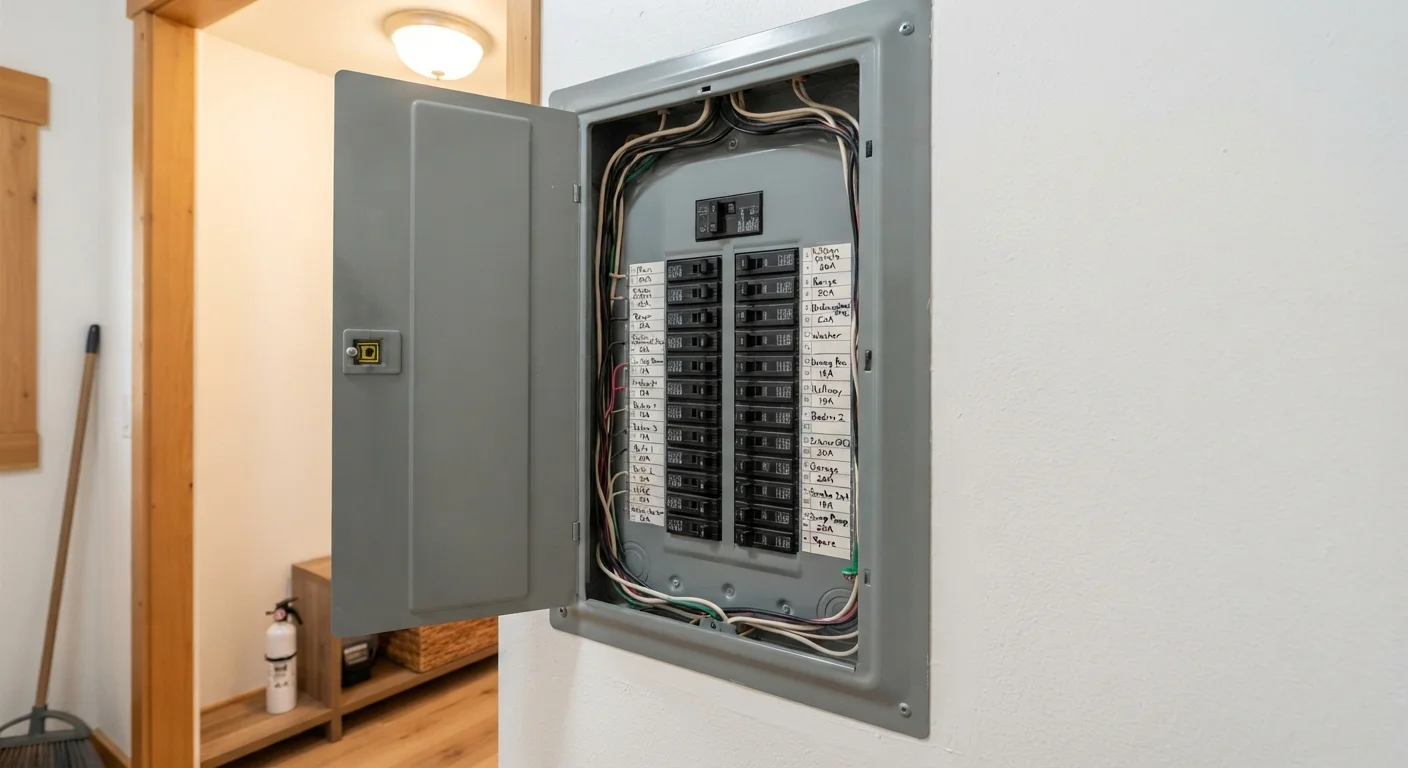
Panels are typically housed in a gray or beige metal cabinet mounted on a wall. Inside, you'll find rows of switches (the breakers) along with several other components working together to keep your home's electrical system running safely. Understanding what's inside helps you respond confidently when something goes wrong - and know when to step back and call a professional.
Circuit
A closed loop of electrical wiring that runs from the panel to outlets, lights, or appliances and back. Each circuit is protected by its own breaker.
Amperage (amps)
A measure of how much electrical current flows through a circuit. Breakers are rated in amps to limit how much current their circuit can safely carry.
GFCI
Ground Fault Circuit Interrupter - a safety device that shuts off power almost instantly when it detects current leaking toward a person or water source.
AFCI
Arc Fault Circuit Interrupter - a type of breaker that detects dangerous electrical arcing (sparking inside wiring or devices) and cuts power to prevent fires.
Short circuit
An unintended electrical connection that causes current to travel along an unplanned path, usually resulting in a sudden surge that trips the breaker.
Overload
A condition where too many devices draw more power than a circuit is rated for, causing the breaker to trip as a protective measure.
Anatomy of the Panel: Key Components
Opening the panel door reveals several distinct parts, each with a specific role:
- Main breaker: A large double-pole switch at the top (or sometimes bottom) of the panel. It controls power to every circuit in the box simultaneously and is used to shut off all power during emergencies or major work.
- Individual circuit breakers: Smaller switches arranged in two columns. Each one protects a single circuit - a bedroom, a kitchen outlet, or a major appliance like a dryer or HVAC unit.
- Bus bars: Metal strips that carry electricity from the main breaker to the individual breakers. These are always live when the panel is energized and should never be touched.
- Neutral and ground bars: Separate terminal strips where neutral (white) and ground (bare or green) wires connect. These complete each circuit safely.
- Service entrance wires: Thick wires entering from the top of the box directly from the utility company. These carry the full voltage of your home's electrical supply and remain live even when the main breaker is off.
Most modern homes have a 100-amp, 150-amp, or 200-amp panel, indicating how much total electrical load it can handle. Older homes may have smaller panels that can struggle with today's energy demands.
How Circuit Breakers Work
Each breaker protects its circuit by monitoring the amount of current (measured in amps) flowing through it. When too much current flows - due to overloading a circuit or a short circuit - the breaker automatically trips, cutting power to that circuit. This prevents overheated wires, which can cause fires.
A tripped breaker sits in a middle position between ON and OFF. To reset it: first unplug or turn off devices on that circuit, then push the switch firmly to OFF, and finally flip it back to ON. If the breaker trips again right away, there is likely a deeper electrical problem that needs professional diagnosis.
Label Every Circuit in Your Panel
Take an hour to map and label each breaker using the directory card inside the panel door. Accurate labels help you quickly cut power to the right circuit during maintenance or an emergency. Use small pieces of tape if the original labels have faded or were never filled in.
Standard breakers protect against overloads and short circuits. Homes also commonly have GFCI breakers (Ground Fault Circuit Interrupter) that cut power when they detect current leaking toward water, and AFCI breakers (Arc Fault Circuit Interrupter) that detect dangerous electrical arcing. These are required in specific locations under modern building codes, such as bathrooms, kitchens, and bedrooms.
Tasks You Can Safely Do Yourself
While most work inside the panel requires a licensed professional, a few basic tasks are generally safe for homeowners:
- Resetting a tripped breaker: As described above, this is a routine homeowner task when done carefully.
- Labeling circuits: If your panel's directory is blank or outdated, mapping which breaker controls which area of your home is a valuable safety project. Turn breakers off one at a time and note what loses power in each room.
- Testing GFCI outlets and breakers: Press the TEST button on GFCI outlets monthly; press RESET to restore power. This confirms the safety device is working.
For a broader look at where the line sits between safe DIY and tasks better left to professionals, see our guide to DIY electrical work myths.
Permits May Be Required for Panel Work
Many electrical projects involving the panel - including adding circuits or upgrading service - require a permit and inspection under local building codes. Requirements vary by municipality. Contact your local building department before starting any significant electrical project to confirm what is needed in your area.
When to Call a Licensed Electrician
Many situations involving your electrical panel require a licensed electrician - and attempting them without proper training creates serious risks of shock, fire, or code violations. Always hire a professional for:
- Adding, replacing, or upgrading circuit breakers
- Upgrading panel capacity (e.g., from 100-amp to 200-amp service)
- Investigating a burning smell, scorch marks, or unusual heat near the panel
- Breakers that trip frequently without obvious cause
- Installing a subpanel or new dedicated circuits
- Any work where a permit is required by your local building department
Service Entrance Wires Are Always Live
The thick wires entering the top of your panel from the utility company carry full voltage at all times - even with your main breaker switched off. Only trained electricians and utility workers should ever be near these wires. Never attempt any work that requires touching or bypassing them.
Remember: the service entrance wires at the top of your panel are never de-energized by your main breaker. Only the utility company can disconnect them. Never touch these wires for any reason.