
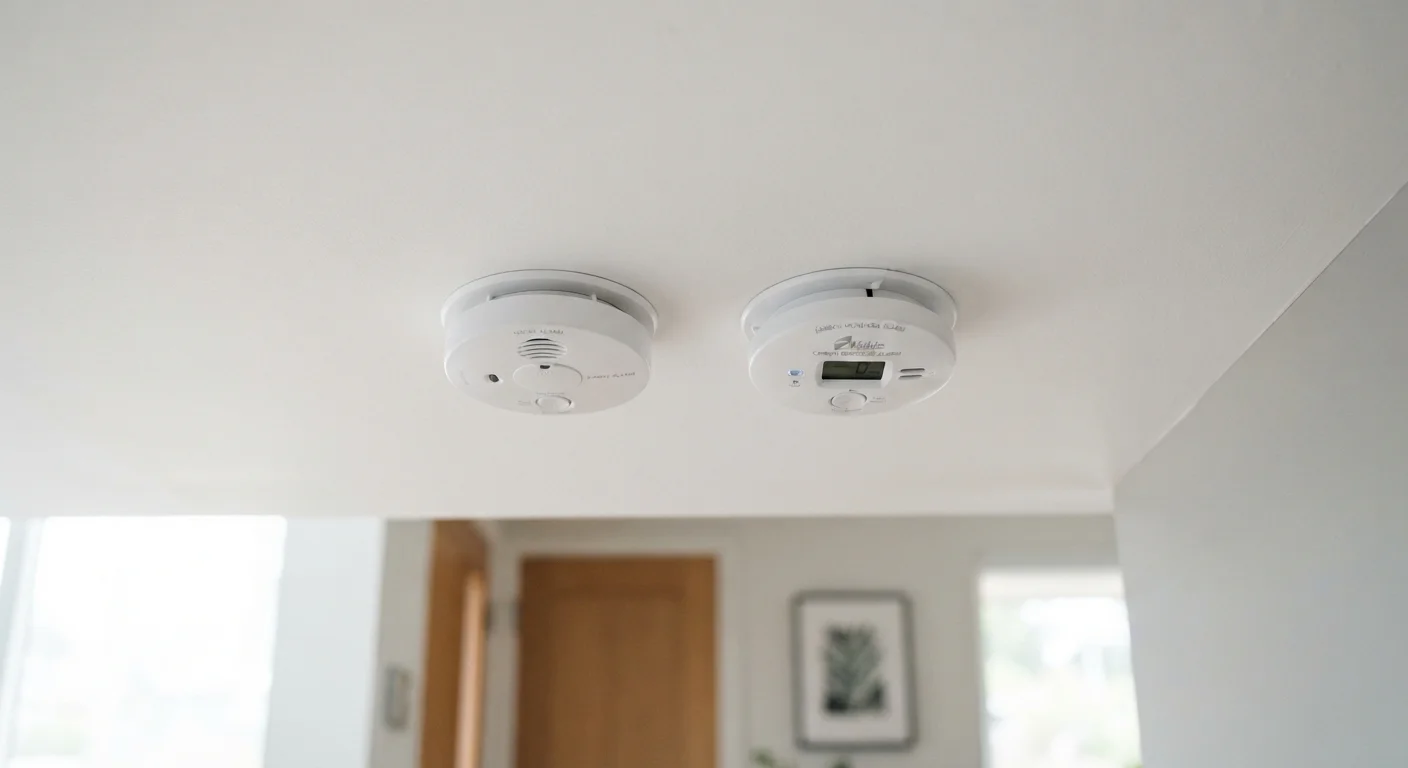
Two Different Threats, Two Different Tools
Smoke alarms and carbon monoxide (CO) detectors are both life-safety devices, but they respond to completely different hazards. A smoke alarm senses airborne particles produced by combustion - fire - while a CO detector measures the concentration of carbon monoxide, a colorless, odorless gas produced by fuel-burning appliances. Confusing the two, or assuming one covers the job of the other, leaves real gaps in home safety.
Combination units that detect both are available, but placement rules still apply - and understanding why each device goes where it does helps you get them right. See our Home Maintenance Myths That Could Cost You for more common safety misunderstandings worth correcting.
| Smoke alarm placement | Every bedroom, outside each sleeping area, every level including basement (National Fire Protection Association (NFPA 72)) |
| CO detector placement | Every level, outside each sleeping area, near fuel-burning appliances (NFPA 720) |
| Smoke alarm lifespan | Up to 10 years from manufacture date (General industry standard) |
| CO detector lifespan | 5-7 years (check unit label) (General industry standard) |
| Recommended test frequency | Monthly using built-in test button (NFPA recommendation) |
| Battery replacement | At least once per year for battery-powered units (General safety guidance) |
Where Smoke Alarms Belong
Smoke rises, so smoke alarms are mounted on ceilings or high on walls (within 12 inches of the ceiling). U.S. fire safety guidance from the National Fire Protection Association (NFPA) recommends installing smoke alarms in every bedroom, outside each sleeping area, and on every level of the home - including the basement. A single unit in the hallway is not enough.
Placement Tips
- Avoid kitchens and bathrooms. Install alarms at least 10 feet from cooking appliances to reduce nuisance trips from steam or cooking smoke. Bathroom humidity can also trigger false alarms.
- Sloped or peaked ceilings. Place alarms within 3 feet of the peak but no closer than 4 inches from any wall or corner, where dead air pockets reduce sensor effectiveness.
- Garages. Not typically recommended inside attached garages because exhaust fumes can trigger false alarms and the temperature range may exceed the device's rated limits.
Renters Have Rights Here Too
Many U.S. states and local jurisdictions require landlords to install working smoke alarms and, increasingly, CO detectors before a tenant moves in. Requirements vary by state, so check your local housing authority or tenant rights resources to understand what your landlord is legally obligated to provide. Even where detectors are provided, residents are often responsible for testing them and reporting any issues promptly.
Where Carbon Monoxide Detectors Belong
Carbon monoxide mixes evenly with air rather than rising like smoke, so it doesn't require ceiling placement - though ceiling installation is acceptable. CO detectors can be placed on walls at about knee-to-chest height, or plugged into outlets. What matters most is location relative to sources and sleeping areas.
Placement Tips
- Near sleeping areas. CO is most dangerous when people are asleep and can't notice early symptoms. At least one detector should be outside each sleeping area.
- On every level. Install a CO detector on every floor, including the basement - especially near any fuel-burning appliance (furnace, water heater, boiler).
- Not directly next to appliances. Keep detectors at least 5-15 feet away from gas ranges, fireplaces, or furnaces; closer placement can trigger frequent false alarms from brief, harmless combustion activity during normal operation.
- Attached garages. A CO detector inside the home near the door to an attached garage is strongly advised, since vehicle exhaust can seep through.
For more on how ventilation affects CO risk, see our article on indoor air quality basics.
Smoke Alarm
A device that detects airborne smoke particles produced by fire and triggers an audible alert. Most residential models use either ionization or photoelectric sensing technology.
Carbon Monoxide (CO)
A colorless, odorless gas produced by the incomplete combustion of fuels such as natural gas, propane, oil, or wood. It is dangerous because it is undetectable by human senses alone.
Ionization Detector
A type of smoke alarm that uses a small amount of radioactive material to detect fast-flaming fires. It tends to respond more quickly to open flames than smoldering fires.
Photoelectric Detector
A smoke alarm type that uses a light beam to detect larger smoke particles from slow, smoldering fires. Generally considered more responsive to this fire type than ionization detectors.
Combination Unit
A single device that contains both a smoke alarm and a carbon monoxide detector. It must still be placed according to the guidelines for both hazard types.
End-of-Life Signal
A chirp or alarm pattern that some modern CO detectors and smoke alarms use to indicate the unit has reached the end of its effective service life and must be replaced.
Testing and Maintenance
Both device types require regular testing and eventual replacement - neither lasts forever. Follow these general guidelines:
- Test monthly. Use the built-in test button on each device. A working alarm will produce a loud beep sequence.
- Replace batteries. Alarms with standard batteries need a fresh set at least once a year. A low-battery chirp is a reminder, not a reason to remove the unit.
- Smoke alarm lifespan. Smoke alarms generally need full replacement every 10 years from the manufacture date (stamped inside the unit).
- CO detector lifespan. CO detectors typically need replacement every 5-7 years. Check the manufacturer's label for the specific end-of-life date.
- Interconnected systems. In interconnected setups (wired or wireless), when one alarm sounds, all sound - strongly recommended for larger or multi-story homes.
If you're considering any wiring work related to hardwired alarm installations, review what homeowners often get wrong about DIY electrical work before starting.
3 in 5
Home fire deaths in homes with no working smoke alarms
According to the National Fire Protection Association, roughly three of every five home fire deaths occur in homes with no smoke alarms or non-functioning ones.
~400
Annual US deaths from unintentional CO poisoning
The U.S. Centers for Disease Control and Prevention estimates approximately 400 Americans die annually from unintentional, non-fire-related CO poisoning.