
Why Hydration Myths Are So Persistent
Hydration advice is everywhere - printed on water bottles, repeated by trainers, cited in wellness blogs. The problem is that much of it is either oversimplified or outright incorrect. Because water is foundational to nearly every body process, myths about it tend to feel credible. But physiology doesn't always match the slogans.
Understanding where the science actually stands helps you make smarter, more personalized choices - without anxiety about whether you've hit an arbitrary daily target. If you're interested in how similar misconceptions play out in other everyday contexts, our piece on bloating myths shows how widespread health misinformation can be.
Myth
You need to drink eight glasses of water every day, no exceptions.
Fact
The "8x8" rule - eight 8-ounce glasses daily - lacks a strong scientific foundation and doesn't account for individual variation.
This guideline appears to have originated from a 1945 U.S. Food and Nutrition Board recommendation that was widely misread. The original text noted that most of the water humans need is already contained in food. Actual fluid needs depend on body weight, physical activity, climate, and health status. Blanket targets like "eight glasses" can be too much for some people and too little for others.
Myth
If you feel thirsty, you're already significantly dehydrated.
Fact
For most healthy adults, thirst is a reliable and timely signal - not a late-stage warning alarm.
The idea that thirst indicates you've already lost a dangerous amount of fluid is largely unsupported by research. The human thirst mechanism is well-calibrated and typically kicks in when body water drops by roughly 1-2%, well before performance or health is seriously compromised. Older adults and certain medical conditions can blunt thirst perception, but for the general population, drinking when thirsty is a sound approach.
Myth
Coffee and tea don't count toward your daily fluid intake because they're diuretics.
Fact
Caffeinated beverages do contribute to daily fluid intake; their mild diuretic effect does not cancel out their water content.
While caffeine can mildly increase urine output, the net effect of drinking coffee or tea is still a positive contribution to hydration. Research has consistently shown that moderate caffeine consumption - the amount found in typical daily coffee intake - does not lead to dehydration in people who consume it regularly. The diuretic label has been overstated in popular health culture.
Myth
Drinking more water is always better - there's no such thing as too much.
Fact
Drinking excessive water can dilute blood sodium to dangerous levels, a condition called hyponatremia.
Hyponatremia occurs when sodium concentration in the blood drops too low, often because of consuming large amounts of plain water in a short period. It can cause symptoms ranging from nausea and headaches to, in severe cases, confusion and seizures. It's most commonly seen in endurance athletes who over-drink during events without replacing electrolytes. The takeaway: more water is not unconditionally better.
Myth
You can only stay hydrated by drinking plain water.
Fact
Foods - particularly fruits and vegetables - and many beverages all contribute meaningfully to total daily fluid intake.
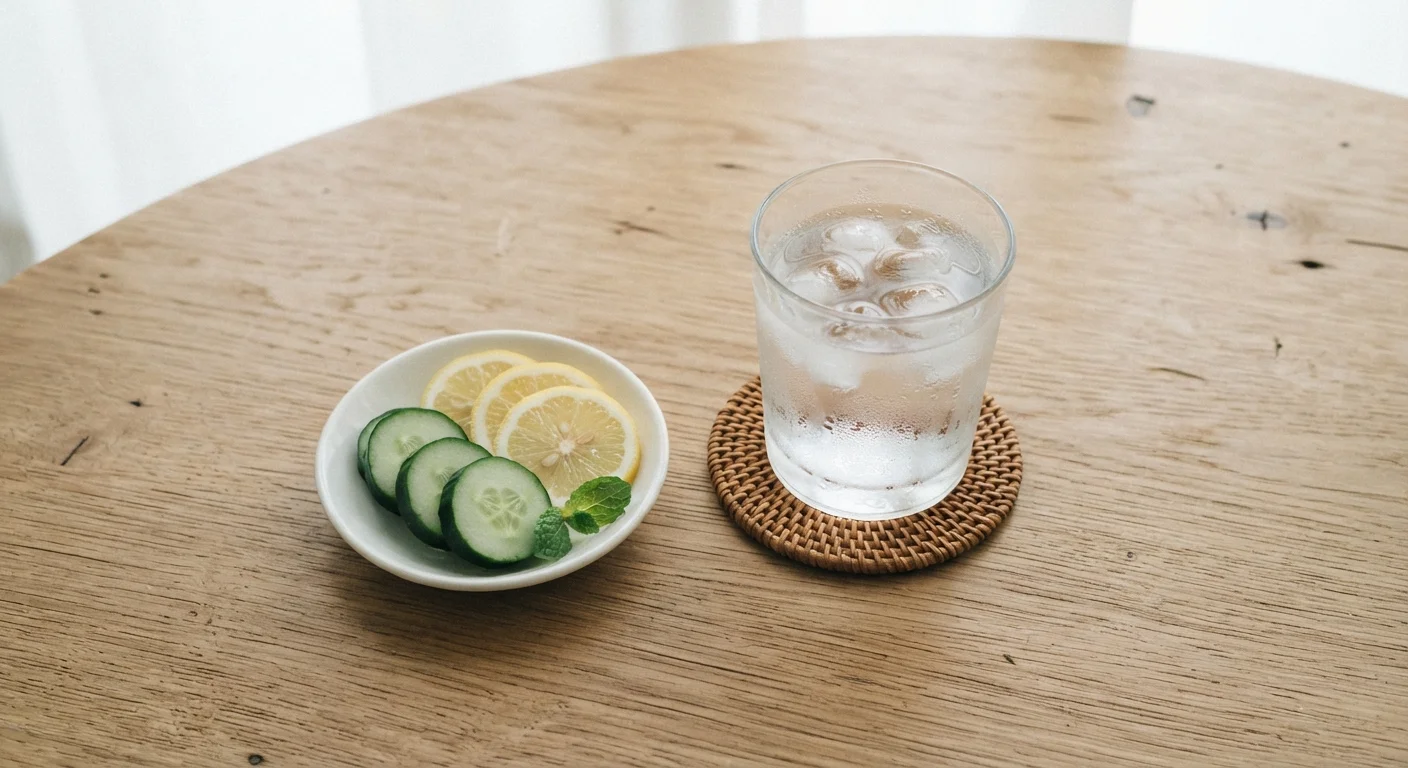
Many fruits and vegetables have water content exceeding 90% by weight. Cucumbers, lettuce, strawberries, and celery are among the highest. Soups, milk, and even diluted juices also contribute. Studies suggest that roughly 20% of daily water intake for many adults comes from food alone. Focusing exclusively on water consumption ignores a significant and healthful portion of the hydration picture.
What Good Hydration Actually Looks Like
Rather than chasing a fixed number, hydration experts generally recommend paying attention to context: activity level, climate, body size, and overall diet all influence how much fluid a person needs on a given day. A sedentary person in a cool office has very different requirements from someone doing outdoor labor in summer heat.
~20%
Daily hydration from food sources
Nutritional surveys consistently find that solid foods - especially produce - account for roughly a fifth of total daily water intake for many adults.
1-2%
Body water deficit that triggers thirst
Research in hydration physiology indicates the thirst mechanism activates at a relatively early fluid deficit, before significant performance effects typically occur.
One of the most practical self-checks remains urine color. Pale yellow typically signals adequate hydration; dark amber suggests you may need more fluids. Colorless urine, while often cited as ideal, can actually indicate you're taking in more water than necessary.
It's also worth noting that persistent thirst - especially when paired with other symptoms - can sometimes signal something worth investigating. The article on body signals you might be dismissing explores when seemingly minor cues deserve closer attention.
Overhydration Is a Real Risk
Drinking far more water than your body needs - particularly in a short time frame - can dangerously dilute blood sodium levels. This condition, hyponatremia, is rare in everyday settings but has caused serious harm in endurance sports contexts. If you experience nausea, swelling, or confusion after heavy fluid intake, seek medical attention promptly.
This article is for general informational purposes only and is not a substitute for professional medical advice. If you have concerns about your hydration, kidney function, or related symptoms, consult a qualified healthcare provider.